
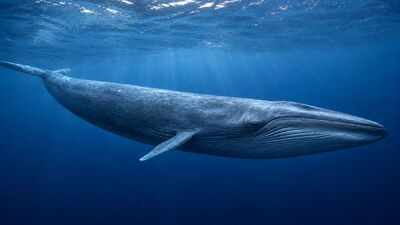
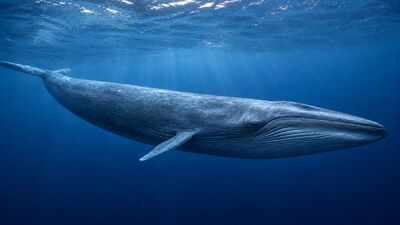
The blue whale is not merely the biggest animal alive today. At roughly 33 metres in length, it is the largest creature to have ever existed on Earth, dwarfing even the biggest dinosaurs that once roamed the planet. Yet size is only part of its remarkable story. Beneath the waves, these ocean giants communicate through an intricate system of low-frequency calls and songs that scientists have spent decades trying to decode. Recent acoustic tagging studies conducted off the coast of southern California have revealed that blue whale vocal behaviour is far more nuanced than researchers once believed, shifting noticeably with depth, sex, season, location and even the time of day, painting a richer picture of life beneath the surface.
How a 330,000-pound blue whale survives on tiny krill
According to the BBC, the blue whale is a staggering 33 metres long, making it not only the biggest animal in the world today but the largest animal to have ever lived. Such a creature could exist only in water, since an animal of this scale would collapse under its own weight on land without the buoyancy the ocean provides.Blue whales can weigh up to 330,000 pounds and are found in every ocean except the Arctic. Despite this enormous bulk, they feed almost exclusively on tiny shrimp-like krill, with the largest individuals consuming up to six tons in a single day by filtering vast volumes of seawater through their baleen plates.
How the largest animal on Earth uses powerful sounds to communicate across the ocean
Communication on this scale requires equally extraordinary sound. Blue whales are among the loudest animals on the planet, producing pulses, groans and moans that may travel as far as a thousand miles under the right oceanic conditions. According to the Australian Antarctic Division, these low-frequency moans can be as loud as a jumbo jet taking off at close range, allowing whales separated by vast stretches of ocean to stay in contact.Researchers off southern California have identified three main call types: pulsed A calls, tonal B calls and shorter, more variable D calls. A and B calls can occur singly or combine into repeated phrases that form long song bouts, while D calls tend to be produced during social or feeding contexts by whales of either sex.
How male and female blue whales use calls differently across the ocean
Males produced calls far more often than females, vocalising roughly half the time compared with only five per cent for females. Most calls were also produced at shallow depths of under thirty metres, despite blue whales typically feeding much deeper during daylight hours, supporting the idea that singing and feeding rarely happen together.Single-note calls have been linked to resting behaviour, while extended song bouts are associated with travelling whales. Calling activity also increased during summer months and was most frequent at dawn and dusk, with singing peaking later at dusk and through the night.
How human activity is disrupting the underwater world of blue whales
Blue whale communication is under growing pressure from human activity. Whale communication ranges have shrunk dramatically, with some populations now only able to hear each other across roughly ten miles in today’s noisier oceans, a fraction of their natural range.According to NOAA, ocean noise, vessel strikes and fishing gear entanglement remain among the most serious threats facing blue whales, which are still listed as endangered despite gradually recovering numbers. Protecting the acoustic conditions that allow these giants to find mates, locate food and stay connected across entire ocean basins is now considered as important to their survival as protecting the whales themselves.