
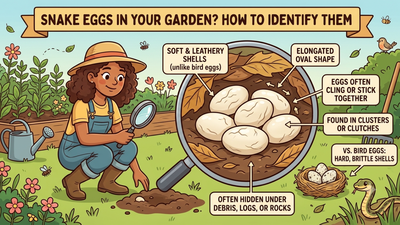
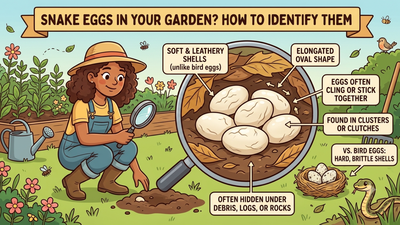
The first clue may not be a snake at all. It could be a cluster of pale, leathery eggs tucked beneath a pile of leaves, inside loose soil, under garden debris or in an undisturbed compost area. For a gardener, finding them can trigger an immediate question: are these snake eggs?The answer is not always obvious. Snake eggs can look surprisingly different from the familiar hard-shelled eggs people see in nests or kitchens. And before reaching for a shovel, there are a few things worth knowing.
What do snake eggs look like?
As per reports, snake eggs are generally soft, leathery and flexible rather than hard and brittle like bird eggs. They can be white, cream or off-white and are often oval or elongated.Some snake species lay eggs in clusters, with the eggs sometimes stuck together. Depending on the species, a clutch can be hidden in soil, leaf litter, rotting vegetation, hollow logs or other sheltered locations.That is one reason a garden can occasionally become an attractive nesting site. Areas with undisturbed leaves, mulch, compost, wood piles and other debris can provide shelter and relatively stable conditions.But appearance alone is not enough to confirm that a clutch belongs to a snake. Other reptiles and animals can produce eggs that look similar.
Where do snakes lay eggs in a garden?
A snake looking for a place to lay eggs is not necessarily searching for a neat, open patch of soil. It may choose a protected, humid and relatively undisturbed spot.Look around areas such as:
- Leaf piles
- Compost heaps
- Loose soil
- Mulch and garden debris
- Spaces beneath logs or boards
- Wood piles
- Abandoned animal burrows or sheltered cavities
The exact nesting location depends on the species.Some snakes leave their eggs after laying them, while a few species provide some form of protection or remain associated with the clutch. So finding eggs does not automatically mean a snake is still nearby.
Can all snakes lay eggs?
No. This is an important distinction.Some snakes are egg-laying, while others give birth to live young. So if you suddenly notice several tiny snakes in the garden toward late summer or early fall, it is possible that eggs were laid somewhere nearby earlier in the year.
Why would a snake choose your garden?
Your garden may unintentionally offer exactly what a snake needs.Dense vegetation, piles of leaves, rocks, wood, compost and other forms of cover can create hiding places. Gardens can also attract the animals snakes eat. Utah State University Extension notes that excess water can attract prey such as worms, slugs and frogs, while spilled bird seed can attract rodents, which may in turn attract snakes.In other words, a snake may not be interested in your flowers at all. It may simply have found a garden with shelter, food and suitable conditions.
What should you do if you find snake eggs?
The safest approach is not to handle, move, crush or disturb them.If you are unsure what the eggs are, keep children and pets away from the area and avoid digging around the clutch. If you suspect they belong to a snake, contact a qualified local wildlife rescuer, forest department or wildlife authority for identification and advice.This is particularly important because you cannot determine whether an adult snake nearby is venomous simply from the appearance of its eggs.And if you find a snake itself, give it space rather than trying to catch or kill it.
Should you remove snake eggs from your garden?
Not on your own.Whether eggs can legally or safely be moved depends on the snake species and local wildlife regulations. In many cases, the better approach is to have the clutch identified first.There is also an ecological reason not to treat every snake as a garden pest. Some snakes eat rodents and other animals that can become garden or agricultural pests.
How can you make your garden less attractive to snakes?
If your concern is repeated snake activity rather than a single sighting, focus on removing the conditions that attract snakes and their prey.Keep grass reasonably short, reduce unnecessary piles of wood and debris, trim vegetation close to buildings and avoid excessive watering. If you feed birds, clean up spilled seed and store bird feed securely because rodents can attract snakes.Importantly, some popular “snake remedies” are not reliable. Products such as snake repellents, sulfur and outdoor mothballs should not be relied upon to keep snakes away; mothballs can also expose people and animals to toxic chemicals.A cluster of pale eggs hidden under leaves may look alarming, but it can also reveal something surprisingly ordinary about the garden around it. Somewhere beneath the flowers and greenery, the space may have quietly become part of a wild animal’s life cycle.The best first step is not to disturb what you have found. Identify it, keep your distance and let a trained wildlife professional determine what should happen next.