
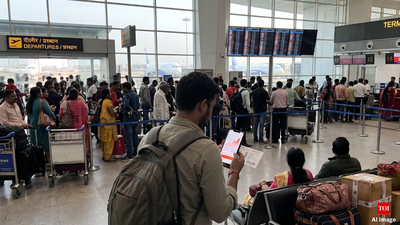
Diwali and Chhath pushed flying costs up by more than a quarter. Three weeks later the network is still sitting at the top of that step.
What usually happens
A festival fare spike is supposed to be a spike. Prices climb for the travel window, then fall back once the crowd has moved.That is what the first half of this autumn looked like. Through October the median next-day fare across 54 routes sat between Rs 7,969 and Rs 8,465, moving within a narrow band.
What happened instead
In the week of 16 November, the week of the Chhath return, the median next-day fare reached Rs 10,843.In the week of 23 November it was Rs 10,471.Against an October and early-November baseline of Rs 8,174, the network is running 28.1 per cent higher, and almost none of the festival increase has unwound.
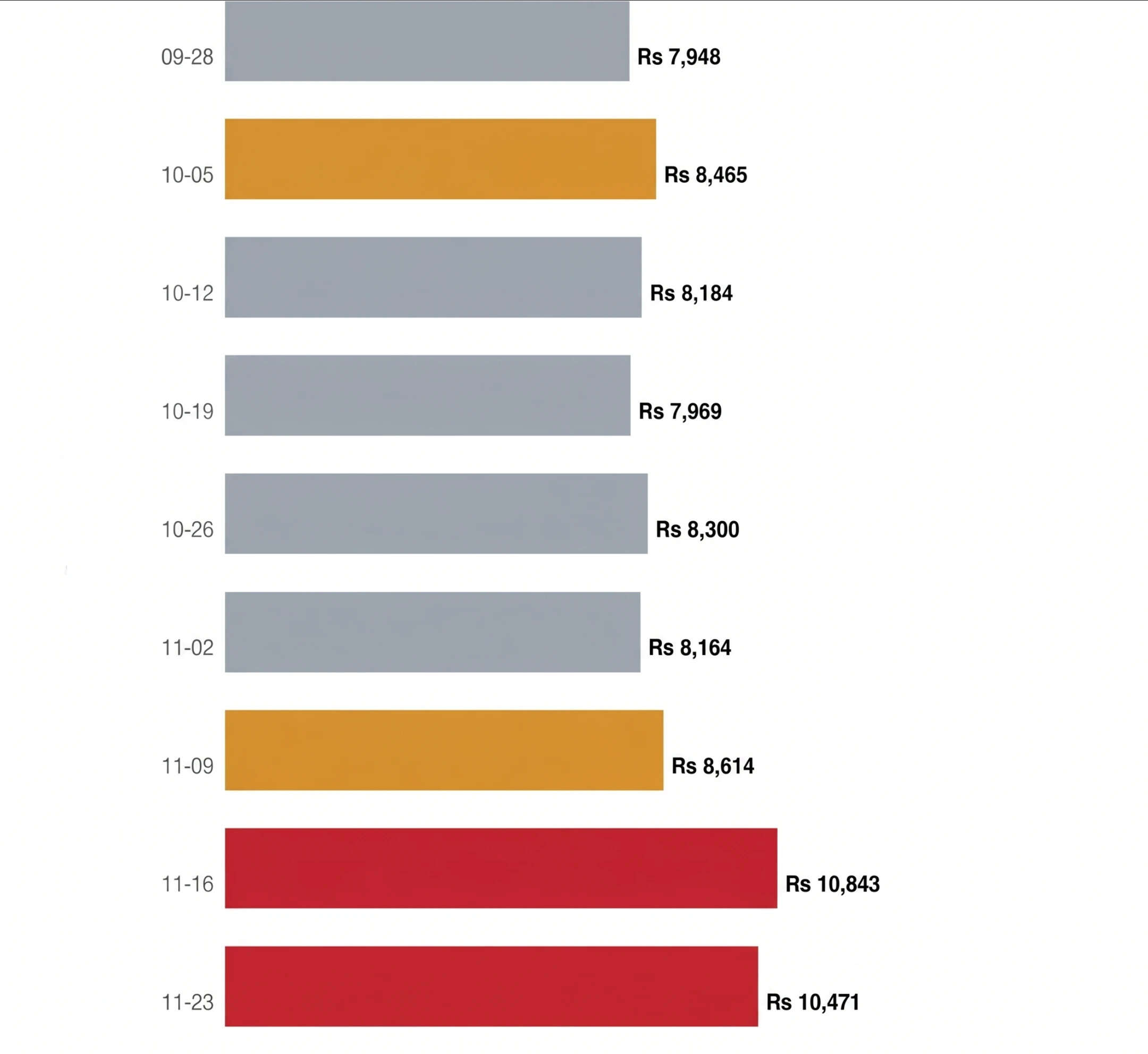
Median next-day fare across 54 routes, by week of travel
Why it may not be a festival effect at all
Two things make this different from a normal post-festival week.The first is the wedding season, which began in the second half of November and runs into February. It concentrates travel on specific auspicious dates rather than spreading it, and it does not end when the festival crowd goes home.The second is capacity. Airlines reduced domestic flying through the summer on fuel costs, and one carrier has roughly halved its presence on these routes since May.Fewer seats mean a festival surge has less slack to absorb it, and less reason to fall back afterwards.Our fare data cannot separate the two. What it can say is that the step up has held for three weeks, which is longer than a festival peak normally lasts.
What to watch next
The test is December. If this was a festival spike with a long tail, the first half of December should drift back towards the October level.If it was the wedding season and a thinner network, it will not, and the Rs 8,000 fares of October will turn out to have been the unusual part of this year rather than the normal part.
The short version
Through October the median next-day fare sat between Rs 7,969 and Rs 8,465.In Chhath return week it hit Rs 10,843. Three weeks on it is still Rs 10,471.That leaves the network 28.1 per cent above its pre-festival level, with almost none of the rise unwound.The likely causes are the wedding season, which runs to February, and a network carrying fewer seats than in spring. December will settle which.
About this data
The Airline Fare Tracker records the median fare shown on Google Flights for 54 routes between Delhi, Mumbai, Bengaluru, Chennai, Kolkata, Hyderabad, Ahmedabad and Pune.Fares are captured every day, and this analysis covers 211 consecutive days from 28 April to 24 November 2026 with no missing dates. The index sets every route to 100 on 28 April and weights routes by monthly scheduled seats.Limits: These are advertised medians, not fares finally paid. All eight cities are metros, so smaller routes are not measured.There is no year-earlier comparison yet, so changes across the period cannot be separated from seasonal demand or from the fuel-driven capacity reduction that sits inside it.Roughly 6 per cent of daily readings were filled in by the data provider where a capture failed. The tracker records which airline flies a route but not which airline charged a given fare.TOI-DPA Airline Price Index is a joint initiative of The Times of India and Decimal Point Analytics.Source: Decimal Point Analytics Airline Price Index