
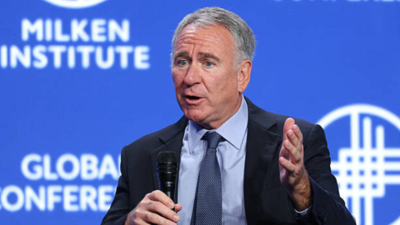
When billionaire hedge fund manager Ken Griffin decided to move his financial empire from Chicago to Miami in 2022, it was seen as another high-profile endorsement of Florida’s growing appeal to wealthy investors and businesses. Four years later, his presence in the city has become considerably more significant than anticipated. Griffin has bought all 138 residential apartments in a downtown condominium tower, is backing a multibillion-dollar corporate headquarters and has committed billions to education, healthcare and other causes.According to a Financial Times report, Griffin has spent more than $5.3 billion on property, business infrastructure, philanthropy and political contributions since relocating to South Florida. The Citadel founder’s investments have made him one of the most influential private figures in the region, with supporters pointing to the jobs, institutions and development his money could bring.From Chicago to Miami: A financial empire changes baseGriffin announced in June 2022 that Citadel, his hedge fund, and Citadel Securities, its electronic trading business, would move their headquarters from Chicago to Miami. The decision followed years of frustration with conditions in Illinois, including concerns about crime and the state’s political leadership. The relocation was expected to take place over several years, with the companies planning to establish a major office presence in Miami’s Brickell financial district.The move was not Griffin’s first investment in South Florida. He had already shifted some employees to the region during the Covid-19 pandemic and purchased a waterfront property on Star Island. But the headquarters announcement marked a more permanent commitment, bringing the prospect of jobs, business activity and other wealthy financial professionals to the city.His real estate ambitions have since expanded beyond a private residence and office space. In July 2026, Bloomberg reported that Griffin had acquired all 138 residential units at Solaris, a 22-storey condominium tower in Brickell. The purchases were made through a network of limited liability companies, with offers arriving individually and residents initially uncertain about who was behind them.Some owners accepted the offers, while others held out for better prices. The acquisition was part of Griffin’s broader effort to assemble property around the site of his planned headquarters. The building’s location makes it significant to his wider development plans.A $2.5 billion headquarters and a bigger visionOne of Griffin’s largest projects is a new Citadel headquarters in Brickell, estimated to cost about $2.5 billion. The proposed 54-storey development at 1201 Brickell Bay Drive is expected to become a major addition to Miami’s skyline. The project is being developed with Related Companies, while Citadel and Citadel Securities plan to occupy a substantial portion of the office space.The headquarters is part of a wider effort to establish Miami as a major centre for financial services. Griffin’s relocation has helped attract attention from businesses and wealthy professionals considering South Florida, although the city’s growth cannot be attributed to one individual alone.Billions for education, healthcare and researchGriffin’s influence extends beyond commercial property. Through his philanthropic initiative, Griffin Catalyst, he has directed substantial sums towards education, medical research and community projects.In September 2026, he announced a gift of more than $3 billion to Carnegie Mellon University, one of the largest individual donations in the history of higher education. The contribution will help establish a new campus in Miami, while also supporting the university’s existing operations in Pittsburgh. The Miami campus is expected to focus on fields including healthcare and biological discovery, national security, energy and climate resilience, and advanced manufacturing.His earlier donations in South Florida include $50 million to the University of Miami’s Sylvester Comprehensive Cancer Center for cancer research and another $50 million to Baptist Health South Florida to support neurological care and research into conditions such as Alzheimer’s disease. He also gave $25 million to Nicklaus Children’s Hospital for a new surgical tower and supported Miami-Dade public schools, scholarships and community projects.A billionaire’s rising influenceBut Griffin’s growing role in Miami has also brought scrutiny. The Financial Times report highlighted concerns about political influence, development decisions and the accountability that comes with private wealth shaping public life. His political contributions, which the report puts at more than $60 million, have added to questions about the relationship between wealthy donors and local decision-making.The debate is unfolding as Miami and the wider South Florida region grapple with housing affordability and inequality. The arrival of wealthy residents and businesses has helped fuel investment, but rising housing and living costs have also made it harder for some existing residents to remain in the area.