
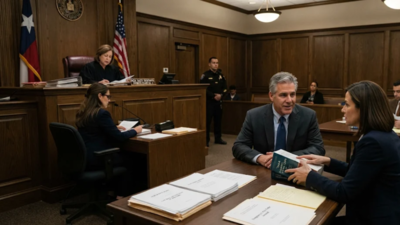
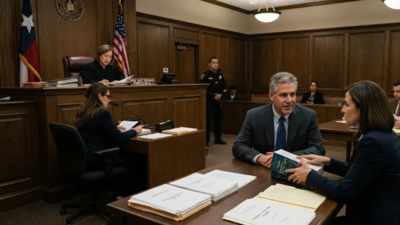
A Texas man who died without a spouse or children left his property, money, personal belongings and animals to two people named in a handwritten will. But when his first cousin once removed challenged the document, a probate judge ordered DNA testing to confirm their family connection. A Texas appeals court has now stopped the test, ruling that the lower court did not have the legal power to order it while the will dispute remains unresolved. The Texas Fourteenth Court of Appeals issued its decision on 17 November 2026 in a case involving Peter K. Demel and the estate of John Demel. The judges found that the probate court had wrongly ordered Peter to provide DNA samples before deciding whether John’s handwritten will was valid.The ruling means Peter cannot be forced to undergo genetic testing under the existing order. The appeals court also instructed the probate court to cancel its direction requiring him to take the test. According to the judgment published by Justia, the case is recorded as In re Peter K. Demel, case number 14-26-00320-CV, from Probate Court No. 5 of Harris County, Texas. Justice Katy Boatman wrote the opinion, with Justices Wise and Hart joining her. The dispute centres on a handwritten will that named Roxanne Bourdon and Chris Quijada as the only beneficiaries of John’s estate. Peter Demel, John’s first cousin once removed, challenged the attempt to have the document accepted by the probate court.
A handwritten will leaves the entire estate to two beneficiaries
John Demel died without a wife or children. He left behind a handwritten will, legally known as a holographic will, naming Bourdon and Quijada as the people who would inherit his belongings and property. The document stated: “I Johnny Demel being of sound mind leave my Estate including all real estate properties, monies, personal belongings, and my animals to Roxanne Bourdon and Chris Quijada.”Neither Bourdon nor Quijada was a legal heir through blood or marriage. Instead, John had clearly stated in the document that he wanted both individuals to receive his property, money, personal belongings and animals after his death. After John died, Chris Quijada filed an application with Harris County Probate Court No. 5 to have the handwritten will accepted for probate. He also requested letters testamentary, which would give him the legal power to manage the estate as its executor. As another option, Quijada asked the court to formally identify John’s legal heirs in case the will could not be accepted.Both Bourdon and Quijada agreed that Quijada should serve as the independent executor of the estate. Peter Demel later entered the case by opposing Quijada’s application and challenging the handwritten will. According to the Texas Fourteenth Court of Appeals, his challenge led to several hearings and arguments over whether he could be forced to undergo genetic testing.
Probate judge initially rejects DNA testing
The probate court first rejected Quijada’s request to make Peter undergo DNA testing. In its written decision, the judge said the court did not have the power to order the test under the Texas Estates Code. Texas law allows courts to order genetic testing in certain cases where they need to identify a person’s legal heirs. But the probate judge explained that these rules mainly apply to cases involving biological children or people claiming inheritance rights through them. The court also found that Peter’s family relationship with John was not disputed. This was enough to give him the legal right to challenge the handwritten will. The judge therefore decided that DNA testing was not needed to prove Peter’s right to take part in the case. Quijada later asked the judge to reconsider the decision. His request challenged only the part of the ruling that recognised Peter’s legal right to contest the will. He argued that this issue should only be decided after a trial.After holding another hearing, the probate judge changed the earlier decision and approved Quijada’s request for genetic testing. The court then issued a written order directing Peter to undergo testing at the National Screening Center. It instructed him to provide samples “as requested by National Screening Center” and stated that the testing had to follow Subchapter F, Chapter 160 of the Texas Family Code. Peter objected to the new order. He filed a request asking the probate court to reconsider its decision, submitted a motion to exclude evidence, requested another hearing and sought the removal of the trial judge from the case. The probate court refused to change its decision. Peter then took the matter to the appeals court.
Appeals court says judge lacked legal authority
Peter approached the Texas Fourteenth Court of Appeals and filed a petition for a writ of mandamus. He argued that the probate judge had gone beyond the powers allowed by law when ordering him to undergo DNA testing. When considering a mandamus petition, an appeals court checks whether the lower court clearly abused its discretion and whether the person challenging the decision has another suitable way to obtain legal relief. Under Texas law, a judge abuses their discretion when they act unreasonably or fail to understand and apply the law correctly. Justice Boatman and the other judges focused on Section 204.051 of the Texas Estates Code. This section deals with court-ordered genetic testing in certain probate cases.The appeals court explained that Section 204.051 applies only to formal proceedings to identify legal heirs under Chapter 202 of the Estates Code. It does not give judges automatic permission to order DNA tests whenever someone challenges a will. The judges rejected Quijada’s argument that an application to have a will accepted for probate should automatically be treated as an heirship case. Under Chapter 202, a formal heirship proceeding is allowed only in certain situations. These include cases where someone dies without a valid will and no estate administration has taken place in Texas, where a will or estate administration leaves out property in Texas, or where a trustee needs to identify the legal heirs of someone who has died.The judges found that none of these situations applied to John’s estate because his handwritten will appeared to leave all his property to Bourdon and Quijada. The panel referred to the Texas Supreme Court’s decision in Frost National Bank v. Fernandez. That ruling supports the principle that a separate heirship proceeding is not allowed when a person leaves a will that distributes their entire estate.
Heirship cannot be decided before the will challenge
Quijada also argued that his alternative request for a formal decision identifying John’s heirs gave the probate judge a reason to order DNA testing. The Fourteenth Court of Appeals disagreed. The judges explained that the request to identify the heirs could not yet be decided because the probate court first had to determine whether John’s handwritten will was valid. If the court accepts the will, John’s estate will pass to Bourdon and Quijada according to his written instructions. Only if Peter succeeds in challenging the will and the court finds that John died without a valid will would it become necessary to identify his legal heirs.The appeals panel referred to earlier decisions in United Fire Lloyds v. Tippin and Guajardo v. Chavana. These rulings support the view that a court cannot decide who the heirs are until it has established that the person died without a valid will. The judges also considered whether genetic testing was needed to confirm Peter’s legal right to challenge the document. Under the Texas Estates Code, a person with an interest in an estate can challenge a will. This can include an heir, beneficiary, spouse, creditor or another person with a property right or financial claim against the estate.The court pointed out that Quijada’s own sworn application to probate John’s will identified Peter as an heir with a one-eighth interest in the estate. Both sides also agreed that John had died without a spouse or children. This meant Peter could inherit part of the estate if the handwritten will was rejected. The appeals judges therefore found that Peter already had a direct financial interest in the case. His legal right to challenge the will did not depend on the results of a DNA test.
Court warns of harm from forced genetic testing
The appeals court also considered whether Peter could wait until the probate case ended before challenging the DNA testing order through a normal appeal. The judges decided that this would not provide enough legal protection. Orders requiring genetic testing generally cannot be challenged through an immediate standard appeal. The panel explained that waiting until the end of the case could expose Peter to the very harm he was trying to prevent. Genetic test results could be disclosed and used during the legal proceedings before an appeals court had a chance to decide whether the testing order was lawful.The judges referred to an earlier legal decision involving the Office of the Attorney General of Texas when considering the risks linked to genetic testing and the disclosure of private information. The Fourteenth Court of Appeals had already issued a temporary stay, which paused the DNA testing while it considered Peter’s petition. The panel conditionally granted his request for a writ of mandamus. It directed Probate Court No. 5 to cancel the order requiring Peter to undergo genetic testing. The judges also lifted the temporary stay and rejected Quijada’s request for attorney fees as a penalty against Peter.The decision does not determine whether John’s handwritten will is legally valid or whether Bourdon and Quijada will receive his estate. That question remains before the Harris County probate court. For now, the appeals court has ruled that Peter cannot be forced to provide DNA samples under the disputed order. The probate court must first resolve the challenge to John’s handwritten will before moving forward with any decision about his legal heirs.