
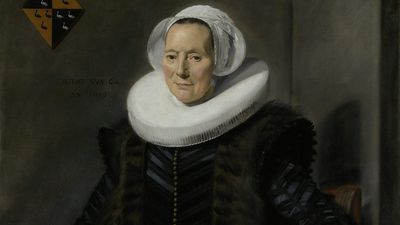
A painting that spent years in an old English family collection has emerged as one of the surprises of an October auction, selling for £70,000 after specialists attributed it to Dutch artist Hendrik Gerritsz Pot. The small oil painting, which depicts a woman in period clothing seated beside a lute with a dog at her side, had entered the sale with an estimate of £8,000. According to auction house Lawrences, competitive bidding pushed its final price to nearly nine times that figure, including the buyer’s premium.The painting came from the collection of the Bailward family, formerly associated with Horsington Manor near Wincanton in Somerset, England. Its significance extends beyond the unexpected auction result: specialists believe it could be the missing companion to a series of works known as Pot’s Merry Company paintings, raising the possibility of a connection to a recognised theme in 17th-century Dutch art.
A woman, a lute and a possible artistic connection
The painting is an oil on an oak panel, a format used by Dutch artists during the period. Its central figure is a woman dressed in Dutch period costume, wearing a lace ruff and seated at a table. A lute lies nearby, while a dog sits at her side. Lawrences described the work as a small but captivating painting when announcing the results of its Autumn Fine Art Sale on October 19. The auction house said the work was attributed to Hendrik Gerritsz Pot, who lived from around 1580 to 1657.The proposed connection to Pot’s Merry Company paintings is particularly intriguing. These works typically depict groups of people socialising in interiors, often with music, food and drink forming part of the scene. However, the auction house described the painting as a possible missing companion, rather than confirming that relationship.The distinction matters because an attribution identifies an artist believed to have created a work, but it does not necessarily establish authorship beyond doubt. Further examination of the painting’s composition, technique, provenance and relationship to other works would be needed to establish the nature of the connection.
What Pot’s paintings reveal about Dutch society
Pot worked during the Dutch Golden Age, a period of considerable artistic activity in the Netherlands. Painters produced portraits, landscapes, still lifes and scenes of everyday life, while genre paintings frequently used familiar social situations to explore questions of behaviour and morality. The National Gallery in London holds Pot’s A Merry Company at Table, dated 1630. The museum describes the work as a scene in which elegantly dressed figures gather in what appears to be a brothel. Drinking, smoking and other details contribute to a composition that combines entertainment with a moral warning about excess and immorality.The painting also demonstrates how artists used seemingly ordinary social gatherings to communicate broader ideas. The figures, their expressions and the objects around them all contribute to the meaning of the scene.Another work, Merry Company, attributed to Pot and dated around 1630-1635, is held by Berlin’s Gemäldegalerie, according to its entry on Google Arts & Culture. It similarly depicts well-dressed men and women gathered in an interior, with details intended to caution viewers against excessive drinking and other perceived vices.These museum-held paintings provide context for understanding the newly auctioned panel. However, they do not independently establish that the Bailward family painting belongs to the same series.
Why the auction price stood out
The £70,000 result was the leading sale reported by Lawrences from its two-day Autumn Fine Art Sale in October. Against the painting’s £8,000 estimate, the final price represented an increase of £62,000, or 775% above the estimate. It sold for 8.75 times its estimated value. The auction house attributed the result to determined bidding and the appeal of the painting’s rarity and history. All prices quoted in its report include the buyer’s premium, so £70,000 should not be confused with the hammer price alone.The painting was not the only object to attract strong interest. A late 19th-century Bidjar or Bakshaish carpet, estimated at £5,000, sold for £15,000, while a 17th-century South German cabinet with elaborate marquetry decoration fetched £9,375 against an estimate of £3,000.A small antique rocking horse by G & J Lines, which came from a local house clearance, also exceeded expectations, selling for £10,000. Meanwhile, a British and Commonwealth stamp collection estimated at £5,000 realised £11,875.The results illustrated how objects with unusual histories, specialist appeal or distinctive characteristics can attract competitive bidding. In the case of the Dutch painting, its proposed artistic connection and its origins in a historic family collection may have helped distinguish it from other works in the sale.
A family collection with a new chapter
For the Bailward family painting, the auction has brought renewed attention to an object that might otherwise have remained largely unknown outside its collection. Its journey from Horsington Manor to the auction room has now placed it in the public record of a notable sale.Yet important questions remain. The possible link to Pot’s Merry Company paintings is an intriguing lead, not a settled art-historical conclusion. The auction result demonstrates the interest bidders showed in the work, but the price alone does not prove its attribution or establish its place within the artist’s body of work.For now, the painting’s £70,000 sale offers a striking example of how an object from a private collection can attract fresh interest when its history and possible artistic significance come to light.