
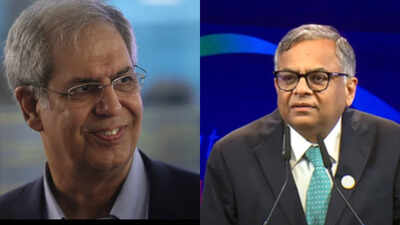
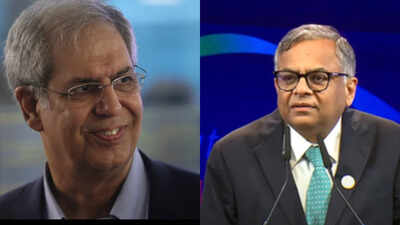
MUMBAI: Tata Trusts on Sunday sharpened its attack on Tata Sons’ reading of its own governance rules, arguing that a casting vote cannot revive a “stillborn” resolution, referring to the manner in which a tie between its nominee directors was resolved at the last board meeting. “Majority amongst two is two and not one,” Trusts said.If Tata Sons’ Articles of Association had settled the matter, a tie-breaker cannot alter the outcome, it said. One nominee withheld support, so the condition in the Articles was not met and the resolution failed, Trusts argued. And having relied on those same Articles to win the SC battle with Cyrus Mistry, the company cannot disown them now, said Trusts.Tata Trusts has challenged the legality of the Tata Sons board’s Sept 17 decision to reappoint N Chandrasekaran as chairman for a further five years from Feb 2027. It said in a statement that the resolution was not validly passed and had no legal effect — “void ab initio”.At issue is Article 121, which requires the affirmative support of a majority of Trusts’ nominee directors for certain decisions. It also gives the chairman of a meeting a casting vote in the event of a tie.Trusts has two nominees on the six-member board: its chairman Noel Tata and vice chairman Venu Srinivasan. Noel Tata voted against the resolution on Sept 17 and Srinivasan voted for it, making the tally 4:1. Chandrasekaran recused himself. Harish Manwani, an independent director who chaired the meeting and introduced the resolution, exercised the casting vote. Trusts said this option was not available. In its reading, the casting vote applies only to a tie across the full board—and a 4:1 tally was not a tie. Nor can it override the approval right the Articles give Trusts’ nominees.The final tally did not matter, it said: “A condition is either met, or it is not.” “The board put a question, and the Articles answered it in the negative,” Trusts said, rejecting suggestions that the split created a deadlock.People familiar with Tata Sons’ position said a split between the two nominees was precisely the situation the casting vote existed to resolve. Trusts also cited the Mistry litigation, which ended in a 2021 Supreme Court ruling. Articles 104B and 121 were squarely in issue, it said. The National Company Law Appellate Tribunal held the nominees’ affirmative voting rights oppressive. Tata Sons resisted, defending them as a legitimate protection for the majority shareholder, and Supreme Court set aside the tribunal’s finding. Lawyers tracking the dispute said the disagreements turn on competing readings of the Articles and are likely to be settled in court.A person familiar with the matter said Trusts, including Noel Tata, approved Chandrasekaran’s reappointment in July 2025 and forwarded the resolution to Tata Sons. In Sept 2025, the Tata Sons board, Noel Tata included, agreed in principle to reappoint him, with formal approval to follow at a later board meeting, the person said. That resolution had been neither cancelled nor replaced and remained valid, the person said.Trusts called it “unfortunate” that Chandrasekaran was contesting reappointment on “such an untenable interpretation” of the Articles.