
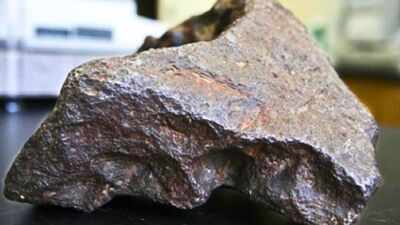
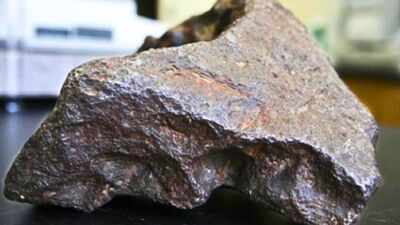
A 10.22-kilogram meteorite spent decades holding open a barn door on a Michigan farm before scientists identified it as a new IIIAB iron meteorite. The rock was reportedly seen to fall near Edmore in 1939 and remained on the farm for years. It was eventually put to use as a doorstop in a barn, with its possible extraterrestrial origin largely forgotten. That changed after another meteorite fell near Hamburg, Michigan, in 2018. The event prompted the farm’s later owners to take a closer look at the unusual rock they had inherited. They eventually brought it to Central Michigan University in Mt. Pleasant for examination. Its unusual weight and appearance had attracted little attention over the decades until scientific testing revealed its remarkable history there.
The rock found in 1939 spent decades as a doorstop
The story of the Edmore meteorite began on a farm near the town of Edmore in Michigan. According to the reported history of the specimen, the rock was seen to fall on the property in 1939. It was recovered by the farm’s owner and eventually became part of everyday farm life rather than being treated as an object of scientific interest.The rock was used as a doorstop for decades. Its unusual appearance did not immediately lead anyone to identify it as a meteorite. The farm later changed hands and the story of the strange rock was passed on to its new owners. It remained on the property until events elsewhere in Michigan prompted them to question its origins.In January 2018, a meteorite fell near Hamburg, Michigan. The event attracted attention and encouraged people to look more closely at unusual rocks they had found or inherited. The owners of the Edmore specimen remembered the story attached to their own rock and wondered whether it could have a similar origin.They eventually took the specimen to Central Michigan University for examination. Scientists there found that the rock had characteristics consistent with an iron meteorite and sent a slice for further analysis.
Its unusual shape and surface provided important clues
The Edmore specimen has a roughly triangular shape and measures approximately 17 × 20 × 23 centimetres. It weighs 10.22 kilograms and has several large indentations across its surface. Parts of the exterior are covered by a light-brown fusion crust.A fusion crust can form when a meteoroid passes through Earth’s atmosphere at high speed. The intense heat causes the outer surface to melt and then cool rapidly. This can leave a thin, dark or brownish layer around a meteorite. In the case of Edmore, the presence of such a crust provided another clue that the rock had travelled through Earth’s atmosphere.Its physical appearance alone was not enough to establish its identity. Scientists needed to examine the material inside the specimen and determine its chemical composition and mineral structure. That detailed work ultimately established that Edmore belonged to the iron meteorite group.
Scientists examined a slice at the Smithsonian
A slice of the meteorite was sent to the Smithsonian Institution for detailed examination. Researchers used a Nova NanoSEM 600 scanning electron microscope under low vacuum to study the sample. They also used energy-dispersive X-ray spectroscopy to analyse its chemical composition and identify elements such as nickel.
Results:
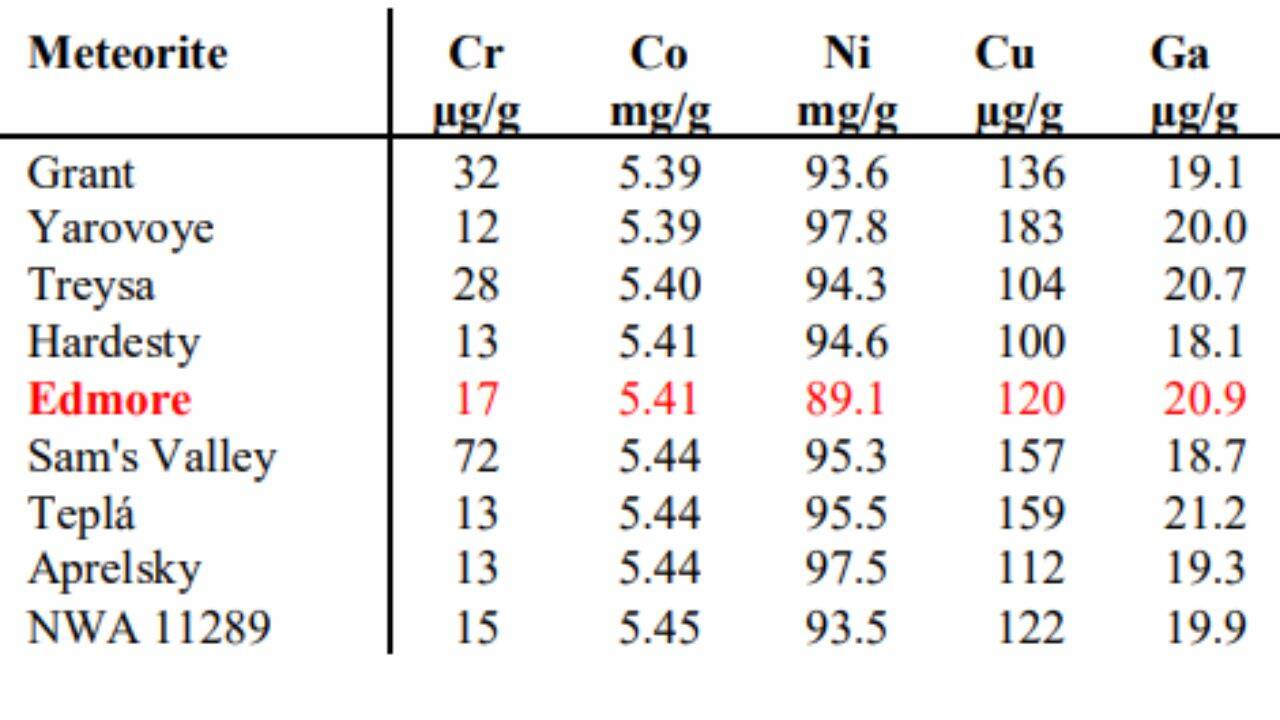
PC: 50th Lunar and Planetary Science Conference in 2019
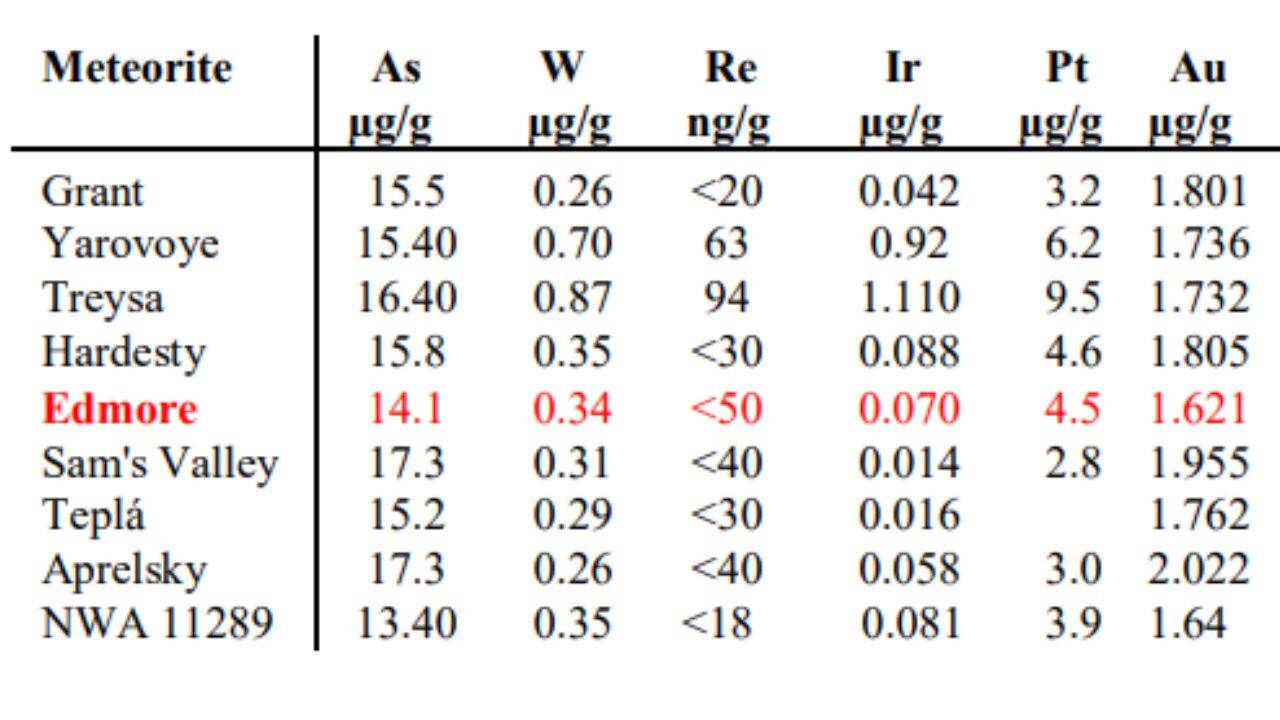
PC: 50th Lunar and Planetary Science Conference in 2019
The researchers prepared the polished slice with 10% Nital and alcohol. This treatment helped reveal the internal structure known as a Widmanstätten pattern. The distinctive pattern develops as certain iron meteorites cool extremely slowly over long periods inside their parent bodies.The structure showed that Edmore was a medium octahedrite. The examined section contained three important minerals: kamacite, taenite and schreibersite. These minerals provided further information about the meteorite’s composition and history.The kamacite formed the main bands within the Widmanstätten structure. Individual kamacite lamellae were about 0.8 millimetres wide. The taenite located between the kamacite bands showed pronounced chemical zoning. The sample also contained schreibersite grains that reached up to 4 millimetres in width. Many of these grains displayed extensive fracturing.
Chemical analysis placed Edmore in the IIIAB group
The mineral structure was only part of the identification process. Researchers also examined the meteorite’s chemical characteristics to determine which recognised meteorite group it belonged to.The analysis showed that Edmore was an iron meteorite belonging to the IIIAB group. The researchers highlighted iridium data as particularly important in reaching this conclusion. Iridium and other trace elements can help scientists distinguish between different groups of iron meteorites and provide clues about the bodies from which they originated.Iron meteorites are thought to come largely from the metallic cores or core-like regions of differentiated asteroids. Their composition therefore gives scientists an opportunity to study material that formed deep inside an ancient planetary body.The Widmanstätten pattern found in Edmore also provides evidence of its slow cooling history. Such structures form when molten metal cools over exceptionally long periods. This process allows kamacite and taenite to separate and form the characteristic interlocking pattern visible after the meteorite is cut and treated.
Edmore received official recognition in 2019
The research presented on the specimen established Edmore as a new IIIAB iron meteorite. Its official name was approved as Edmore, Michigan, and it was subsequently listed in the Meteoritical Bulletin as an Iron, IIIAB meteorite.The meteorite’s journey from a farm doorstop to a scientifically recognised specimen illustrates how valuable material can sometimes remain unnoticed for decades. The rock had been sitting on a Michigan farm for generations without its true nature being established.Its identification also shows the role that public awareness can play in meteorite discoveries. The 2018 Hamburg meteorite fall encouraged the Edmore owners to reconsider a rock whose unusual history had been passed down through the farm. Without that connection, the specimen might have continued serving as a doorstop rather than becoming the subject of scientific research.