
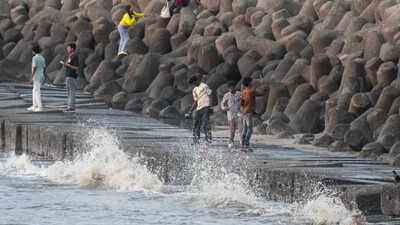
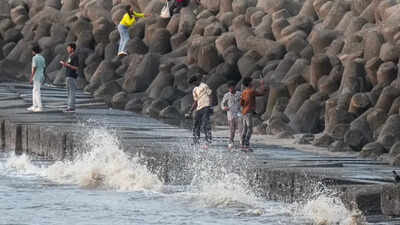
Millions of people in Kolkata and Mumbai are at “immediate risk” of losing their homes due to rising sea levels and permanent inundation, according to a United Nations report.The UN Secretary-General’s report, challenges related to sea level rise and ways and approaches to address it, released Monday, said rising seas are already damaging urban infrastructure, water systems, transport networks, energy grids, buildings and groundwater resources, with consequences for human rights, development and financial stability.“In the low-lying deltas of South Asia, in cities such as Kolkata and Mumbai in India, and Dhaka, the defining impact is human displacement, with more than 14 million people at immediate risk of losing their homes to permanent inundation,” the report said.It said the nature of the risks differs across regions. In high-income coastal cities such as Miami, New York and Guangzhou, assets worth an estimated USD 2 trillion to USD 3.5 trillion are at risk, while in South Asian cities the primary concern is human displacement.Global sea level rose by 4.7 mm per year between 2014 and 2023, while the rise reached 5.9 mm in 2024, a new record driven mainly by exceptional ocean warming. The annual rate averaged 4.75 mm during 2012-2025, with global mean sea level in 2025 remaining close to the record-high level of 2024.Nearly 770 million people, or about 10 per cent of the world’s population, live in coastal areas less than 5 metres above the high-tide line, placing them at acute risk, the report said.The UN warned that rising seas are intensifying coastal flooding, freshwater salinisation, erosion and ecosystem degradation. They are also increasing risks to public health through damage to sanitation infrastructure, water-borne diseases, injuries and deaths, as well as rising mental health stress.The report said the combination of sea-level rise and land subsidence is further worsening flooding risks, while saltwater intrusion can contaminate freshwater wells and soils, affecting drinking water security, agriculture and irrigation.It stressed the need for early and long-term adaptation planning, supported by adequate and predictable financing, stronger data and scientific capacity, and robust technical, institutional and legal frameworks to protect populations and states most at risk.