
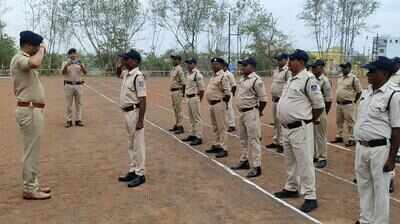
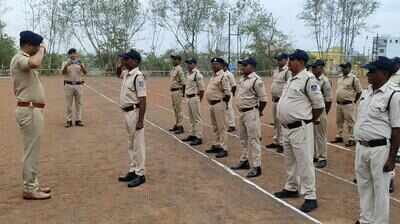
Indore: They are there in every village of Madhya Pradesh, but most people barely take notice of them. Dressed in khaki uniforms, not unlike the law enforcers, and carrying wooden staves, the kotwars have been a key, yet unsung, part of village administration for generations.Appointed by the tehsildar under the Madhya Pradesh Land Revenue Code (MPLRC), a kotwar typically assists the revenue department in their day-to-day functioning, works alongside the patwari or a revenue official and relays information gathered from villagers, serving as the administration’s first point of contact in the state’s rural belt.However, despite being posted in every village, discharging their duties with utmost sincerity and integrity, the kotwars have slipped into quiet obscurity over the years.However, that is about change if the Burhanpur district administration sets the ball rolling on a proposed new template for grassroots policing.The district police has trained its kotwars to additionally function as part of law-and-order support network across villages, saying that the idea is to advance a model where an existing institution could be transformed into a force multiplier without creating new infrastructure or recruiting additional personnel.The kotwars have been around for a long time, as they trace their roots to the colonial era when village watchmen operated as the govt’s local information network, reporting crimes, deaths, disputes and suspicious activity to the police and revenue authorities.After Independence, the kotwars were retained under the MPLRC, continuing to serve as aides to revenue officials and vested with the responsibility of assisting local administration and maintaining communication between villages and government officials.Even today, many kotwars receive ‘Seva Bhumi’—a piece of land attached to the revenue office as a reward for their service, instead of being on the regular wage roll.“In some parts of Madhya Pradesh, the land allotment in return for their service can extend up to 20 acres. In villages where there is no such convention of land allotment, the kotwars receive a monthly honorarium of about Rs 8,000 each. In Burhanpur’s banana-growing belt, some kotwars cultivating their service land earn Rs 20-25 lakh annually from farming. The position, though economically viable, is institutionally neglected,” district SP Ashutosh Bagri told TOI.While the office continued to exist through the years, not much thought was put into training the patwaris for allied roles.Bagri said many kotwars never attended a formal orientation programme previously. “Some lacked confidence, were unsure of official protocol and were never even taught the basics of how to properly wear and maintain their uniform or coordinate with police stations,” he said.The week-long training programme in Burhanpur sought to change all that. The kotwars underwent morning physical fitness sessions and classroom training on discipline, intelligence gathering, communication, crowd management and assisting police during festivals or emergencies, the SP added.They were also taught how to collect and relay information from villages, remain in regular contact with police stations and respond to instructions from govt agencies, the SP said, adding that confidence-building exercises were also introduced to help them take ownership of a role in which they had fallen out of practice.Every police station designated a nodal officer responsible for coordinating with nearly 50 kotwars, ensuring regular communication between the village network and the police.The police officers, who drove the initiative, said the biggest strength of a kotwars lies in something technology cannot easily replicate.A kotwar knows every household, landholding, local dispute and newcomer to the village, making him a source of human intelligence at the grassroots, especially during festivals, communal tensions, disasters or criminal investigations, when early information can prevent larger incidents.The initiative also assumes significance at a time when police forces across the country continue to grapple with manpower shortage.Rather than raising a new army of village volunteers, the Burhanpur initiative is an attempt to revive a statutory institution that already exists but received little attention through the decades.Officials involved in the orientation effort said the objective was not merely to train kotwars but to restore confidence in an institution that had gradually become dormant.While time alone would bear witness to whether the initiative is a success, the promised revival of a rural administrative service which once involved guarding medieval forts may offer a refreshing template for strengthening grassroots policing across the country.