
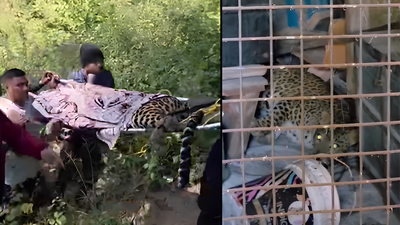
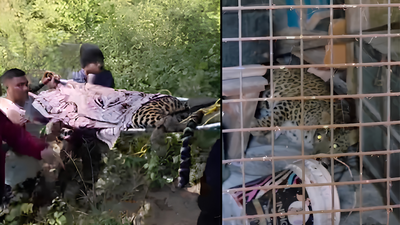
A leopard rescue in Uttarakhand’s Bageshwar district has drawn attention for two reasons: the villagers’ response and the controversy surrounding how the animal was carried after being tranquilised. What began as an emergency involving a wild animal entering a village has now raised questions about safety, rescue equipment and the handling of wildlife.
Leopard enters a village cattle shed
The incident took place in Ganwata, under Thaklad village in Bageshwar district. A leopard entered a livestock enclosure, leaving residents concerned about the potential danger to people and domestic animals.Rather than confronting the big cat, villagers secured the enclosure from outside and alerted the Forest Department. Their decision helped contain the situation while trained personnel were called to manage the rescue.
Forest team tranquilises the animal
Forest Department personnel reached the location and tranquilised the leopard before attempting to remove it. This step helped make the operation more manageable in a populated area.However, capturing a wild animal is only one part of a rescue. Moving it safely, keeping people at a distance and preventing injuries during transport are equally important.
Viral video sparks controversy over carrying method
The rescue drew criticism after footage shared on instagram showed the tranquilised leopard being carried on a makeshift dandi-kandi, a traditional carrying frame used in hilly terrain.According to the account accompanying the video, the animal slipped off the arrangement and fell to the ground among forest personnel and villagers. The footage prompted questions about why a secure cage was not used for transportation.The post also raised concerns about the number of people standing close to the animal. Although the leopard had been sedated, the situation could have become dangerous if it moved unexpectedly.
Why transporting a tranquilised leopard needs care
Sedation does not automatically make a wild animal safe to handle. The level of sedation can change, and the animal may begin recovering during transport. A fall can also cause injuries, even when the animal appears unconscious.A secure, suitable transport enclosure, appropriate restraints and adequate space around the animal can help reduce these risks. The rescue team must also consider the safety of nearby residents and its own personnel.The available reports do not establish whether the leopard suffered injuries during the reported fall. An official explanation of the carrying method and the precautions taken would help clarify what happened.
A rescue must protect people and wildlife
The Bageshwar incident highlights a difficult reality of human-wildlife encounters. Villagers need protection when leopards enter inhabited areas, but the animals also deserve careful handling during rescue operations.The villagers’ decision to call forest officials rather than approach the leopard themselves was sensible. The controversy over its transportation, however, raises a separate question about whether the rescue was conducted with adequate safeguards.A successful rescue should mean more than removing an animal from a dangerous location. It should also minimise the risk of injury to the animal and the people involved.Disclaimer: This article is based on available reports and footage shared on social media. The circumstances surrounding the leopard’s fall, any resulting injuries and the Forest Department’s explanation require independent confirmation.