


With Bethlehem Kudumba Unit (BKU) becoming Malayalam cinema’s biggest blockbuster in terms of footfalls, its success has reinforced something audiences have come to appreciate about Nivin Pauly: his ability to inhabit characters that feel real. From the repeat-viewing appeal of family dramas to experimenting with different genres, the actor reflects on career choices, the evolving Malayalam film market, social media and the speculation of a reunion with Dulquer Salmaan. Excerpts:What does BKU becoming Malayalam cinema’s biggest blockbuster by footfalls mean to you personally?What has been especially beautiful about BKU is the repeat viewing. Someone watches it with friends and returns with their family. Young people are bringing their parents and grandparents. Milestones like this are wonderful, but they will eventually be surpassed. Malayalam cinema is seeing industry hits more frequently, which is a healthy sign. It means the audience is growing, the market is expanding and bigger achievements are possible. I’m sure the next industry hit is already on its way. For me, the real happiness is that BKU became part of that growth.
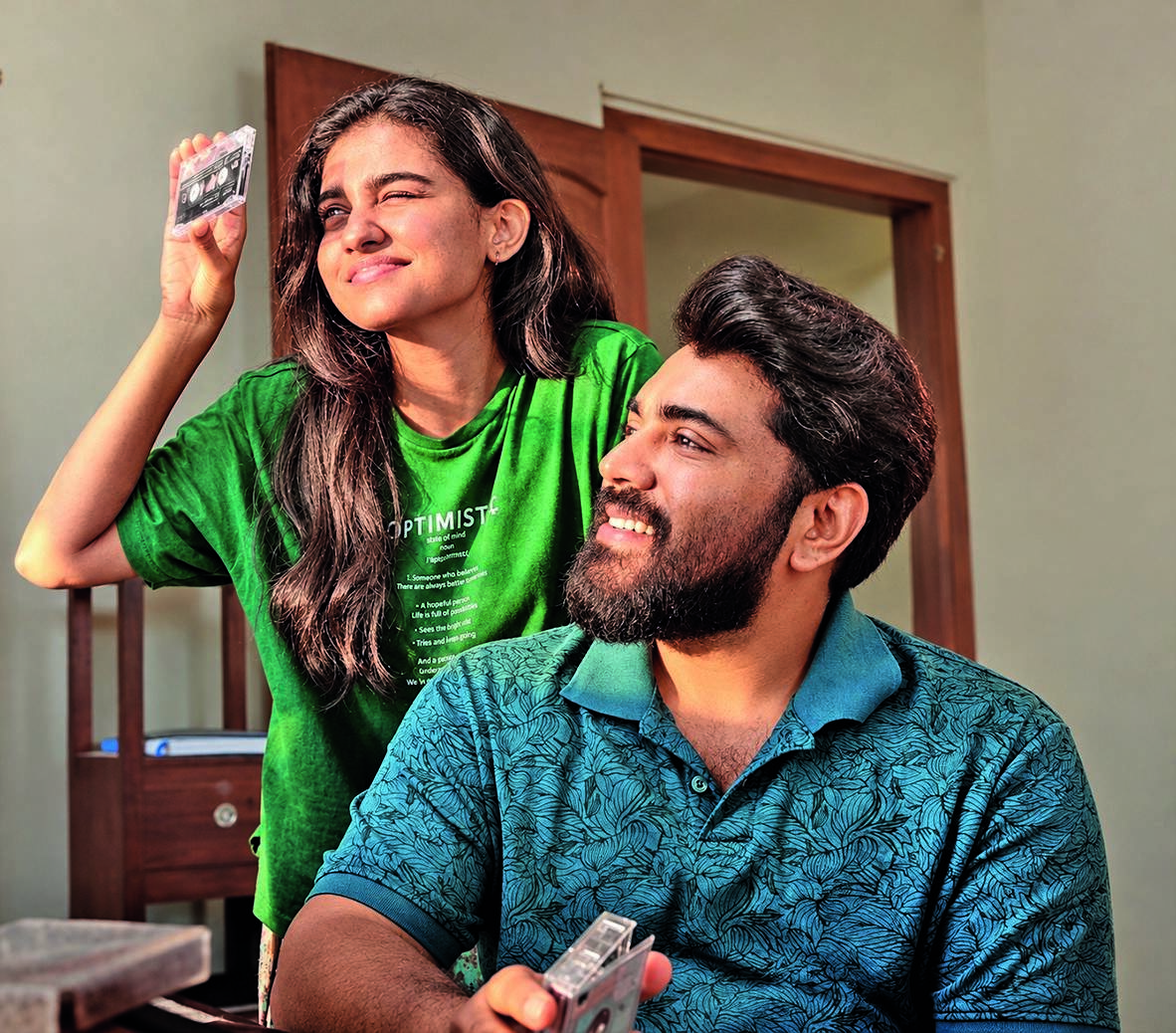
Age-gap romances can be tricky, as even a small misstep can affect how a relationship is perceived. Did you have any reservations about playing Justin?Every relationship needs to be handled with sensitivity, and this one was no different. What I appreciate about Justin is that he never tries to control Ashley or treats love as ownership. Even when things get difficult, he doesn’t try to separate her from her parents or force her to choose between them and him. They aren’t perfect people, and theirs isn’t a perfect relationship. But there is respect, freedom and a genuine choice to be together. That is what makes their relationship beautiful.Is family-oriented cinema a space where you naturally shine, or have the right films, such as Sarvam Maya and BKU, found you?Family audiences are the hardest to connect with, because you’re not speaking to one age group or one kind of viewer. A teenager, a parent and a grandparent can watch the same film for completely different reasons. So when a film connects across generations, I don’t see a ‘family-film space’; I see emotions universal enough to travel. I’ve always been drawn to characters who feel close to life: flawed, funny, vulnerable, sometimes confused. Maybe audiences find it easy to place me in those worlds. But I never choose a film thinking, ‘This will work with families’. I choose it because I believe in the character and the emotional truth of the story. With BKU, Girish created a family that doesn’t feel designed for cinema. They’re messy, affectionate, irritating and real. That excited me.
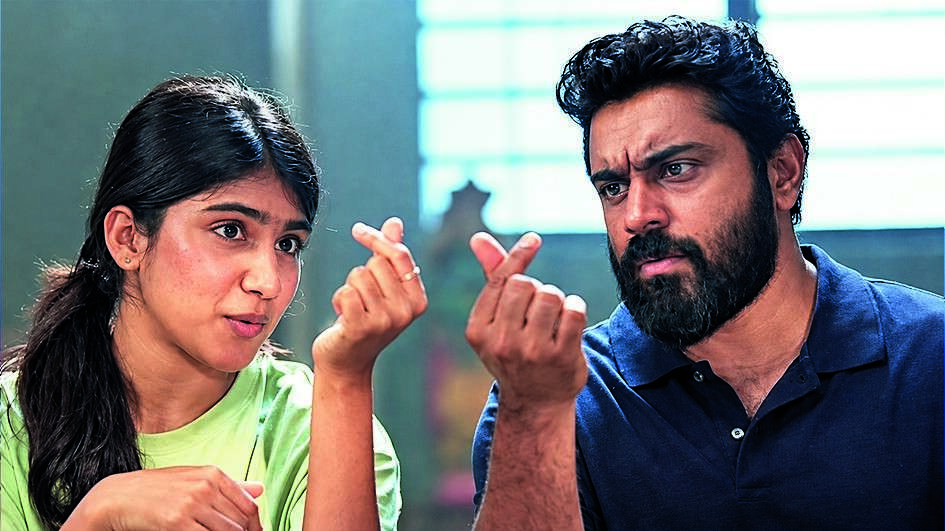
You’ve experimented with different kinds of films, some with mixed results. Has that ever made you hesitant?Instinct has guided me throughout my career, starting with my decision to quit my IT job and pursue cinema. Some of my experiments worked, others didn’t, but both gave me clarity. Failure can make you cautious, but if it makes you afraid, you stop growing as an actor. The lesson was never to stop experimenting, but to understand myself better. Now, the question is how much of what people love about me I can retain while still surprising them.Was there a particular experience or decision in the last few years that changed how you look at your career today?Success tells you what works, while failure forces you to understand your choices, mistakes and strengths. Both are necessary. The most important thing is not to give up during a difficult phase. In cinema, one Friday can change everything. But you can’t simply wait for that Friday to arrive. You have to keep working, preparing and improving so you’re ready when it does.You’ve always had an easy connection with humour and everyday characters. Has comedy become more instinctive with experience?A lot of the best humour comes from behaviour… a hesitation, a reaction, an awkward silence or just the way one person looks at another. I really enjoy that kind of comedy, and I genuinely enjoy the process of shooting those scenes. I usually feel very relaxed going into a comedy sequence. A big part of that also comes from my co-actors. Sometimes I enjoy their performances so much that I find it difficult to stop laughing during a take. So, yes, maybe comedy has become more instinctive with experience, but for me, the most important thing is still enjoying the moment and reacting honestly to the people around me.Does making people laugh require a different approach in a family entertainer, or is comedy better when you don’t consciously try to be funny?I prefer not trying too hard to be funny. If the character knows he is delivering a joke, sometimes the humour disappears. But if the character is completely serious and the situation becomes funny for the audience, that is much more enjoyable for me. In a family entertainer especially, humour has to travel across generations. A teenager, a parent and a grandparent may laugh at completely different things in the same scene. So, rather than designing every moment as a punchline, I think it is better to make the situation truthful. Humour usually finds its own way out of that.How do you build chemistry with your co-stars? Your on-screen partnership with Aju Varghese seems to have that chemistry, too…We don’t have to try to create chemistry or build a bond with our co-stars. It happens naturally. We just need to be ourselves. With Aju, it is nice because we are such close friends, and we are close even as families. Even if we don’t have a lot of friends, having a few good friends is still great.Your Tamil projects are at very different ends of the spectrum — an arthouse film like Yezhu Kadal Yezhu Malai and a mass entertainer like Benz. Is that contrast something you consciously look for outside Malayalam cinema?With Ram sir and Yezhu Kadal Yezhu Malai, I entered a completely different cinematic world. The rhythm, philosophy and approach to a character were very different from those in the films I normally do. Benz gives me a completely different kind of energy and scale. I didn’t want to approach the character thinking, ‘Now I have to behave like a villain.’ That can become very external. The more interesting question for me was: why does this man believe he is justified in what he is doing? Most people don’t wake up thinking they are the villain in somebody else’s story. They have their own logic, ego, wounds and ambitions. Finding that internal logic was much more interesting to me than simply trying to look threatening. I enjoy that contrast.How active are you on social media? Do you follow conversations about your films and performances, and do they affect you?Social media is a great way to gauge how people respond to your work. Audiences show their love through messages, edits and posts, and also offer constructive criticism. But it’s not healthy to form an opinion based entirely on social media. Algorithms can keep showing us a particular pattern that may not reflect the wider audience. Personal messages can be more useful because when someone takes the time to explain what moved them or didn’t work, you get a more honest sense of how your work is reaching people.Some Malayalam actors have built a presence across multiple Indian film industries. Do you have similar pan-India ambitions?I’m definitely open to working in different languages. Today, good films can travel far beyond the language in which they are made. For me, what matters most is finding the right character, filmmaker and story.With the OTT boom expanding Malayalam cinema’s reach, do you think the talk of a bigger market is justified?It’s something to be proud of when people speak well of Malayalam cinema. More writers and directors can help us grow further, both in content and commercial success. We also need big films that gross ₹700 crore or ₹1,000 crore, but they must be content-driven. That’s what audiences expect, too. Earlier, even ₹100 crore was a rare milestone. We’ve come a long way, with films grossing ₹300 crore in the last two Onam seasons. Now, the industry is also more connected with distributors outside Kerala. Not every film will work in every region, so we need to understand its core audience and position it accordingly. If a film has potential in a particular market, we should be ready to push it. We did that with BKU and Sarvam Maya. Manjummel Boys, Aavesham and Premalu have also travelled well. It needs strategic planning and a team ready to act when an opportunity arises.We hear your name connected to several projects. What do you have lined up?Dear Students is awaiting release. Multiverse Manmadhan is in the rewriting phase. The same goes for the film with Alphonse Puthren (Premam). Everyone is taking their time to make the scripts better, so I agreed that we should take our time and make decisions as we go. I also have a project with Nashid Famy, the writer of Jaya Jaya Jaya Jaya Hey. It is a fun entertainer, and that is progressing in parallel. I haven’t decided what I will do next after that.
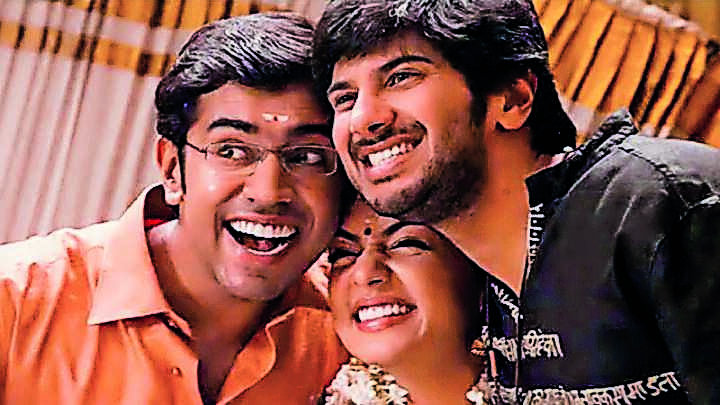
On reuniting with Dulquer Salmaan…In Bangalore Days, Dulquer and I played cousins. When we met at an award function after a long gap, his warmth immediately brought back that cousin-like bond. Later, Dulquer distributed my film with Ram sir, Yezhu Kadal Yezhu Malai, in Kerala, and people began speculating about a reunion. We’d both be excited to work together again; it’s about finding the right project. Given the affection and expectations surrounding our reunion, we’d want the film to live up to that excitement.