
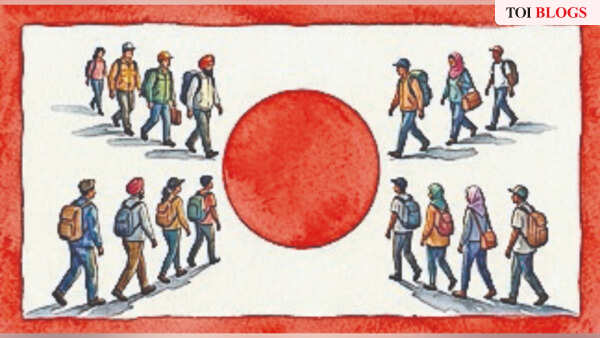
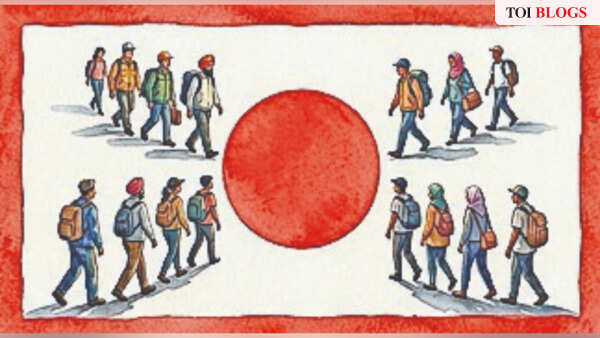
Japan has more people aged over 95 than babies born within the past 12 months. It uses far more adult diapers than baby diapers. Its population has been declining since 2009, and it’s feeling short of hands for a variety of jobs, ranging from construction to agriculture. In fact, its offices have a unique class of older employees, called madogiwazoku – window gazers – who are retained not for their productivity but psychological safety. So, it’s not surprising that, despite its famously anti-immigration mood, Japan is hiring foreign workers in large numbers.Latest data puts the number of foreigners with specified skilled worker status in Japan at 4.4L, a record. Several lakh more are likely to be accepted over the next two years. But even this can’t bridge the labour gap that an ageing population has opened up. A survey last year found that 68% of Japanese firms had hired foreigners because they couldn’t find native Japanese to do the job. Shortages are acute in healthcare and manufacturing. Even IT is likely to need 8L hands by 2030.These are roles that Indian workers could fill, yet they form a small minority of Japan’s foreign workforce. Vietnamese, Indonesians and Myanmarese are present in strength, even Nepalese, although Japanese language is a hurdle for all. That’s not a missed opportunity, though. The next 45 years, when Japan’s foreigner population could touch 11%, up from 2% in 2020, are a window Indian blue- and white-collar workers can aim for. Given the warm ties between India and Japan, GOI can play enabler. Japan has a plan to use millions of AI-powered robots to tide over its looming demographic crisis, but it’s also a conservative society where only 8.4% of people – per OECD – use AI at work, as against 50% of Americans. Japan probably will want the human touch, which means more immigrants.
Disclaimer: Views expressed above are the author’s own.