
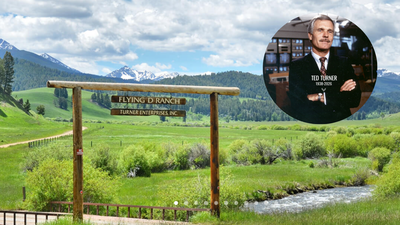
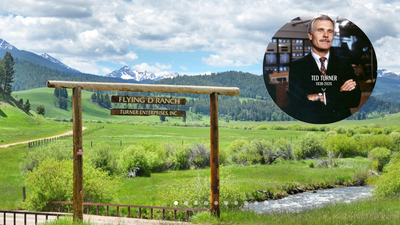
South of Bozeman, Montana, a vast stretch of land runs from forested slopes and open meadows to high benches overlooking the surrounding country. The Flying D Ranch, a 113,613-acre property that became closely associated with Ted Turner after he bought it in 1989. Once managed as a cattle ranch, the property was reshaped around bison, native wildlife and the protection of large areas of habitat. Today, mule deer, elk, moose, pronghorn, black bears, mountain lions, wolves and badgers are among the animals found across the ranch. Its rivers and streams also support trout fisheries, while bald and golden eagles are regularly seen over the property.
Turner bought Montana’s Flying D in 1989
Turner’s connection with the Flying D began in 1989, when the media entrepreneur acquired the property south of Bozeman. The ranch covered roughly 113,600 acres and stretched across several distinct landscapes, rather than forming one uniform expanse of Montana countryside, according to Montana Free Press (MTFP). The southern end rises into steeper, forested terrain. Further north, the land opens into rolling meadows before reaching higher bench country. That variation created room for different habitats and helped make the ranch suitable for a broad range of wildlife.For Turner, the property became more than a place to raise animals. It formed part of a much larger approach to land ownership in which working ranches were managed alongside conservation goals.
The Flying D became a major home for Turner’s bison herd
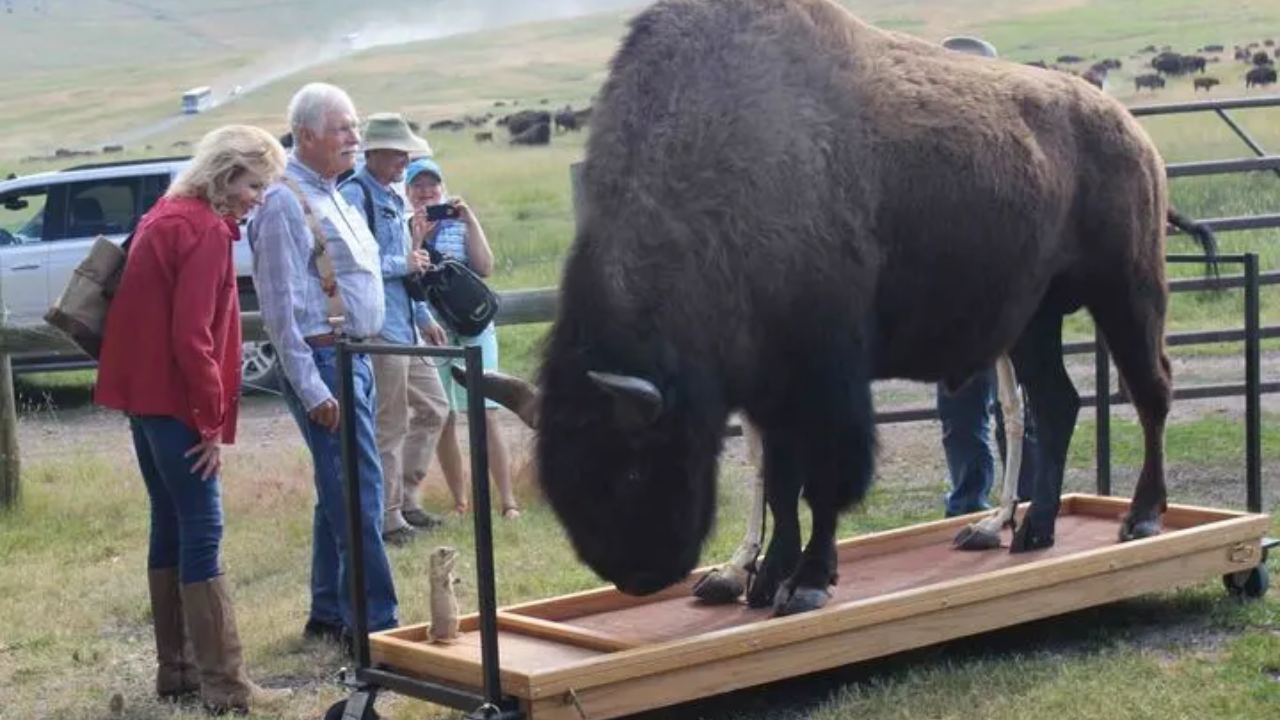
Bison are at the centre of the ranch’s identity. Turner maintained a large herd on the Flying D, using the property as a setting for his efforts to restore a species that had once been reduced to a fraction of its former numbers. The ranch was also managed for wildlife rather than being treated simply as a private estate. Its combination of grassland, woodland, streams and higher ground provided habitat for species that require very different conditions.Turner’s interest in bison extended beyond the Flying D itself. As reported by MTFP, in July 2017, he hosted visitors attending the International Bison Conference at the ranch, where he examined a bison carcass that had been prepared to show the animal’s anatomy.That moment offered a glimpse of the hands-on interest he brought to conservation. Holly Pippel, who moved to Gallatin County from Georgia in 1995 to work as an equine manager for Turner, later recalled spending long periods with him on horseback discussing wildlife, habitat and species under pressure.
PC: MTFP
The Flying D provides habitat for wolves, bears, elk and mountain lions
The Flying D supports established populations of several large mammals. Rocky Mountain elk move through the property alongside mule deer and white-tailed deer, while Shiras moose occupy suitable habitat in the more wooded parts of the ranch, as reported by Turner Enterprises.Rocky Mountain gray wolves are also among the species recorded there. Black bears, mountain lions, pronghorn antelope and badgers add to the list, giving the property an unusually broad mix of native wildlife.The landscape changes considerably from one end of the ranch to the other, and that matters for animals. Forests provide cover and feeding areas, while open meadows and rolling country offer different conditions for grazing species such as bison, elk and pronghorn.Birdlife is part of the picture too. Golden and bald eagles are seen across the ranch during much of the year, particularly around the open country and waterways.
Rivers and streams add another layer of habitat
The Flying D is not defined solely by its terrestrial wildlife. Rivers and streams run through the property, supporting trout fisheries and adding aquatic habitat to the ranch’s mixture of forests, grasslands and uplands.Those waterways have also formed part of Turner’s wider interest in conservation. Scott Bosse, Northern Rockies Regional Director for American Rivers, said Turner supported work to protect Montana’s rivers through his foundation.The ranch itself has continued to function as a working property. Alongside wildlife management and bison production, it has offered hunting opportunities through the Montana Hunting Company, according to Turner Enterprises. That combination of private land management, agriculture, hunting and conservation reflects the way Turner approached many of his Western properties.
How Turner used vast private ranches to preserve Montana’s open landscapes
The Flying D was only one piece of Turner’s land interests. Over his lifetime, he assembled conservation-oriented properties covering about 2 million acres across the western and midwestern United States. His Montana holdings eventually extended to roughly 130,000 acres across several ranches. The scale made him one of the state’s most prominent private landowners and put his approach to conservation under close attention.Turner was also an early supporter of conservation easements, which can protect land from future development while allowing ownership to remain private. That became an important part of his land-preservation legacy in Montana.
Conservation became part of Turner’s wider philanthropy
Turner’s environmental work extended well beyond ranches and wildlife. MTFP reported that he directed large amounts of his wealth towards humanitarian and conservation causes, including a $1 billion donation to the United Nations in 1997. The donation was intended to support several areas of international work, including assistance for refugees and children, landmine clearance and efforts to combat disease.His environmental philosophy was also fairly direct. In a 2017 interview with Mountain Outlaw, Turner rejected the idea that economic activity and environmental protection had to be treated as opposing goals. For Turner, land ownership provided a way to put that belief into practice. The Flying D was one of the places where the idea became visible, through bison herds, wildlife habitat and restrictions on future development.
The man behind the land
Turner’s reputation was never limited to conservation. He became a major figure in American media after founding CNN and built interests in sports, sailing and entertainment. At 38, he won the America’s Cup, an achievement he later described as one of the high points of his life. He also owned the Atlanta Braves and Atlanta Hawks and became known for a personality that could be as conspicuous as his business ambitions.His private life attracted considerable attention as well. He was married three times, with his final marriage being to actor Jane Fonda. The marriage ended in 2001. Yet people who spent time with Turner in Montana often described a different side of him. Environmental writer Todd Wilkinson, who co-wrote Last Stand: Ted Turner’s Quest to Save a Troubled Planet, recalled early-morning walks and conversations with Turner about conservation and the problems facing the natural world.
A conservation legacy that remains on the land
Turner died on May 6, 2026, at the age of 87 in Lamont, Florida, surrounded by his family. By then, the Flying D had been associated with him for nearly four decades. The property remains a working ranch rather than a conventional wildlife reserve. Bison continue to form part of its operations, while the varied terrain supports the deer, elk, wolves, bears, moose, pronghorn and other species that have made the ranch significant as a wildlife landscape.Its future also sits within the broader legacy Turner left across Montana. Conservation easements on his properties will continue to limit development in protected areas, while the ranches themselves remain privately held landscapes.