
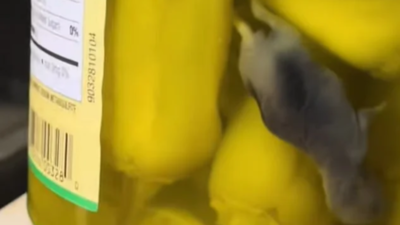
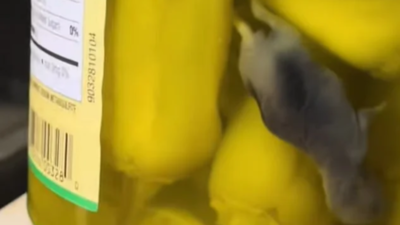
The jar was supposed to contain pickled peppers. Instead, a woman filming her kitchen found something that made her stop mid-meal: what appeared to be a dead baby mouse floating inside the jar.In a TikTok video posted on September 16, the woman, identified online as Tiffany, showed the jar and warned others not to buy the product. The video quickly spread online, turning an ordinary pantry ingredient into a food-safety scare.And the disturbing part was not limited to the video.The brand, Mezzetta, later announced a voluntary recall of a specific batch of its Golden Greek Peperoncini Medium Heat, 32-ounce jars, saying the product could contain “foreign objects such as pest contamination,” the CBS News reported. The recall followed the social-media video and the company’s contact with the consumer. The recalled product is identified as SKU 10106328, lot 720106. Mezzetta said it was working with retailers and customers to isolate and remove the affected product while its investigation continued. So far, the company has reported no illnesses or injuries connected with the recalled peppers.The incident also shows how quickly an unsettling discovery inside a single food jar can become a much bigger consumer-safety issue.The woman said she had already licked her fingers while preparing the meal before noticing what appeared to be the rodent.What makes the incident even more unsettling is how easily the jar could have gone unnoticed. Pickled vegetables are usually sealed, stored for weeks or months and treated as an easy addition to sandwiches, salads and cooked meals. Most people would never think to inspect them closely before eating.For the woman who found the suspected mouse, the discovery came only after she had opened the jar and begun cooking. The episode has since raised questions online about how a foreign object could have entered a commercially packaged food product in the first place. The company said its investigation was continuing as the recalled batch was being removed from stores.For consumers, the immediate lesson is fairly simple: when a packaged food is recalled, don’t taste it, don’t use it and don’t assume that washing or removing the visible contaminant makes it safe. Check the product name and lot number against the recall notice and follow the manufacturer’s instructions.What began with one TikTok video has now become a formal recall and investigation, a reminder that sometimes the strangest food-safety stories begin with something sitting quietly at the back of an ordinary kitchen cupboard.