
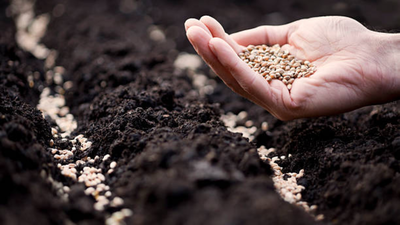
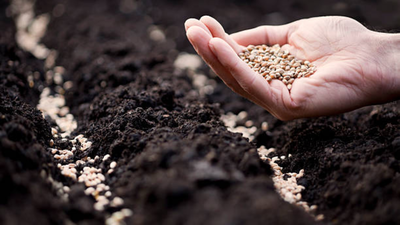
For Honest Raja, the road from engineering to farming was not exactly a career move most people would make. After working as a robotics engineering teacher in Mumbai, he left his job in 2022 and returned to his village in Tamil Nadu. What followed was a journey across nearly 60,000 km in search of something many people might walk past without noticing, old native seeds.Today, Raja grows around 300 varieties of native vegetables, flowers and trees on his family’s two-acre farm in Nagampatti village, Krishnagiri district. His collection includes different kinds of brinjal, tomato, bottle gourd, chilli and beans.
He left Mumbai and returned to his village
Raja completed mechanical engineering from Mahendra College of Engineering in Salem in 2018. After graduating, he worked in Hosur and later moved to Mumbai. But living away from his family eventually made him rethink what he wanted to do.“I did not enjoy being away from my family,” Raja told 30Stades. He resigned in 2022 and returned to his village to pursue organic farming.His family already had two acres of farmland. His father had been growing flowers, and Raja could have simply continued with the existing farming setup. Instead, he became interested in something much more specific: finding and preserving traditional seed varieties.He says he started saving seeds in 2020 after becoming interested in native varieties and learning about people who were already collecting them. For him, the seeds were not just another crop input. They were varieties that needed to remain in cultivation.
Then came the 60,000-km journey
Raja began travelling with other seed collectors, visiting farmers, tribal communities, gardeners and seed savers in different parts of India. According to his account to 30Stades, his travels eventually covered nearly 60,000 km, including parts of Tamil Nadu, Odisha, Nepal, Bihar and Uttar Pradesh.He brought the seeds he collected back to his farm and started growing them there.His collection is surprisingly varied. He has 16 varieties of brinjal and 12 varieties of tomato, while bottle gourd alone accounts for around 60 varieties. His collection also includes six types of chilli from Tamil Nadu and four kinds of beans.Some are visually very different from the vegetables people usually see in supermarkets. His traditional tomatoes include Naatu Thakkali, as well as yellow and black or purple heirloom varieties. His bottle gourds can be long and slender, short and round, striped or unusually curved.And each variety has its own history, Raja says.
His farm has become a living seed bank
The two-acre farm is now doing more than producing vegetables.Raja grows the plants, collects their seeds and plants them again. That means the varieties remain alive through repeated cultivation instead of sitting unused in storage.The farm already had 77 coconut trees planted by his grandfather, and Raja uses the available space between them to grow vegetables, greens and native varieties. He uses cow dung, leaf waste and fish waste as farm inputs instead of chemical fertilisers, according to 30Stades.There is also a practical side to all this. Raja sells vegetables through an organic market once a week, while the seeds are sold or shared with people who want to grow the varieties themselves.A packet of around 15 to 20 seeds can cost about ₹30, although prices vary depending on the variety, 30Stades reported.
He doesn’t always sell the seeds
Perhaps the most interesting part of Raja’s work is what happens after the seeds leave his farm.He has distributed seeds to around 300 farmers, particularly through natural and organic farming networks in Tamil Nadu. Some farmers receive the seeds for free and return seeds to him after growing the crop.Raja described it as a kind of seed cycle. If he gives a farmer one kilogram of seed, the farmer may return three kilograms the following year. That allows the collection to keep growing while putting the same traditional varieties into other farms.So the seeds don’t remain limited to his two acres.They travel.
Why he believes native seeds matter
Raja told 30Stades that he looks for varieties that can offer traits such as lower water needs, pest resistance and distinctive flavours. These are his observations about the varieties he grows, rather than a claim that every native seed will perform better in every farming condition.His larger concern is simple: varieties that are no longer grown can become difficult to find.That is why he keeps propagating them, sharing them with farmers and encouraging others to grow them. The vegetables provide an income, but the seeds give the work a longer purpose.According to 30Stades, Raja’s farming, seed multiplication and vegetable and seed sales together generate around ₹50,000 a month.For someone who once worked in Mumbai and trained in mechanical engineering, it is an unexpected second career. But Raja isn’t simply growing vegetables. He is trying to keep hundreds of old varieties in the ground — one crop, one farmer and one packet of seeds at a time.