
Far below the reach of daylight, the ocean follows rules that seem almost impossible from the surface. There are no plants, no sunlight to power photosynthesis and, in many places, barely any oxygen. Yet the deep sea is far from empty. It supports animals that have evolved entirely different ways of finding food, surviving crushing pressure and making a living in permanent darkness. Some rely on chemicals leaking naturally from the Earth’s crust, while others depend on tiny fragments of organic matter that drift down from the waters above like an endless, slow snowfall. Together, these creatures show that sunlight is only one way to sustain life. The deep ocean has quietly developed another.According to WorldAtlas, check the list of the Ocean Creatures That Can Live Without Sunlight
Deep-sea creatures that can live without sunlight
1. Giant tube worms
PC: worldatlas
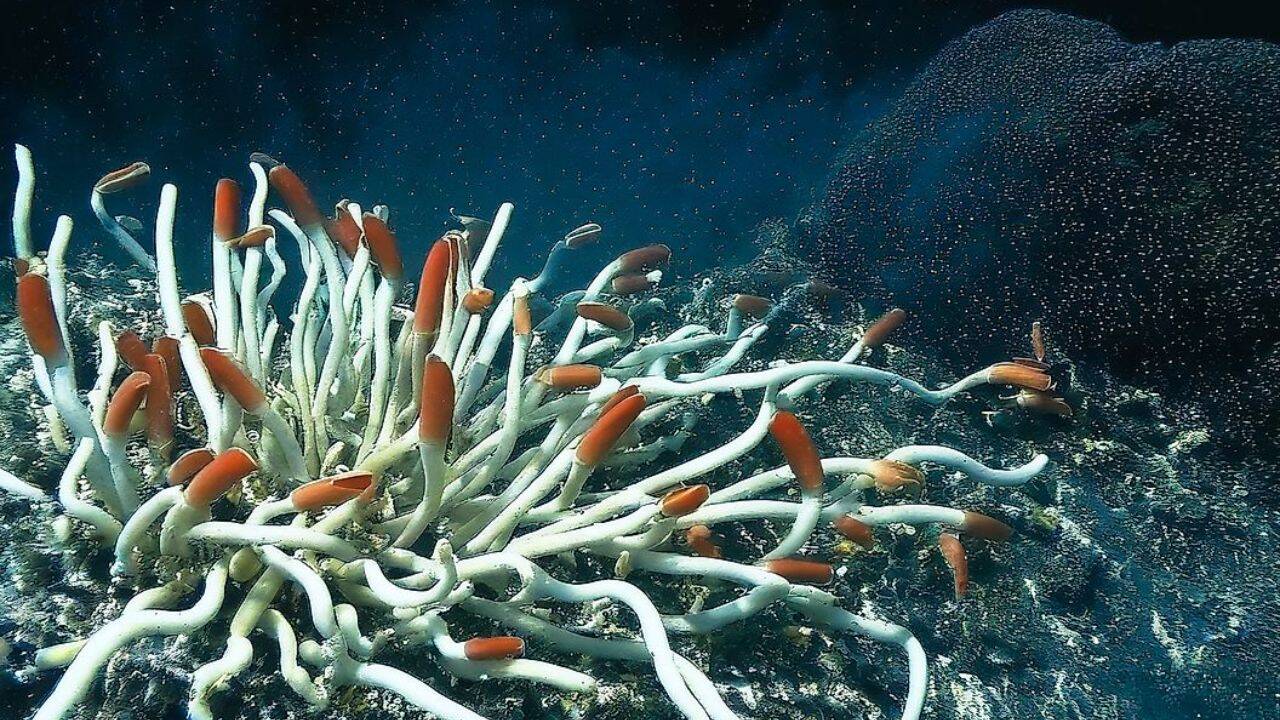
Giant tube worms are among the most recognisable animals living around hydrothermal vents. Dense groups of their pale tubes can cover the seabed, each crowned with a vivid red plume that absorbs oxygen and chemicals from the surrounding water. Although they resemble plants from a distance, they are animals with an unusual way of feeding.Unlike most animals, a giant tube worm never eats through a mouth because it does not have one. Instead, its body houses enormous populations of bacteria that convert hydrogen sulfide and other vent chemicals into nutrients. The worm supplies these microbes with everything they need, and in return receives the food they produce. Entire colonies thrive because of this partnership, drawing energy from chemicals rising out of the Earth’s interior rather than from sunlight.2. Deep-sea mussels
PC: worldatlas
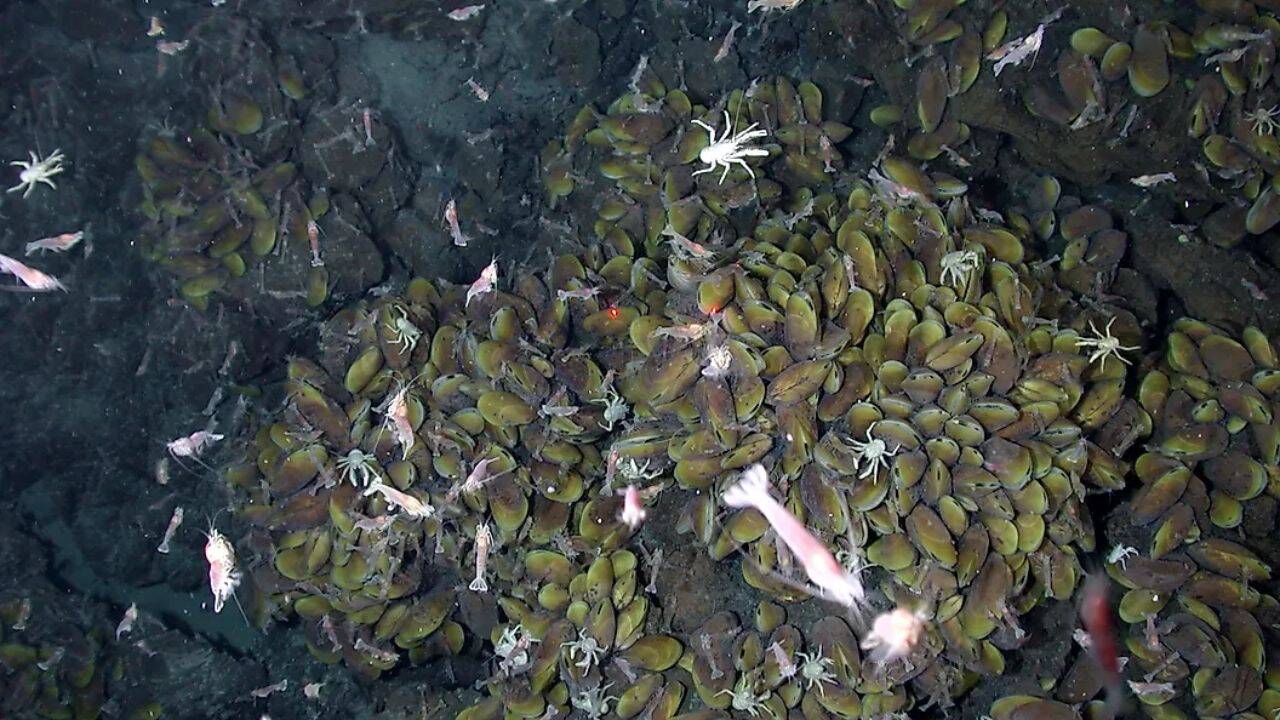
Not every chemically powered ecosystem forms around hot water. Cold seeps, where methane and sulphide slowly escape through the seabed, also support surprisingly rich communities. Deep-sea mussels gather in large beds across these seep sites, sometimes covering broad stretches of muddy seafloor.Their feeding strategy mirrors that of the tube worms. Special bacteria living inside their gills process the seep chemicals into usable nutrients, allowing the mussels to survive without filtering plankton from the water. Over time, these shellfish create habitats that attract many other deep-sea residents, including worms, snails, crabs and small fish that shelter among the crowded shells.3. Hydrothermal vent shrimp
PC: worldatlas
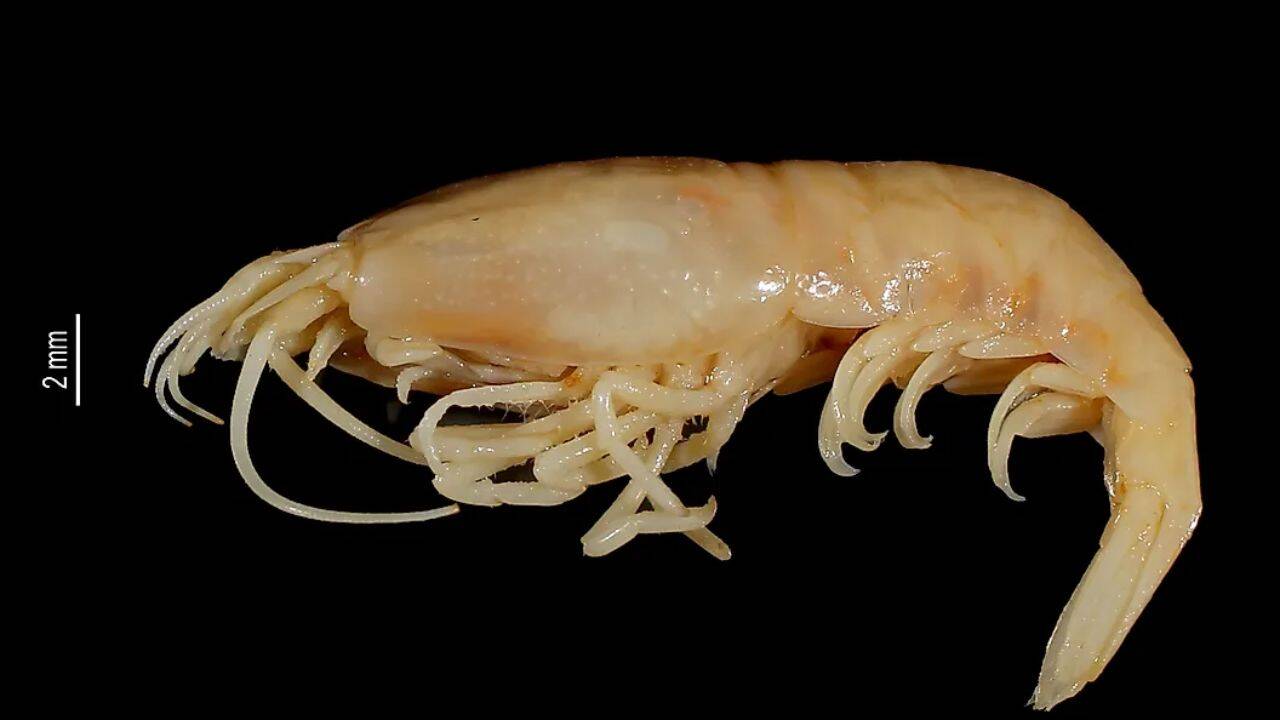
Certain hydrothermal vents are so densely packed with shrimp that the seafloor appears to shimmer with movement. Thousands of individuals cluster together at the edges of vent openings, where temperatures can change dramatically over very short distances.Rather than feeding on larger prey, these shrimp depend on bacteria growing across nearby rocks and, in some species, directly on their own bodies. Living so close to superheated water is risky, yet it also provides the richest bacterial growth. Several vent shrimp have reduced conventional eyesight because ordinary vision has little value in complete darkness. Instead, specialised light-sensitive organs appear to help them detect the faint glow associated with the hottest vent fluids, allowing them to remain close to food without venturing into lethal temperatures.4. Yeti crabs
Pc: worldatlas
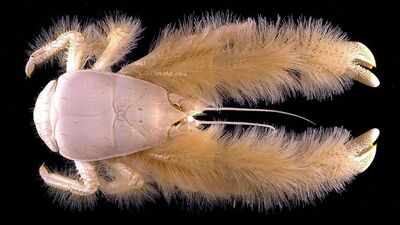
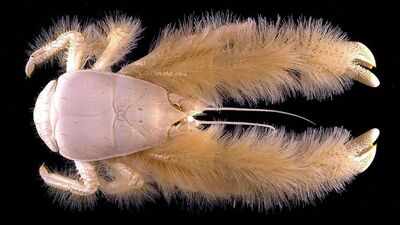
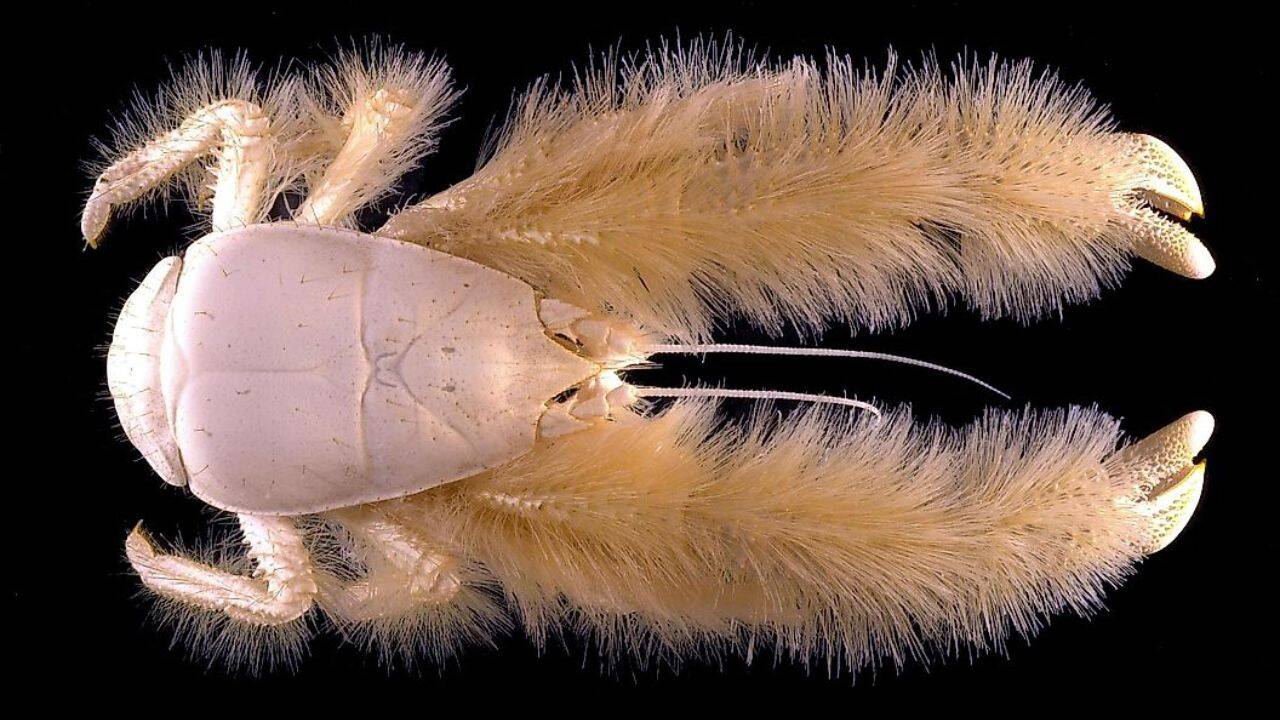
When scientists first discovered the yeti crab, its unusually hairy claws immediately stood out. Those thick bristles are not simply decorative. They provide a surface where dense layers of bacteria can grow.The crab actively maintains these bacterial gardens by repeatedly moving its claws through chemical-rich water. Fresh supplies of sulphide help sustain the microbes, which are later scraped off and eaten. It is an unusual farming system, carried out entirely underwater and powered by natural seep gases rather than sunlight or vegetation.5. Pompeii worms
Pc: worldatlas
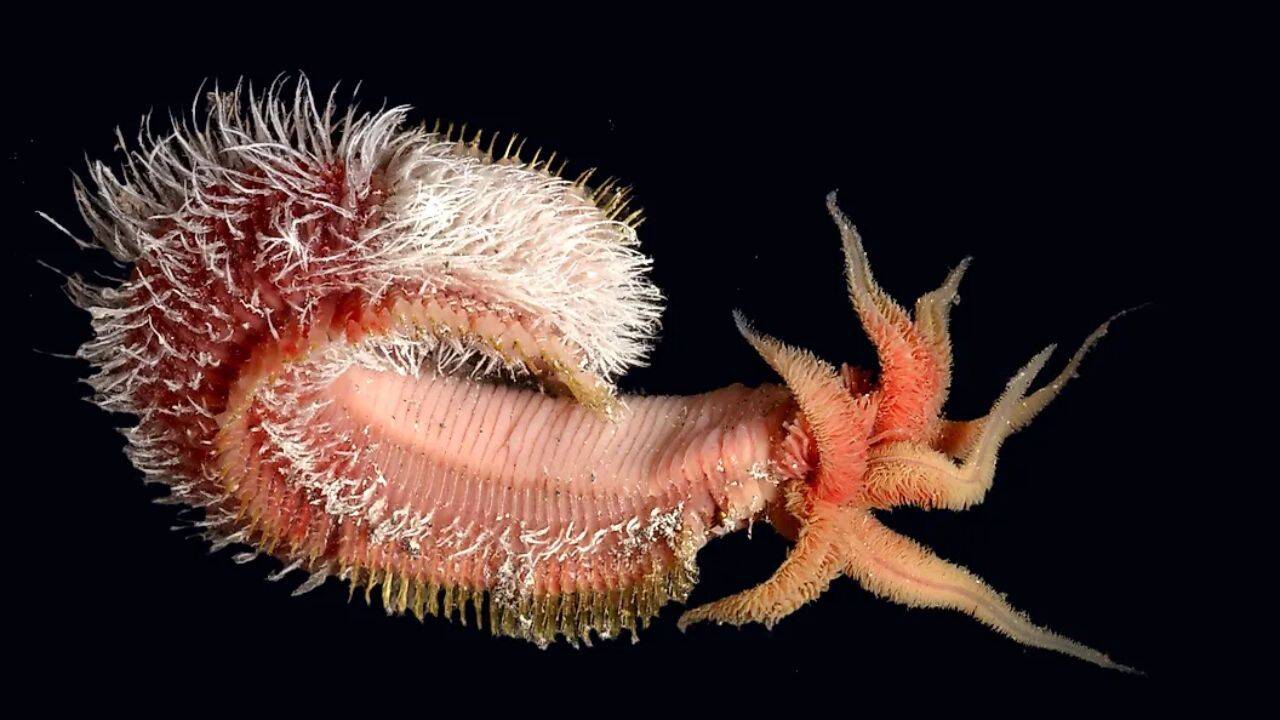
Few animals tolerate extreme heat as well as the Pompeii worm. It builds protective tubes directly onto active hydrothermal vent chimneys, placing part of its body in water far hotter than most marine life could survive while keeping its head in cooler surrounding water.The vent fluids themselves can reach extraordinary temperatures because immense pressure prevents them from boiling. The worm avoids direct contact with the hottest water by living along the narrow boundary where extreme heat meets colder seawater. Dense bacterial growth covering its back is thought to provide additional protection while also serving as another food source within this unusual partnership.6. Vampire squid
Pc: worldatlas
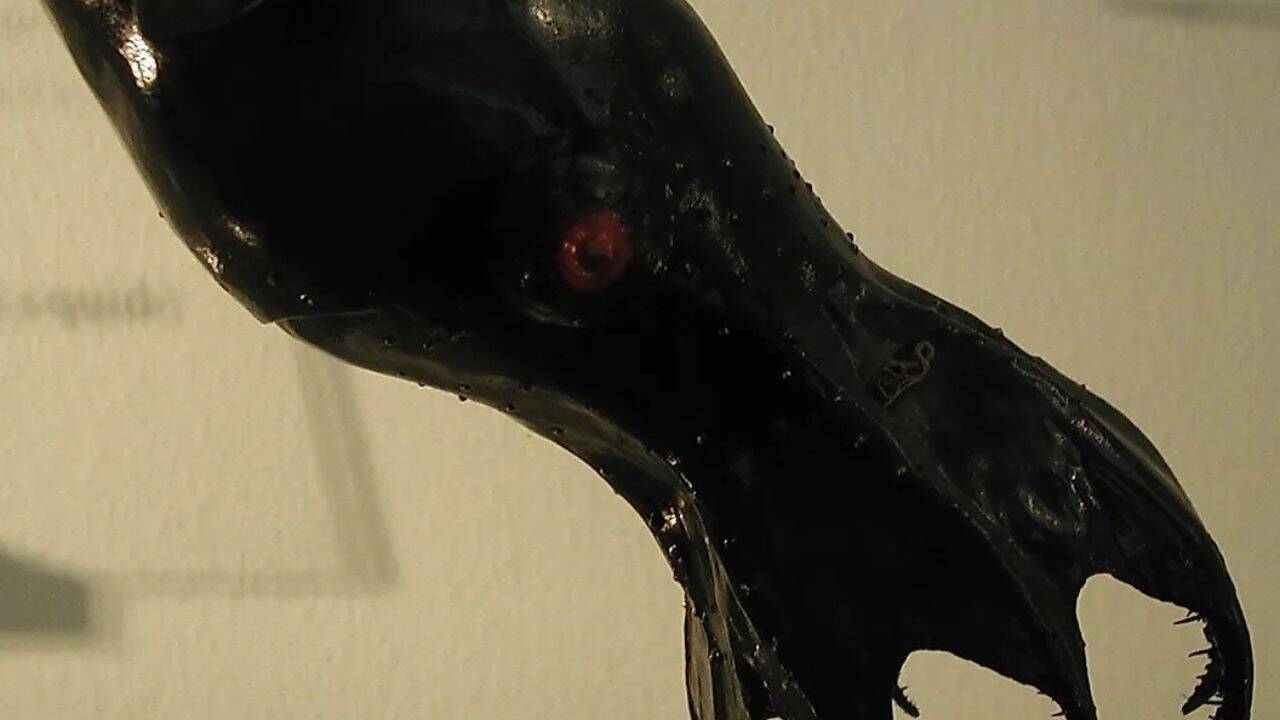
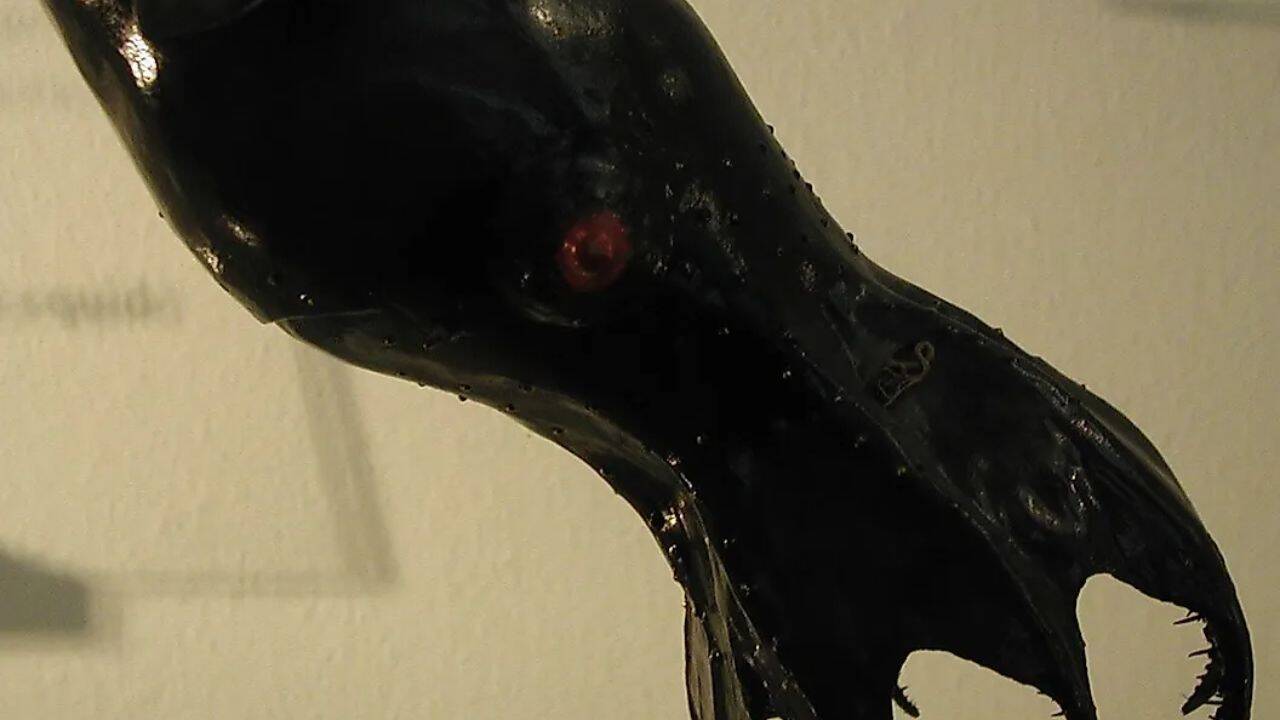
Despite its dramatic name and dark colouring, the vampire squid is not an aggressive predator. It occupies deep regions of the ocean where oxygen levels are extremely low, leaving relatively few competitors able to survive alongside it.Instead of chasing prey through the darkness, it waits. Two long sticky filaments collect particles drifting down from surface waters, including dead plankton, microscopic debris and organic waste collectively known as marine snow. These particles are rolled into edible bundles before being consumed. Combined with one of the slowest metabolic rates known for an animal of its size, this patient feeding strategy allows the vampire squid to survive where food is scarce.7. Mariana snailfish
Pc: worldatlas
The Mariana snailfish represents the deepest fish ever observed in its natural environment. Living close to the floor of the Mariana Trench, it spends its life beneath immense pressure that would destroy most shallow-water species.Its soft, delicate body is adapted to these extreme conditions rather than speed or strength. Food comes mainly from small crustaceans scavenging across the trench floor. Although the snailfish occupies the top of this local food chain, the energy supporting its existence still begins much higher in the ocean, carried downward through sinking organic material.8. Hadal amphipods
Pc: worldatlas
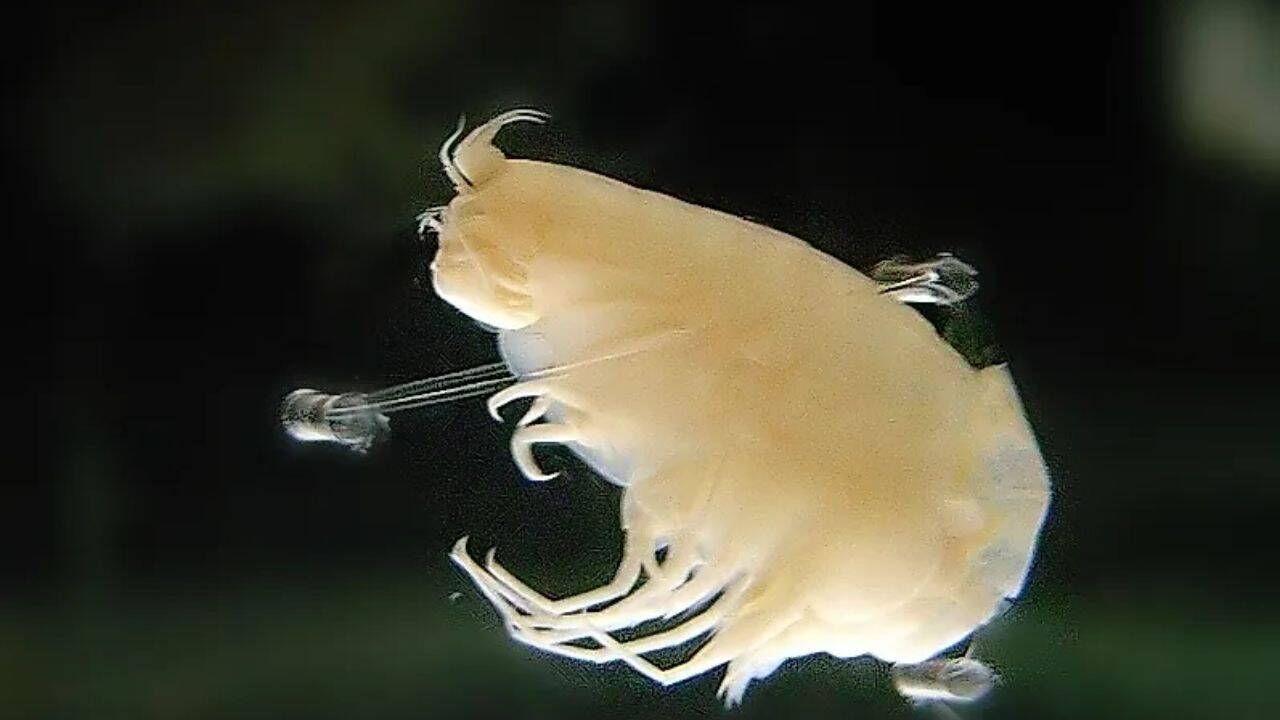
Among the most numerous animals in the deepest trenches are hadal amphipods, small crustaceans resembling shrimp. They patrol the seabed thousands of metres below the surface, searching constantly for anything edible that eventually reaches the ocean floor.Food arrives unpredictably. A dead fish, fragments of wood or other organic remains may be the only substantial meal available for long periods, so amphipods feed rapidly whenever an opportunity appears. Some species grow much larger than their shallow-water relatives, an adaptation often linked with the demanding conditions of trench ecosystems. By breaking down whatever reaches these depths, they help recycle nutrients and support many other deep-sea animals.