
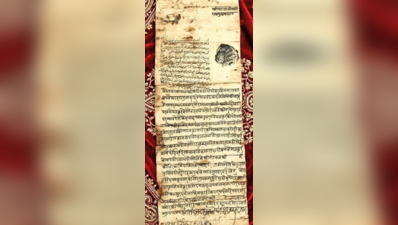
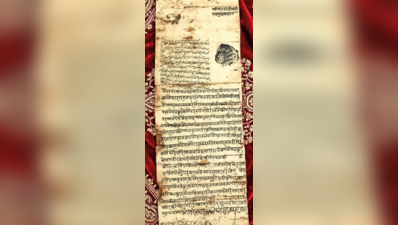
Bhopal: The Marathas won Bundelkhand from Mughals with the sword. But a 280-year-old letter found in Madhya Pradesh’s Datia reveals what happened after the battlefield fell silent — and places one of their most formidable commanders, Pandit Naro Shankar, at the heart of the business of turning conquest into rule.Carrying the royal seal and signature of Peshwa Balaji Bajirao (Nanasaheb), the fragile document records arrangements for Karera and adjoining parganas of Akbarabad and Damaron, naming jagirdars and zamindars and detailing nazarana and other dues.The discovery was made by archaeologist and Gyan Bharatam Mission nodal officer Wasim Khan during a recent survey in Datia ordered by directorate of archaeology, archives and museums commissioner Madan Kumar Nagargoje. It was found in the private collection of Itrat Zaidi, a descendant of Karera’s mansabdar Syed Asgar Ali Khan.Its most revealing detail is a name: ‘Pandit Naro Shankar’.“The letter, issued in Balaji Bajirao’s name clearly empowers Naro Shankar to collect taxes, records arrangements concerning Karera and adjoining parganas, naming jagirdars and zamindars and detailing nazarana and other dues. That makes the document extraordinary: it captures the machinery of power being put in place after conquest — who held land, who owed money and how the new authority was being enforced,” Khan said.Naro Shankar was no desk-bound official. He rode with Bajirao I into Bundelkhand in 1729 when the Peshwa answered Raja Chhatrasal’s call against Mughal commander Muhammad Khan Bangash. Later, he became a key Maratha figure in the region. Historical records place his 1748 campaign in Bundelkhand and note that Karera passed into Maratha hands soon after.“The significance is that documentary evidence connected with Naro Shankar’s campaigns in Bundelkhand has been extremely rare. This is historically and archaeologically very important,” said archaeologist Ramesh Yadav.Although the paper on which the letter was written has weakened over nearly three centuries, its ink remains remarkably clear, said Nilesh Lokhande, deputy director, archives. It will now be conserved.For centuries, Maratha expansion has been told through battles and forts. This fragile sheet captures something rarer — the moment victory became land, revenue and rule.