
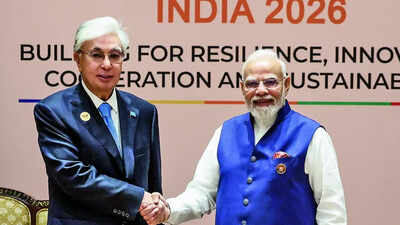
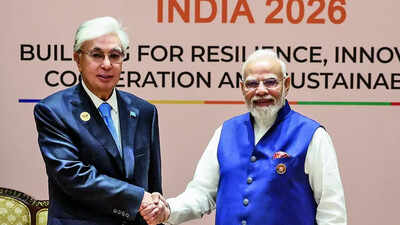
New Delhi: PM Narendra Modi held 15 formal bilateral meetings with heads of govt and state on the margins of Brics summit over three days, apart from pull-aside meetings with leaders of global institutions. On the closing day, Modi met leaders from Kazakhstan, South Africa, Philippines, Nigeria, Uganda and Burundi, the current chair of the African Union.In the meeting with Kazakhstan President Kassym-Jomart Tokayev, the leaders reviewed bilateral cooperation in fields including trade, defence and security, connectivity, energy, critical minerals, emerging tech, creative economy and people-to-people ties.In his meeting with Philippines President Ferdinand Marcos, Modi agreed to further deepen and expand collaboration in defence and security, trade and investment, space, railway infrastructure, fintech, education, tourism, science and technology, innovation and people-to-people ties.“Both leaders agreed to advance relations under the aegis of the Strategic Partnership established between the two countries in August 2025 during the State Visit of President Marcos to India. PM welcomed the Philippines’ decision to join the Coalition for Disaster Resilient Infrastructure,” said an Indian readout.Modi also held a bilateral meeting with South African President Cyril Ramaphosa, recalling the successful translocation of cheetahs from South Africa to India and inviting South Africa to join the International Big Cat Alliance. The PM met Burundi President Evariste Ndayishimiye, chair of African Union, and discussed the early convening of 4th India-Africa Forum Summit.
Share your thoughts in the comments
Be respectful · TOI community guidelines
In another bilateral meeting with Nigerian Vice President Kashim Shettima Mustapha, the leaders focused on expanding cooperation in trade and investment, defence and security, energy, agriculture, health and digital technologies.In the meeting with Uganda Vice President Jessica Rose Epel Alupo, the focus was on tech partnerships, capacity building, knowledge sharing, investment facilitation and private-sector collaboration. TNN