
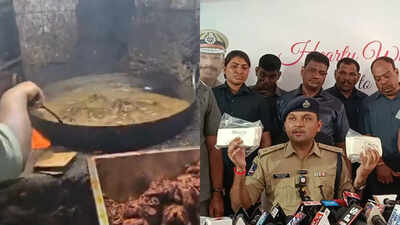
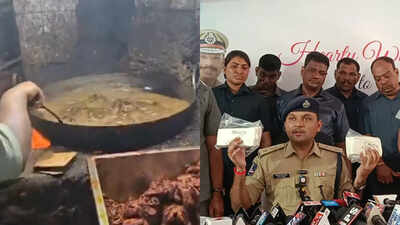
Food adulteration has become every day affair. From ghee to milk, and meat to pulses, every ingredient is being adulterated and every now and then, the same question arises-how far is our food safe? In a latest series of incidents, the Hyderabad Food Adulteration Surveillance Team (H-FAST), along with the Food Safety Officer (FSO), raided an unlicensed fast food godown in Charminar and the Hyderabad Commissioner’s Task Force also conducted a raid and found shocking results. Scroll down to read the details.The Hyderabad Food Adulteration Surveillance Team (H-FAST), along with the Food Safety Officer (FSO), raided an unlicensed fast food godown in Charminar and seized around 110 kg of prepared fried chicken, half a dozen 15-litre tins of loose cooking oil and artificial chemical food colours. The H-FAST team posted on X,and mentioned that in association with the FSO, they seized large quantities of adulterated food material that was being stored under unhygienic conditions.As per the statement, the establishment was operating without an FSSAI licence. They also found prohibited food colours, including MSK Lion Green and Raspberry Red, evidence of the reuse of stale and hazardous cooking oil, and the absence of water analysis certification and quality control measures. In the most, they mentioned the major violations which included• Operation without a mandatory FSSAI licence.• Use of prohibited/artificial food colours (MSK Lion Green and Raspberry Red).• Reuse of stale and hazardous cooking oil.• Absence of water analysis certification and quality control measures.• Gross unhygienic conditions and lack of pest control.Seizure Details:• Approximately 110 kg of prepared fried chicken.• 6 tins of loose cooking oil (15 litres each).• Artificial chemical food colours.
Health Risks to Consumers:
• Consumption of such adulterated and unhygienic food may lead to:• Food poisoning, vomiting, and diarrhea.• Gastrointestinal infections.• Long-term health issues due to repeated consumption of reused oil.• Allergic reactions and toxicity due to artificial food colours.• Increased risk of serious illnesses affecting the liver and overall health.According to the statement, a case has been registered at Hussainialam Police Station under relevant provisions of the Food Safety and Standards Act, 2006, and other applicable laws.In another case, the Hyderabad Commissioner’s Task Force uncovered large-scale sales of fake and misbranded paneer across the city, seizing around 825 kilograms of suspected adulterated products during special raids. The team inspected nearly 45 retail outlets and eight manufacturing units and found several food business operators selling Cheese Analogue products as paneer, misleading consumers.For the unversed, cheese analogue is made using vegetable fats and non-milk ingredients, but it was allegedly being sold under labels such as “Paneer”, “Malai Paneer”, “Milk Paneer”, and “Fresh Paneer”. Authorities also found cases where bulk products were repacked under misleading names such as “Premium Paneer” without proper licences or traceability. The official said enforcement drives are continuing across the city and food samples have been sent for laboratory testing. More inspections are likely in the coming days.
What is Analogue Paneer?
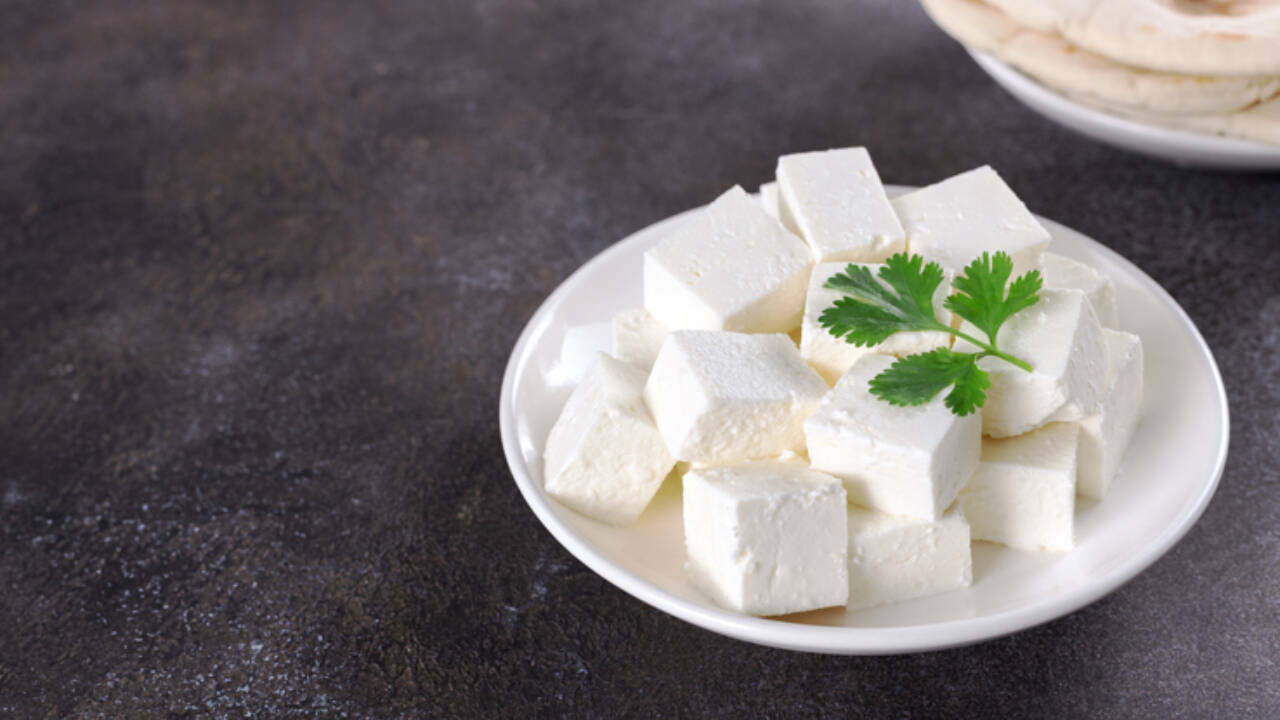
As defined by the FSSAI for regulations around all dairy products, “Analogue means a product in which constituents not derived from milk take the place, in part or in whole, of any milk constituent(s) and the final product resembles, organoleptically and/or functionally, milk or milk product or composite milk product as defined in these regulations.”
How to identify Analogue or Fake Paneer?
While the Food Safety and Standards Authority of India (FSSAI) has issued a lot of tests and measures to check adulteration in milk and milk products, there are certain ways in which you can do the quality check of store-bought paneer at home as well. Take a look at the following tips and tricks:
Taste and texture
Pure or natural paneer is made with regular milk that uses an acidic content to curdle the milk and it has a distinctive firm texture and carries a fresh, milky aroma. So, always taste it before buying. And if the paneer doesn’t offer that creamy texture and milky aroma, avoid it.
Read the package
While buying read-to-eat paneer, it’s crucial to examine the product label carefully, as the Food Safety and Standards Authority of India (FSSAI) has strict regulations requiring manufacturers to clearly indicate when non-dairy substitutes are used. Look specifically for terms like “analogue” or “imitation” on the packaging, as these legally must be displayed if the product isn’t authentic paneer.
Use your hands
Simply mash some paneer using your clean and bare hands. The adulterated paneer is made with skimmed milk, hence, it cannot bear the pressure of hands and will start falling apart when pressure is applied.
Use iodine tincture
To test whether the paneer is natural or artificial, one can use iodine tincture. Add water to a pan, place the paneer in it, and bring it to a boil. Let it cool down, then add a few drops of iodine tincture and see if the color changes to blue, which means the paneer is artificial.
Use arhar dal
For this test, boil paneer in some water, and after it cools down, add some tur dal powder and let it rest for 10 minutes. If the color of the paneer changes to light red, it is a sign that the paneer is made with detergent or urea.
Use soybean powder
Boil some paneer in water, let it cool down, and then add some soybean powder to it. If the color of the paneer changes to light red, it is a sign that the paneer is made with detergent or urea.