
For Tyler Wells, the toughest part of his cancer journey wasn’t limited to hospital visits, medical tests, or chemotherapy sessions. It extended into his workplace, where he found himself negotiating for something he believed should never have required a discussion in the first place: time to recover. The US-based social media professional, who was undergoing treatment for brain cancer, recently shared that he resigned from his high-paying job after his employer refused to grant him paid time off during chemotherapy, despite having an “unlimited leave” policy on record.
His story has triggered widespread conversations online about workspace compassion, employee rights, and the reality behind seemingly flexible corporate policies.
Who is Tyler Wells?
Wells is a Tennessee-based digital professional who had been working at an advertising agency, earning what he described as a six-figure salary. During his tenure, he was diagnosed with brain cancer and began undergoing chemotherapy, which is indeed a physically and emotionally exhausting process and often requires extended recovery periods.
Like many professionals with serious illnesses, Wells attempted to continue working while managing treatment; however, he soon realized that balancing both was becoming highly difficult. To cope, he requested periodic time off, a modest amount, according to him, to focus on his health.
What exactly happened at work?
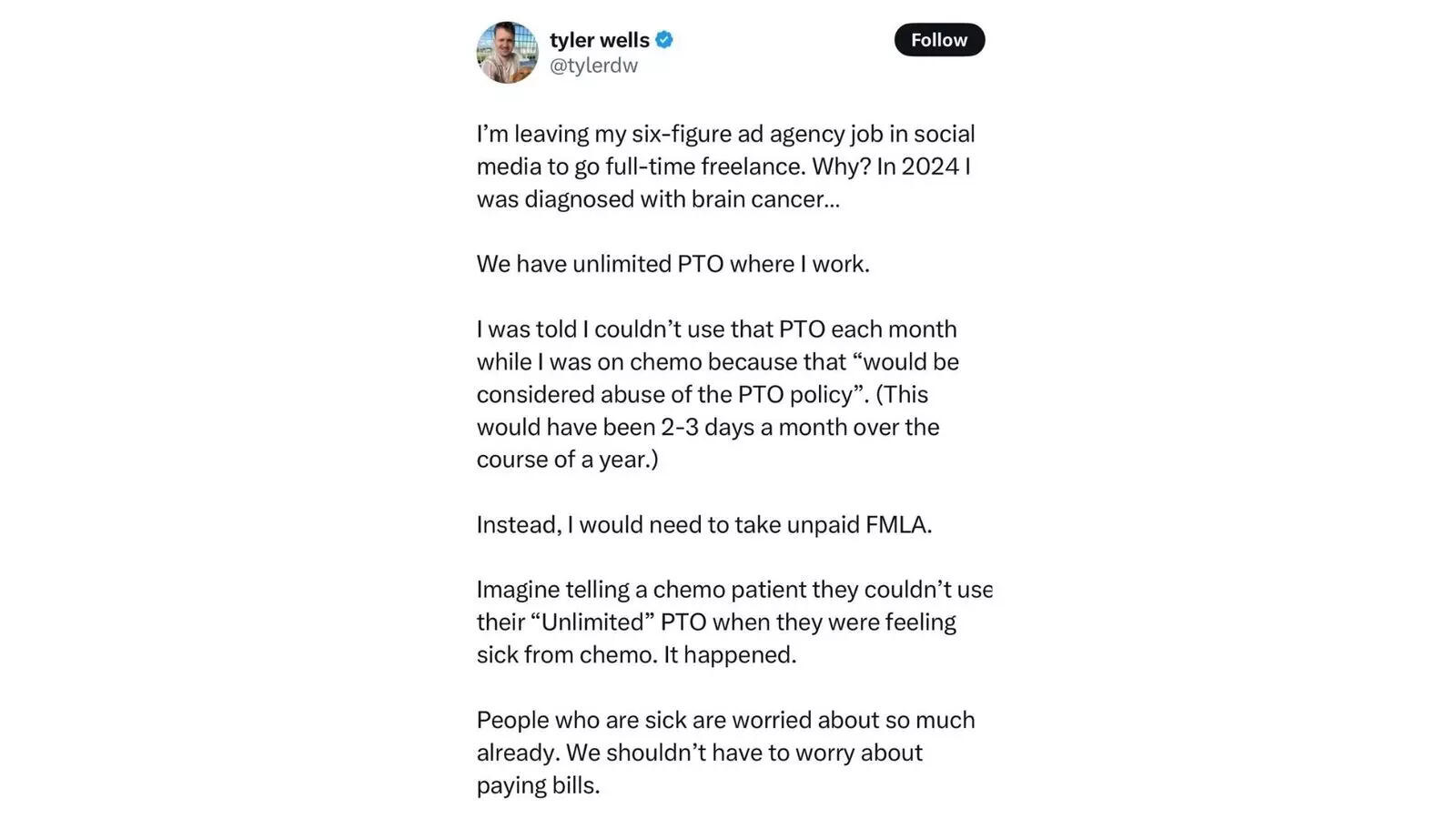
Wells says his company officially had an “unlimited paid time off” (PTO) policy, which is meant to let employees take time off whenever they need it, as long as their work gets done and their manager approves it. However, unlimited PTO does come with certain guidelines and expectations.While going through chemotherapy, Wells wanted to take a couple of days off each month, around 24 to 36 days over the year, to rest and recover. But he says his request was turned down.He later shared on X that he was told using PTO regularly during treatment would be seen as “abuse” of the policy. Instead of paid leave, he was told to apply for unpaid time off under the US Family and Medical Leave Act (FMLA).
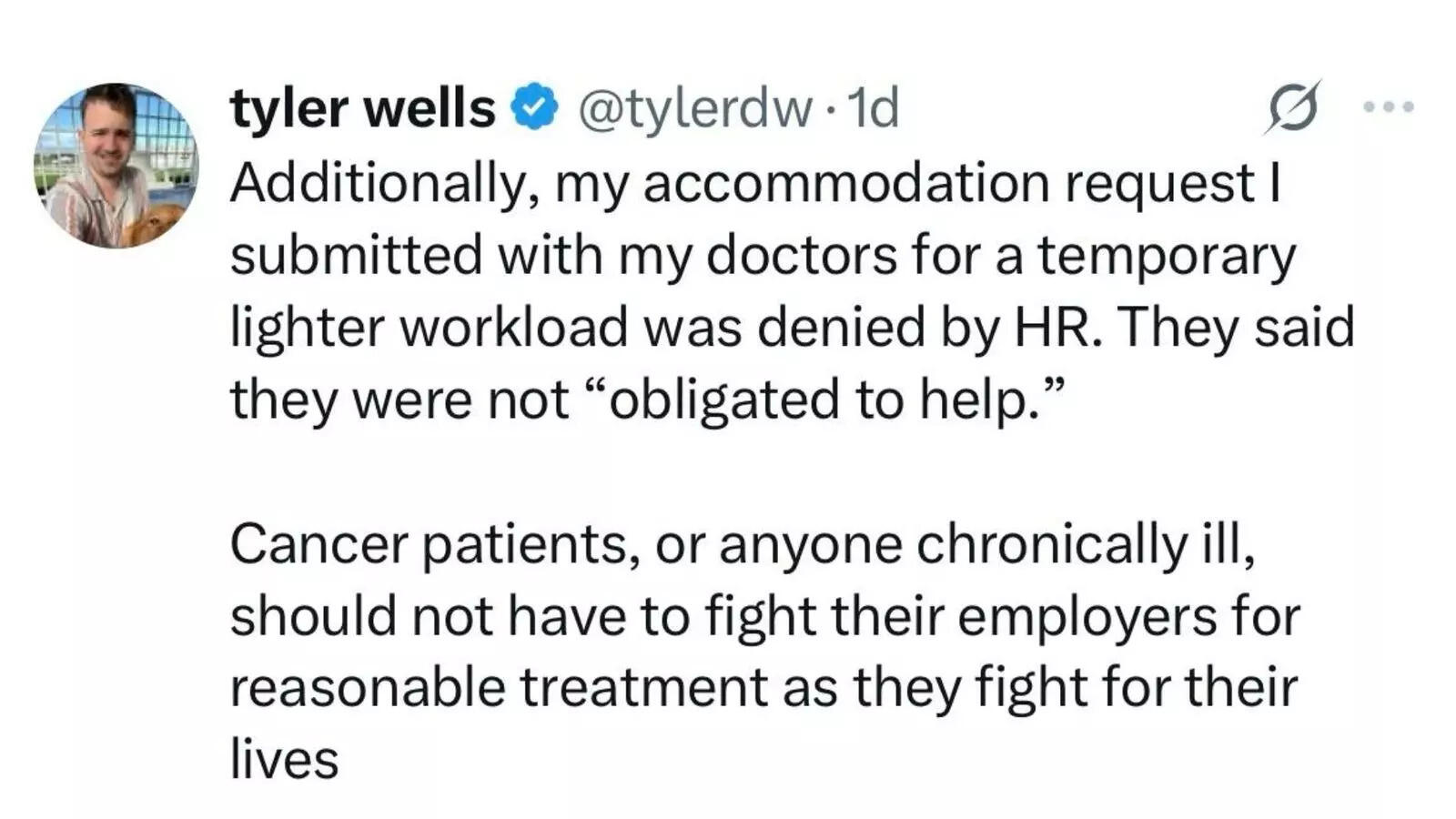
He also said his request to have a temporarily lighter workload was turned down, with HR saying the company wasn’t “obligated” to make any changes. With little support and growing pressure, Wells eventually decided to resign.
Why ‘unlimited PTO’ often isn’t really unlimited
On paper, unlimited leave policies sound great, but in reality, they often have limits. Unlike traditional leave, where employees know exactly how many days they can take, unlimited PTO usually depends on manager approval.
Many people end up taking less time than they need because of things like:
Fear of appearing uncommittedPressure to performWorkplace competitionUnspoken expectationsIn Wells’ case, the policy didn’t really help when he needed it most.
Why his story resonated with so many
After Wells shared his experience online, thousands of people responded with their own stories, describing times when illness, burnout, or family emergencies were met with resistance at work.Many said they, too, had struggled just to get a basic understanding or support during a medical crisis.His story struck a chord because it showed a bigger issue: employee wellness is often talked about but not always actually practiced.
The mental and financial toll of working through illness
Beyond physical pain, cancer treatment often brings anxiety, emotional exhaustion, and financial uncertainty.Wells pointed out that unpaid leave would have meant worrying about bills while battling a life-threatening condition.“People who are sick are worried about so much already,” he wrote. “We shouldn’t have to worry about paying bills.”Mental health professionals say such workplace pressures can significantly delay recovery and deepen emotional distress.
How do workplace leave policies compare?
In the US, employees might be able to take unpaid medical leave under federal law, but paid medical leave isn’t guaranteed for everyone.In India, most companies offer only limited sick leave, and the rules can vary a lot depending on the sector. Big companies may provide extra medical benefits, but contract and informal workers often have very little protection.As a result, many people end up relying on their manager’s understanding rather than clear legal safeguards, and paid leave isn’t always available when someone is seriously ill.
A larger debate on compassion at work
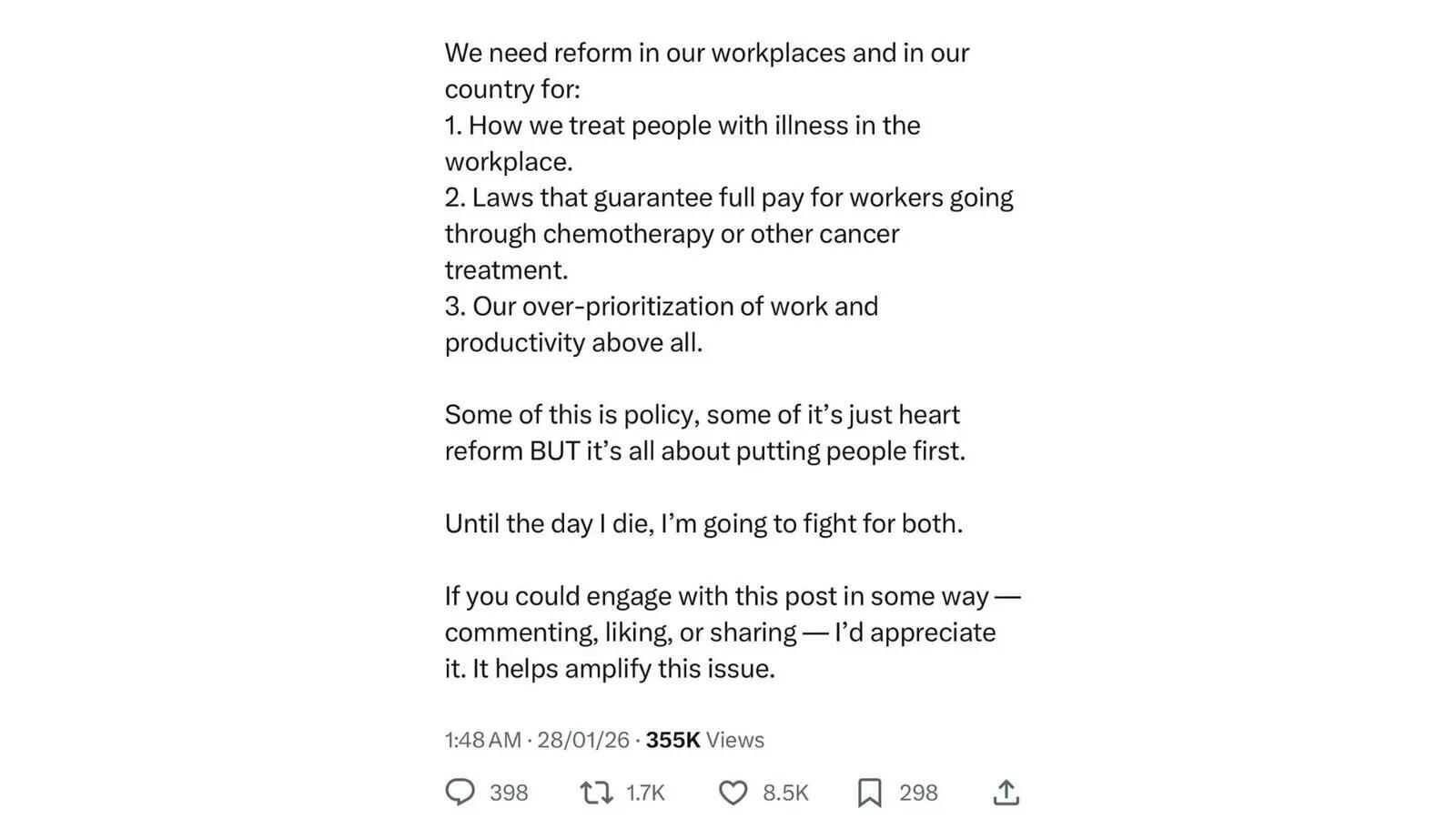
Wells has since called for broader reforms, including:Better protection for employees undergoing treatmentGuaranteed paid medical leaveMore flexible work arrangementsA shift away from productivity-first culturesHe argued that companies must prioritize people over performance metrics, especially during health emergencies.“Some of this is policy,” he wrote. “Some of it is just heart reform.”
What his story reveals about modern workplaces
Wells’ resignation raises an important question: how much support do workplaces really give when employees are going through tough times?Many companies talk about work-life balance and employee well-being, but stories like his show that real support often depends more on the company culture than the rules on paper.For a lot of people, his story is a reminder that behind every job title and paycheck, there are real people who sometimes need understanding more than anything else.Disclaimer: This article reflects the experiences and claims shared by Tyler Wells. The Times of India does not independently confirm these statements and is providing them as reported.Thumb image: Canva (for representative purposes only)