
Introduction: A Crisis Reignited on 26–27 February 2026
Tensions between Afghanistan and Pakistan have surged into one of the most serious cross-border military escalations in recent years. On 26 February 2026, Afghan forces—under the de facto Taliban administration—announced large-scale retaliatory strikes against Pakistani military positions along the Durand Line in response to Pakistani airstrikes earlier in the week. Kabul claimed capture of Pakistani border posts, significant casualties among Pakistani troops, and the seizure of equipment, while Pakistan described these actions as unprovoked and responded with its own military offensive. On 27 February 2026, Pakistan intensified counter-operations, including air and ground strikes on Afghan territory and operations targeting Taliban forces that Islamabad described as “unprovoked” aggression. These shifts mark the conflict’s most dangerous phase since the 2024–present clashes.This article analyses these latest developments against the backdrop of enduring structural fault lines between the two states—historical border disputes, insurgency spillovers, and socio-political stresses in conflict zones— before delineating possible escalation pathways and a coherent framework for de-escalation.
Contextual overview: From border skirmishes to full-scale retaliation
Border hostilities between Afghanistan and Pakistan are not new; clashes have been recurring since 2024, punctuated by periodic ceasefires and renewed flare- ups. Historical patterns include exchanges of fire along frontier crossings and cross-border attacks attributed to irregular militant groups, particularly the Tehrik-i-Taliban Pakistan (TTP), whose presence in Afghanistan is a longstanding grievance for Islamabad.The immediate trigger for the February 2026 escalation was a series of Pakistan-conducted airstrikes on alleged militant camps in Afghanistan’s eastern provinces of Nangarhar and Paktika on 22 and 26 February 2026, resulting in significant militant and civilian casualties. Afghan authorities condemned the strikes as violations of sovereignty.
February 26, 2026
Afghan defence authorities declared that large-scale retaliatory operations had been launched along multiple sectors of the disputed Durand Line, claiming capture of at least 19 Pakistani posts, the destruction of equipment, and the deaths of dozens of Pakistani soldiers. Kabul framed the offensive as a measured response to prior Pakistani attacks, invoking sovereign defence.
February 27, 2026
Pakistan escalated operations under “Operation Ghazab-Lil-Haqq,” conducting extensive air and ground attacks on Taliban positions across several Afghan provinces, including strikes on installations in Kabul, Kandahar, and Paktia. Islamabad reported striking multiple enemy positions, inflicting heavy casualties, and destroying ammunition depots. Both sides released conflicting casualty estimates, reflecting sharply divergent narratives. A refugee camp near the Torkham border was also struck, adding civilian harm to the tally of escalation consequences.
Structural fault lines: Historical and strategic drivers
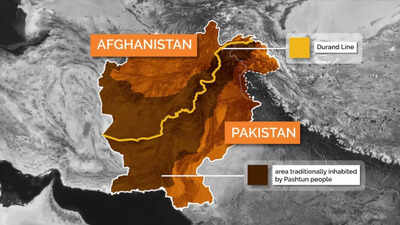
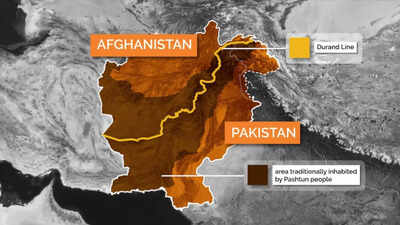
The Durand Line dispute: The Durand Line, the colonial- era boundary dividing Pashtun tribal areas, remains a central contention that fuels mistrust and discord between Kabul and Islamabad. While Pakistan recognises it as an international border, successive Afghan regimes—including the current Kabul administration—have refused formal acceptance, framing it as a historical imposition that undermines Pashtun unity. This unresolved border impedes cooperative security mechanisms and provides fertile ground for interpretive disputes whenever an incident occurs along the frontier.Operationally, the lack of mutual recognition exacerbates border permeability and inhibits effective intelligence sharing, enabling militant groups to exploit the ambiguity.Militant externalities and the TTP factor: Pakistan’s core justification for cross-border action is its allegation that Afghan territory offers sanctuaries for TTP and allied militants. Islamabad contends that TTP uses these safe havens to launch attacks in Pakistan’s Khyber Pakhtunkhwa (KP) and along Pakistan’s western flank. Kabul rejects these claims or asserts limited capacity to enforce its writ against such groups, partly due to ideological affinities and organisational linkages with transnational insurgent networks. These contentious accusations reinforce defensive militarisation on both sides.Refugees as security and political vectors: Pakistan hosts one of the largest protracted Afghan refugee populations, concentrated in frontier regions like KP and Balochistan. This demographic reality is leveraged politically and securitised by Islamabad, which periodically combines refugee management with border security operations. Kabul views deportations or restrictive policies as coercive pressure, further straining bilateral ties.
Escalation pathways: How the conflict can intensify
The recent incidents suggest multiple escalation trajectories:Expansion of kinetic operations: If either side expands air or artillery campaigns beyond border regions into deeper strategic locations, the risk of significant military confrontation increases. Pakistan’s strikes on bases in Kabul and Kandahar represent such a risk, as they underscore a shift from limited border engagements to broader target sets.Proxy and militant backlash: A sustained military confrontation could catalyse renewed recruitment and mobilisation among TTP and other militant factions, further complicating counterterrorism strategies and potentially destabilising provinces in Pakistan like KP and Balochistan.Civilian harm and displacement: Cross-border violence hitting civilian areas—including refugee settlements— can provoke humanitarian crises, increase internal displacement, and galvanise domestic political pressures against restraint on both sides.Breakdown of diplomatic channels: The termination of ceasefires or abrupt collapse of negotiation avenues, as occurred in prior episodes, risks transforming episodic skirmishes into protracted hostilities, especially if external mediators are absent or rejected.
Recommendations for de-escalation and management
Given the danger of further escalation, a multilayered policy approach is necessary:
Immediate de-escalation measures
Crisis hotline and incident de-escalation protocols: Establish real-time military communication channels to manage misunderstandings and prevent inadvertent escalation.Temporary ceasefire negotiation: Reinstating a neutral-mediated ceasefire—possibly under the United Nations or a mutually acceptable regional actor—can stabilise the immediate situation.
Structured counterterrorism cooperation
Joint verification teams: Technical teams with Taliban and Pakistani officers (possibly facilitated by regional mediators) to investigate cross-border militant activity and contentious incidents.Information sharing: Limited, secure intelligence channels focused on militant networks such as TTP to build confidence without exposing sensitive sources.
Durand Line functional management
Border management commission: A pragmatic forum that focuses on de-confliction mechanisms, border fencing agreements, and monitoring systems without prejudicing long-term border claims.Community liaison structures: Engagement with Pashtun tribal elders to manage local insecurities and mitigate the exploitation of porous border zones by militant outfits.
Refugee governance and humanitarian planning
Internationalised framework: Partnering with the United Nations High Commissioner for Refugees to demarcate humanitarian safeguards, voluntary repatriation programs, and decouple refugee policy from coercive security narratives.
Internal stabilisation in conflict zones
Holistic security response in KP and Baluchistan: Complement counterterrorism with governance reforms, economic investment, and community policing that reduce grievances and militant recruitment.
Conclusion: Breaking the cycle of retaliation
The February 2026 escalation reflects deep-seated structural tensions rooted in contentious border legitimacy, insurgent externalities, refugee dynamics, and bilateral mistrust. The intensification of military operations from 26–27 February illustrates how rapidly retaliation can escalate into broader conflict without robust communication and crisis management frameworks. To avert a protracted confrontation with regional repercussions, both sides—and their international partners—must prioritise mechanisms that reduce incentives for unilateral kinetic action, institutionalise incident management, and build incremental confidence even amid profound political differences. Without such strategic restraint, the cycle of retaliation risks recurring with greater ferocity, civilian harm, and spillover instability across South and Central Asia.