
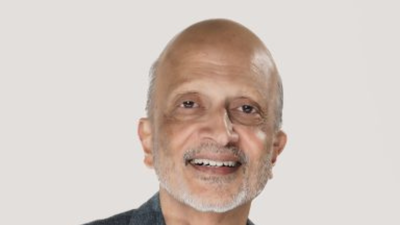
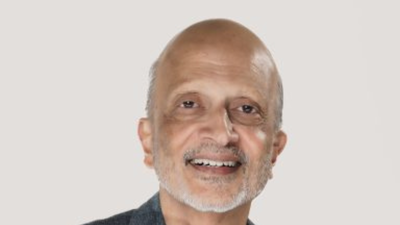
An Australian newspaper recently ran a headline that read: ‘Singh beats Smith’. It was about business ownership in Sydney, but it captured the steady shift in how the desi diaspora, now estimated at over 35 million people spread across more than 200 countries, has become a force. Last month, members from 25 countries gathered in Bengaluru for the Indiaspora Forum — venture capitalists alongside paralympians, AI researchers beside art collectors, policymakers sharing space with meditation gurus. The range was the point.Building slowly, on purposeIndiaspora was founded in 2012 by entrepreneur MR Rangaswami. “We are not an overnight success,” Rangaswami said. “Non-profits scale differently — it’s been slow and steady.” That patience has produced something durable. From its origins in the US, the organisation now operates across what Rangaswami calls the ‘big six’ diaspora hubs: the US, UAE, Canada, the UK, Australia and Singapore. Its annual forum has become one of the few spaces where the breadth of Indian diaspora influence — not just its economic weight — gets examined seriously.Rangaswami is deliberate about keeping the forum free of the transactional energy that dominates most professional gatherings. “We do want this event to be a non-transactional event,” he said in his keynote. “This is not about selling to each other. This is not about pitching. It’s really about getting to know and understand and enhance your field of knowledge, and enhance more of what you know about other things going on in the world.”That philosophy was visible on stage. Art collector Kiran Nadar discussed her new museum in Delhi. Sri Sri Ravi Shankar led sessions on meditation. Tennis legend Vijay Amritraj joined a group of athletes — including a Paralympian — to discuss India’s bid for the 2036 Olympics.Missing linkFor Asif Ismail, CEO and publisher of American Bazaar, Indiaspora fills a gap that long went unaddressed. Regional associations — Gujarati samajs, Telugu organisations, and others — have existed for decades, but their focus tended to be narrow and community-specific. “Before this, there wasn’t really anything binding the diaspora together globally,” he said.The organisation made an early mark with a high-profile inaugural ball for President Barack Obama in 2013, and has since grown into a professionally run network with a staff drawn largely from corporate backgrounds. But it hasn’t lost the texture of a community. Rangaswami recalls a recent case of a member in the US who needed to travel to India for a funeral but couldn’t, because her newborn had no passport yet. “Our members helped organise it,” he said.On political matters, the approach is similarly understated. Immigration hurdles, geopolitical tensions, mobility concerns — these are live issues for diaspora communities everywhere. “We don’t publicly lobby,” Rangaswami said. “But we work privately with govts, conveying concerns and facilitating dialogue.”More than remittancesFor years, the story of the Indian diaspora has been told primarily through remittances — the billions of dollars sent home annually. The Indiaspora Impact Report, launched at this year’s forum, argues that this framing is too small.The numbers it presents are striking in their specificity: 76% of overseas angel investors backing Indian startups are from the diaspora, operating across 56 countries. More than 60% of surveyed Indian NGOs have received diaspora donations; over half have used diaspora networks to access global institutional funding. Nearly one in five internationally co-authored research papers involves a diaspora connection.Then there is the harder-to-measure influence — yoga studios popping up in every American suburb, Indian cinema crossing language barriers, cuisine that has become unremarkable in cities where it once felt exotic. “It’s not just about money,” Rangaswami said. “It’s about influence, culture, and ideas. We have to measure both the hard and soft power of the diaspora.”Why BengaluruThe choice of host city was deliberate. Last year’s forum was held in Abu Dhabi; this year, Indiaspora wanted to bring the conversation back to India and what better venue than the IT hub of Bengaluru. As Rangaswami put it, “Bengaluru represents the new India — tech-driven, global, forward-looking.”The organisation now runs programming year-round — climate summits, global health discussions focused on conditions like diabetes and heart disease that disproportionately affect South Asians, and a new initiative called Indiaspora Next, designed to bring younger diaspora members into networks that have historically been led by an older generation.What keeps people returning, says Sree Sreenivasan, an ambassador for the organisation, isn’t the networking. “Networking may bring people in, but it’s ideas and inspiration that keep them coming back.” He describes the forum’s core asset as convening power — something that resists easy digitisation. “One of the great skills of the 21st century is bringing people together,” he said. “You could do this online, but when people from 25 countries come together in one place, ideas and relationships deepen in a different way.”