
Spoiler Alert: This article contains significant plot details and spoilers for ‘DTF St. Louis’. If you haven’t seen the show yet and wish to avoid spoilers, please stop reading now.‘DTF St. Louis’ has always walked closely with chaos, bringing in the quirky, offbeat, and just a bit disturbing to its story. Now the miniseries has landed its finale, and like clockwork, its last episode has thrown viewers into a mix of shock and deep thought. What looked at first like a madcap dark comedy with a whodunnit edge turns out to cut a lot closer to the bone: this was always a story about loneliness, desire, and the way lives can unravel when people just don’t get each other.Even the cast is saying it: if you want to make sense of that final twist, go rewatch the whole thing. The ending flips the whole story on its head.
‘DTF St. Louis’ending explained
‘DTF St. Louis’ finale episode, with that too-true title ‘No One’s Normal. It Just Looks That Way From Across the Street’, finally pulls back the curtain on the mystery that’s shadowed the show from the start: who killed Floyd Smernitch?Here’s the kicker: the answer is no one. Floyd’s death wasn’t murder at all. He took his own life.Throughout the season, suspicion swirled between key characters: Floyd’s oddball friend Clark, his wife Carol, and their messy triangle of secrets and longing: a situation that could’ve easily tipped into violence. Or at least, that’s what it looked like. Instead, the true story is much more tangled and tragic. Floyd’s death comes from a pileup of confusion, heartbreak, and private pain. In the end, he drinks something laced with drugs, a cocktail meant to fix his sex life, ironically enough, and winds up dead.The moment that hits hardest is when his stepson, Richard, who is thinking he’s catching Floyd mid-betrayal, confronts him. That little showdown tips Floyd over the edge. Suddenly, all the clues point away from murder and toward a very human, deeply sad ending.
What does the ‘DTF St. Louis’ cast say
Here’s the thing: ‘DTF St. Louis doesn’t let you off easy. Even the detectives (Jodie Plumb and Donoghue Homer) spend most of the finale unraveling a case that isn’t what it seemed. “You’ll probably have to go back to the beginning to really understand the ending, honestly,” Joy Sunday, who plays Jodie, told People. Richard Jenkins (Donoghue) put it simply: “If you jump to the end, you still won’t know what happened unless you know the whole script.”At the heart of everything was Floyd struggling: personally and in his marriage. He’s dealing with Peyronie’s disease, which throws his sex life into disarray. Carol, his wife, drifts into an affair with his best friend, Clark. That’s messy enough, but it gets worse when Clark becomes the top suspect after Floyd dies from what looks like poisoning.The twist? Turns out Floyd knew about the affair and didn’t even hold it against them. As Jenkins put it, “The writing is just sublime…You almost felt you weren’t worthy of it at times. It was that good.”The finale puts everything on the table. Clark passed Floyd a prescription stimulant (amphezyne) to “help” his situation. They spend Floyd’s last night together drinking, dancing in their underwear, and when Floyd hints at something more, Clark turns him down gently. It’s not mean; just honest.Meanwhile, Richard sees everything from the window. He’s just found out Floyd is on the DTF St. Louis app, looking for hookups outside his marriage. When he finally confronts Floyd, Floyd flashes a hand sign before finishing his drink. Richard thinks it’s a kind of taunt; actually, it means “I love you” in American Sign Language.Creator Steven Conrad started dreaming up the show back when dating apps felt unstoppable. “That idea that there could be excitement without consequences,” he said. The finale pulls that illusion apart.Floyd’s death isn’t about criminal intent; it’s about what happens when people stumble in their pain and make desperate choices. Conrad puts it best: Harbour brought the role “to a person who was susceptible to this bad idea five years ago, but wouldn’t have done it 30 pounds ago, wouldn’t have done it one friendship earlier, wouldn’t have done it but in a phase of life now where he seems to need some volt of electricity to resuscitate him.”
What’s DTF St. Louis all about?
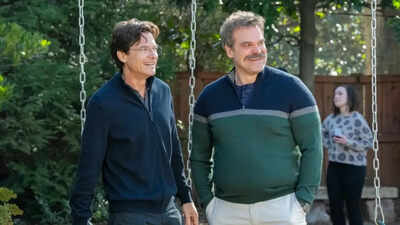
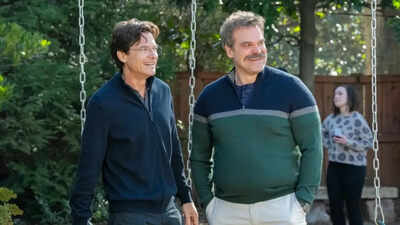
Picture a satire of suburbia with noir edges. The story of ‘DTF St. Louis’ circles three people: Clark (a bored weatherman in a dead marriage), Floyd (ASL interpreter and open wound in human form), and Carol (caught between the two men, looking for something more). Their lives collide through a fake hookup app, meant for married folks chasing secret flings.One dead body at the pool kicks it all off. Detectives dig through shattered relationships and odd clues. The app that promises “no consequences” ends up showing exactly how much damage denial and escapism can do. Every connection, every choice from episode one leads straight to how things fall apart in the end.As the series winds down, it’s clear: the real mystery isn’t who killed Floyd, but what led him there. The show doubles back on itself, exposing emotional isolation, unmet needs, and how easy it is to feel invisible even in a crowded room.Floyd’s death isn’t violence; it’s the quiet tragedy of being misunderstood. DTF St. Louis starts as a twisted whodunnit, but finishes somewhere a lot messier and much more real.For those who are yet to binge on it, ‘DTF St. Louis’ is currently streaming on HBO Max.