
As China accelerates construction at its secretive nuclear facilities deep inside Sichuan, what is emerging is not just a story of military modernisation but a larger geopolitical puzzle, one that directly impacts India, exposes gaps in global nuclear governance, and raises concerns of a renewed arms race.Satellite imagery, and assessments point to a scale of expansion that goes beyond incremental upgrades. Entire villages have been cleared, high-security complexes erected, and new infrastructure integrated into a broader nuclear network, all signalling a significant jump in China’s production capabilities.But beyond the technical details lies a deeper contradiction. Even as Beijing expands its nuclear footprint at a pace not seen in decades, it continues to block India’s entry into global nuclear regimes on procedural grounds, while itself staying outside key export control frameworks.For India, this is not just about watching a neighbour’s military evolution. It raises fundamental questions: Does China’s build-up alter the strategic balance in Asia? Should India recalibrate its nuclear doctrine? And is the world entering a new phase where rules apply unevenly, and power determines compliance?As global arms control frameworks weaken and geopolitical tensions sharpen, developments at Sites 906 and 931 offer a window into both China’s strategic thinking and the emerging challenges for India’s security calculus and the international order.
China’s nuclear expansion: What the evidence shows
China has been quietly expanding its nuclear weapons production infrastructure in Sichuan province, raising concerns about the acceleration of its nuclear program as the US and other global players monitor developments amid fraying arms agreements.Satellite imagery and Chinese government documents obtained by CNN reveal large-scale construction at facilities including Sites 906 and 931, prompting fears of a significant increase in China’s nuclear production capacity.The changes come after villagers in Sichuan were evicted in 2022, with local authorities citing a “state secret” when asked about the land seizures. Satellite images show that entire villages have been razed and replaced with facilities linked to nuclear weapons manufacturing. The developments support recent claims by the US administration under Donald Trump that China is undertaking its most ambitious nuclear modernization campaign in decades.Trump, who is set to visit Beijing next month, aims to discuss nuclear arms control with Chinese President Xi Jinping. Earlier this year, the New START Treaty (arms control pact between the US and Russia) expired, and the Trump administration has expressed interest in negotiating a broader deal that would include China. However, the rapid expansion at Sichuan sites suggests that Beijing’s nuclear ambitions show little sign of slowing.
Massive dome at Site 906 signals expansion
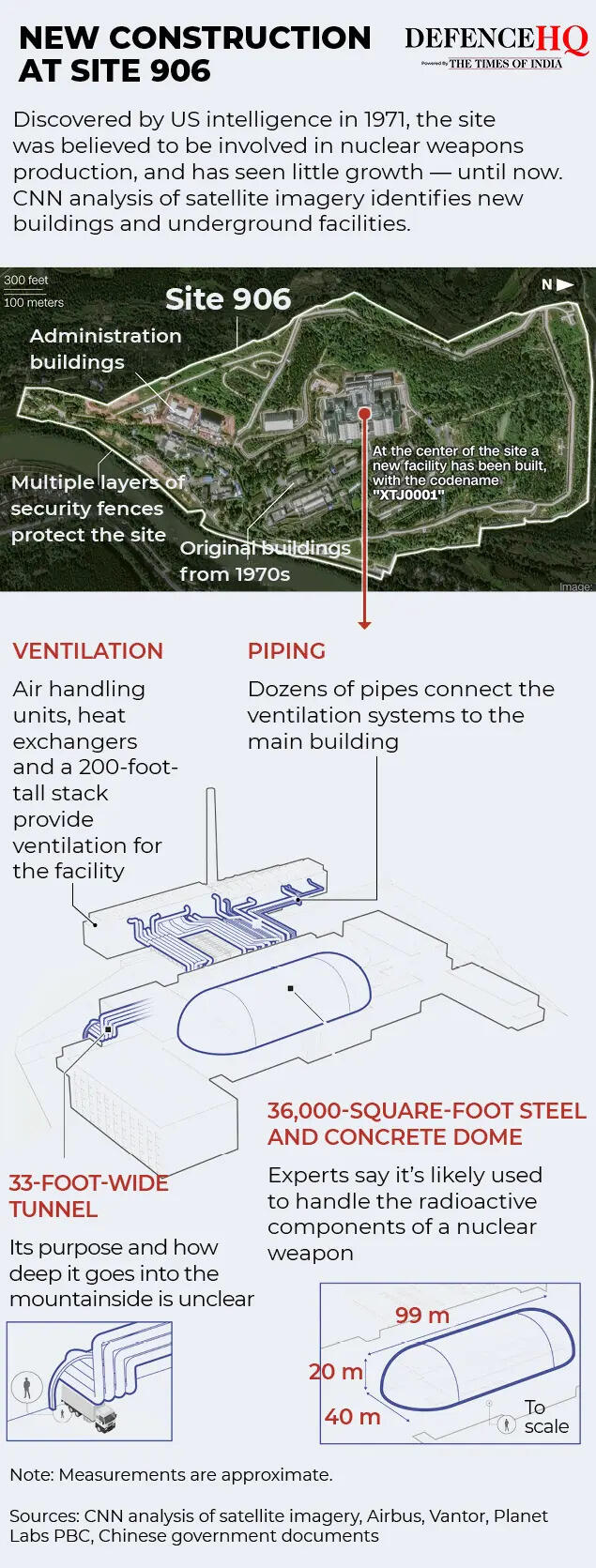
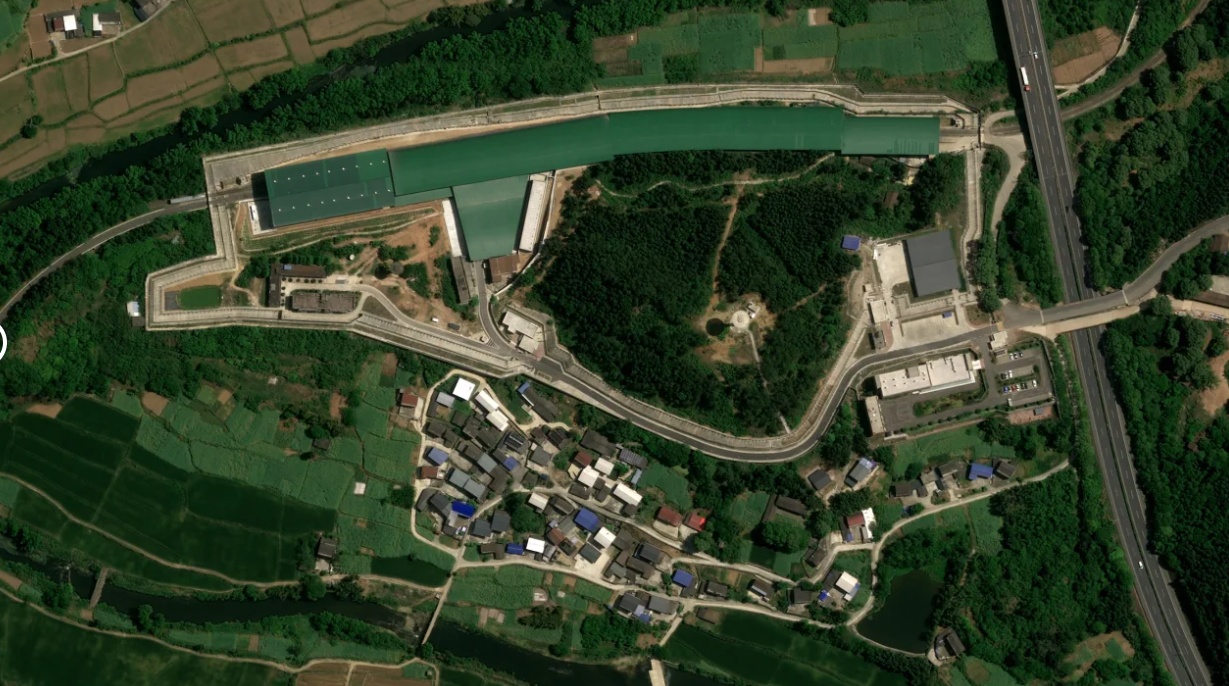
One of the most prominent additions is a 36,000-square-foot reinforced dome, shaped unusually like a Tic Tac, built on the banks of the Tongjiang River.The facility is outfitted with radiation monitors, blast doors, and extensive air-handling systems designed to contain uranium and plutonium, according to experts. A nearby tunnel leads into a mountain, and the site is surrounded by three layers of security fencing. CNN analysts compiled more than 50 satellite images of Site 906 to build a 3D model, revealing the facility’s strategic significance.“This building is almost a Rorschach test for people’s worst nightmares about what China is up to,” Jeffrey Lewis, distinguished scholar at Middlebury College, told CNN. “It is emblematic of all these changes. It does seem there’s going to be a much bigger capacity to produce at the end of this.”“Newly refurbished roads link Site 906 to at least three other nuclear bases in and around Zitong county,” Lewis said, highlighting the broader integration of the network. The construction project of the dome, designated XTJ0001 in Chinese documents, appears to be central to China’s increasing nuclear production capability.
Evictions and Site 931 expansion
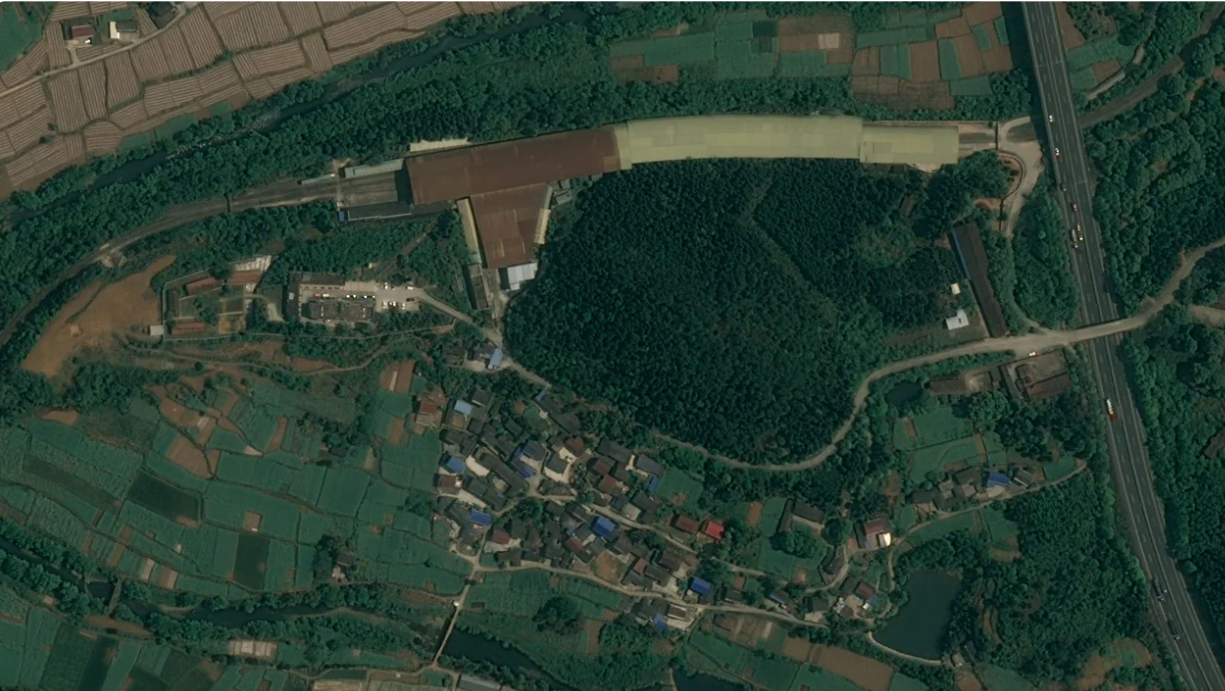
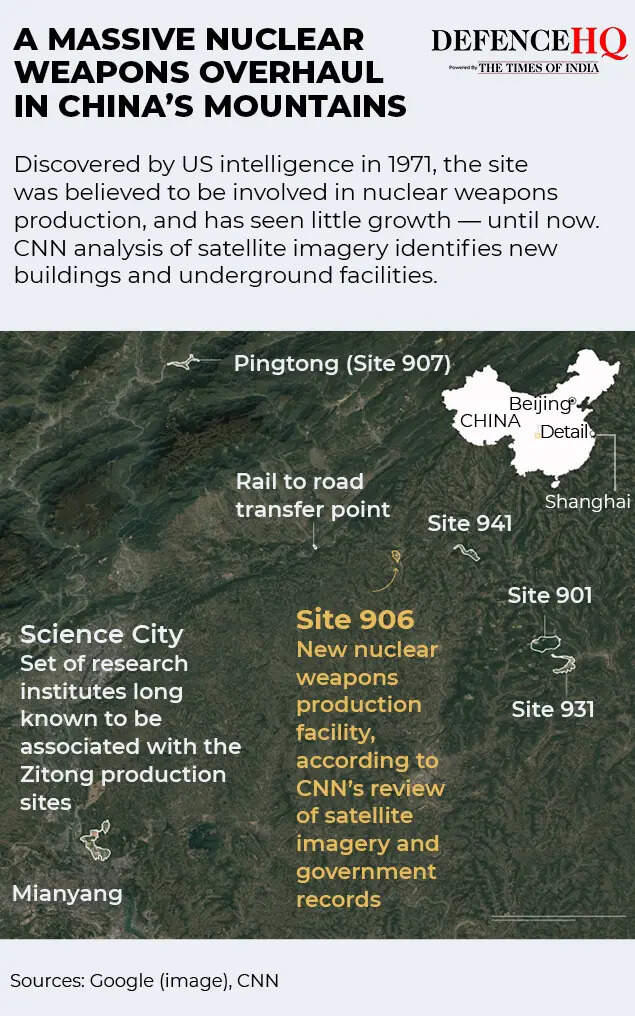
Site 931, another facility in the same region, has expanded into Baitu village, forcing the displacement of local residents.Nearby Dashan village was also demolished to make way for the base. Infrastructure improvements, including a road-to-rail transfer point connecting the network to western China, underscore a systematic upgrade of the Zitong nuclear complex.Historically, these sites were first noted by US intelligence in 1971, which considered them a strategic gamechanger for Beijing. By 2020, China’s warhead stockpiles surpassed France’s, making it the fastest producer of nuclear weapons globally, though still trailing the US and Russia, each with at least four times as many warheads.Site 906 before and after over 5 years Before
After
Alleged violations and modernization
In February, US undersecretary of state for arms control Thomas DiNanno accused China of violating a ban on explosive nuclear testing. Beijing denied the claims. US intelligence also reports that China is testing a new generation of warheads.Chinese defense ministry spokesman Jiang Bin had then stated, “It is known to all that China pursues a nuclear strategy of self-defense and follows a nuclear policy of no first use of nuclear weapons… China pledges not to use or threaten to use nuclear weapons against non-nuclear-weapon states and nuclear-weapon-free zones.”Despite official denials, analysts argue that facility designs, such as the Zitong River dome, indicate technological modernization and expanded production capabilities. “It’s clear that there are a lot of changes happening on the ground,” Renny Babiarz, VP of Analysis and Operations at AllSource Analysis, told CNN.
Strategic implications and global concerns
Experts warn that the scale of the expansion could create blind spots for Western intelligence. “The fact that this modernization is so extensive suggests a fundamental overhaul in the technology that underlies the entire system,” said Decker Eveleth, nuclear analyst at CNA Corporation.Further supporting the modernization claim is Science City, a network of research institutes 40 miles southwest of Zitong. Satellite images show over 600 buildings demolished in 2022 to make way for new facilities, reflecting the strategic investment in China’s nuclear program.Beijing’s military posture has become more muscular, including early warning systems capable of detecting and intercepting incoming missiles, potentially serving as a deterrent against Western intervention in Taiwan. “China’s leadership appears to believe that to build and demonstrate strategic capability, including nuclear weapons, can have a psychological impact on Western countries,” said Tong Zhao, senior fellow at the Carnegie Endowment for International Peace.
What does this mean for India’s deterrence posture
For India, the immediate question is whether China’s expansion alters the nuclear balance in Asia.China already possesses a significantly larger arsenal than India. However, its rapid infrastructure build-up suggests a move not just towards numerical expansion but qualitative enhancement, including survivability, faster deployment and integrated command systems.This could complicate India’s doctrine of “credible minimum deterrence”. India’s doctrine is based on maintaining sufficient capability rather than parity. However, a significantly enhanced Chinese arsenal, supported by better infrastructure, integration and early warning systems, may require recalibration in terms of delivery systems and second-strike capability.While India’s nuclear policy has historically emphasised restraint, a more advanced and dispersed Chinese arsenal may require recalibration in terms of delivery systems, second-strike capability and early warning mechanisms.The implications become sharper when viewed alongside ongoing tensions along the Line of Actual Control (LAC).While nuclear weapons remain tools of deterrence, their presence influences escalation thresholds and strategic confidence in conventional conflicts.A stronger nuclear backing could embolden China’s conventional military posture, allowing it to operate with greater strategic confidence in border regions. For India, this raises a critical concern: does China’s nuclear modernisation indirectly alter the balance of power even in conventional engagements?
A world without guardrails
The timing of China’s expansion is significant. With the New START framework no longer in force and no equivalent trilateral agreement involving China, the global nuclear order is entering uncertain territory.Historically, arms control agreements between the US and Russia imposed limits on stockpiles and deployment. China, which was not part of these frameworks, now appears to be expanding in an environment with fewer constraints.For India, which is outside the Nuclear Non-Proliferation Treaty framework but has maintained a responsible nuclear posture, this creates a paradox: a rules-based order that is weakening just as new entrants or expansions emerge.
NSG, NPT and the question of double standards
One of the most contentious aspects for India is China’s opposition to its entry into the Nuclear Suppliers Group.Beijing has consistently argued that India’s non-signatory status to the NPT disqualifies it from membership. However, critics point out that China’s own actions, expanding nuclear infrastructure and resisting deeper transparency, raise questions about the consistency of its position. This contradiction becomes more pronounced when viewed alongside China’s absence from frameworks like the Wassenaar Arrangement, which governs dual-use technologies. India, despite not being an NPT signatory, is a member of the Wassenaar Arrangement and adheres to its export controls.The contrast feeds into a broader narrative, that global nuclear governance is shaped as much by geopolitics as by principles.
Selling restraint, practising expansion
China’s official stance continues to emphasise restraint. Its defence ministry has reiterated its “no first use” policy and commitment to not targeting non-nuclear states.Yet, the scale of construction in Sichuan suggests a parallel track, one of capability expansion and technological modernisation. Analysts argue that such dual messaging allows Beijing to maintain diplomatic positioning while strengthening its strategic arsenal.For India, this duality complicates engagement. Should it respond to stated policy or observed capability?
Risks of a new arms race
Analysts caution that China’s rapid expansion could trigger a new arms race, complicating global strategic calculations.“Once you get past a certain number of warheads it becomes an academic distinction,” Eveleth said. “It’s about the capabilities and what you’re planning to do with them more than it is about the number of warheads.”There are also concerns that US reactions may lead to overestimation of Chinese capabilities, further spurring nuclear proliferation. Jeffrey Lewis noted, “We’re going to match what we think they’re doing. We’re going to match our own nightmare. And that’s potentially very dangerous.”For India, this raises a key dilemma, whether to respond through capability enhancement or maintain its current doctrine while relying on strategic restraint and diplomacy.
How should India respond
India’s options broadly fall into two categories: strategic and diplomatic.On the strategic front, there is a case for accelerating modernisation, particularly in missile systems, submarine-based deterrence and surveillance capabilities. Ensuring a credible second-strike capability remains central to maintaining deterrence stability. Although, India is one of five countries to operate a nuclear triad. On the diplomatic front, India could intensify efforts to highlight inconsistencies in global nuclear governance, especially China’s stance on NSG membership. Strengthening partnerships with like-minded countries and pushing for more inclusive arms control dialogues could also form part of the response.
The diplomacy dilemma
China’s strategic confidence is further bolstered by ongoing US military engagements in regions like Iran, which analysts say could reduce incentives for Beijing to slow its nuclear expansion.While Trump may seek nuclear dialogue during his Beijing visit, many remain sceptical. “Even in this optimistic scenario, Beijing would be unlikely to pursue any serious arms control negotiations,” Zhao said. “But its willingness to initiate a broad-based dialogue could be sufficient to satisfy Trump.”
The bigger picture
The developments around Sites 906 and 931 illustrate a robust Chinese commitment to nuclear modernization and strategic deterrence. But they also expose a deeper contradiction, between Beijing’s expansion on the ground and its restrictive stance in global nuclear governance.For India, the challenge is twofold: responding to an evolving security environment while navigating a global order where rules are unevenly applied.As China builds, the question is no longer just about capacity. It is about intent, influence, and how countries like India position themselves in a rapidly shifting nuclear landscape.