The US offered a California family $4 million for its 6,300-acre island ranch; after they refused, the government seized it and a jury awarded them $12.7 million
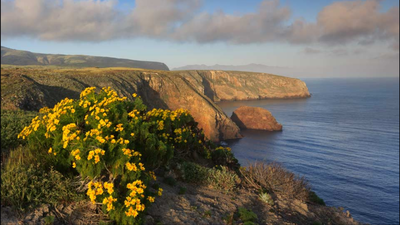
A federal jury in Los Angeles ordered the United States government to pay $12.7 million (£7.8 million) to a California family after it seized their 6,300-acre ranch on Santa Cruz Island. The verdict, delivered in February 1999 after a three-week trial, ended a decades-long property dispute between federal park officials and attorney Francis Gherini, whose … Read more


A Costa Rican mother saved for 9 years to buy land, then built her home with 7 tonnes of recycled plastic | World News

Cindy Mora and her son’s home used about 850 blocks made from recycled plastic, PC: Econews Cindy Mora Abarca spent 9 years saving money for a small plot of land in the Lámparas neighbourhood of Alajuelita, near San José, Costa Rica, hoping to eventually build a permanent home for herself and her 6-year-old son, Fabrizio. … Read more

Meet Zainab Nathani, the Illinois student who designed a material that can pull water from humid air using sunlight |

Zainab Nathani, a high school junior from Niles, Illinois, has designed a material that can pull drinkable water straight out of humid air, powered entirely by sunlight. Studying at Niles Township West High School, she built her project around emulsion-templated composite biogels, porous, bio-based structures engineered to trap moisture from the atmosphere and release it … Read more

In 2006, Oregon poured rotenone into 2,824-acre Diamond Lake: an estimated 90 million invasive fish disappeared, and its collapsed trout fishery reopened |

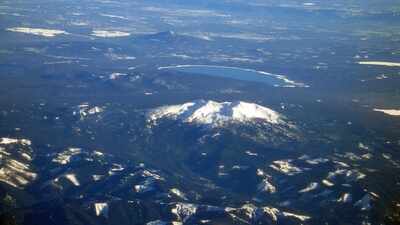
Aerial view looking east to Diamond Peak and Crescent Lake in the Diamond Peak Wilderness in the Oregon Cascade Range. Credits – Wikimedia Commons In September 2006, Oregon officials took the drastic step of treating Diamond Lake with rotenone after an invasive fish had pushed the lake’s trout fishery into collapse. The fish was tui … Read more

In 1937, Australian scientists released infected rabbits on an island to test a virus that would later transform rabbit control across the continent |

A European rabbit in Tasmania. Image Credit: JJ Harrison/Wikipedia In 1937, Australian scientists took an unusual step in the fight against one of the country’s most destructive pests known as ‘rabbits.’ They released rabbits carrying ‘myxoma virus’ on Wardang Island, off South Australia, to see whether the disease could spread naturally. The experiment was part … Read more

In 1960, Chicago gave Japan’s future emperor 18 bluegill as a friendship gift, and their descendants spread in Japan and reached an estimated 25 million in Lake Biwa | World News

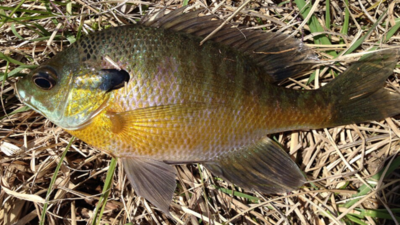
A bluegill (Lepomis macrochirus) at the University of Mississippi Field Station. Image credits: Wikimedia Commons  When Crown Prince Akihito visited Chicago in October 1960, his sole request was to visit the city’s Shedd Aquarium. The 26-year-old heir to the Japanese throne was already a serious student of fish biology, and the aquarium stop was less … Read more

In 1951, a New Jersey couple bought 185 acres as a summer retreat after which an injured owl turned their property into a wildlife refuge | World News

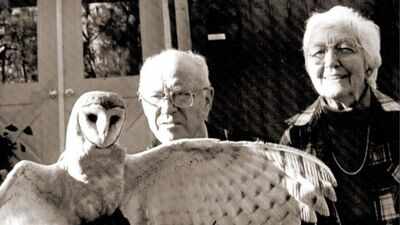
Jim and Betty Woodford. Image Credit: Cedar Run Wildlife refuge In 1951, Jim and Betty Woodford bought 185 acres in what was then the largely undeveloped Medford Township, New Jersey, hoping to create a summer retreat. But the land became the foundation for a lifelong commitment to wildlife. According to the Cedar Run website, the … Read more

In the 1990s, a predatory flatworm was released in Samoa to control giant African snails; it later became linked to the decline and extinction of native island snails

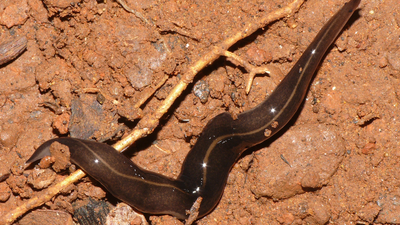
In the 1990s, a predatory flatworm was released in Samoa to control giant African snails An aggressive predatory flatworm introduced to Pacific islands during the 1990s to control agricultural pests has pushed native land snail species toward extinction, turning a planned biological control program into an ecological disaster. The New Guinea flatworm (Platydemus manokwari) was … Read more

In 2024, a beaver returned to a California creek after 19 years and began cutting down aspen trees beside a man-made dam | World News

For nearly two decades, there was no sign of beavers along Strawberry Creek in Great Basin National Park. Then, in 2024, park staff discovered evidence that one had returned, several quaking aspen trees had been freshly cut down beside a beaver dam analogue, a human-built structure designed to imitate the ecological effects of a natural … Read more

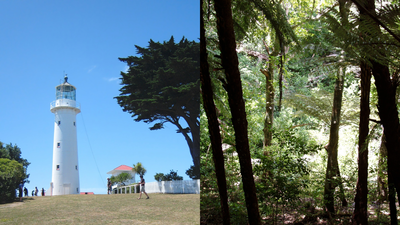
In 1980, a New Zealand lighthouse keeper stayed after automation ended his job; he later helped lead a restoration effort that planted 283,000 native trees

Tiritiri Matangi Lighthouse | Wikimedia Commons Ray Walter arrived on New Zealand’s Tiritiri Matangi Island as a lighthouse keeper in 1980, when the job was already approaching its end. The country was automating its lighthouses, and in 1984 Walter’s position disappeared when the Tiritiri Matangi light was automated. He did not leave the island. Instead, … Read more