Indian Railways, commonly called the national transporter, is now working to increase its passenger and freight carrying capacity on its highest density routes that often see demand outpace supply.Railway Minister Ashwini Vaishnaw has shared a plan to expand tracks on seven high density routes, introducing four lanes or four tracks to cater to the growing demand.India’s seven high-density railway routes, covering about 11,000 km, are being expanded to four tracks to handle more passenger and freight traffic across the country, Vaishnaw said recently.“Spread across nearly 11,000 km, these routes account for around 41 per cent of total railway traffic while covering just 16 per cent of the railway network,” he said on X, highlighting the importance of these corridors, which carry a substantial portion of India’s overall rail traffic.
Seven High Density Routes In Focus
The seven high-density routes link some of the country’s major cities and regions. They are;
- Delhi–Howrah
- Howrah–Chennai
- Chennai–Mumbai
- Mumbai–Delhi
- Delhi–Chennai
- Mumbai–Howrah
- Delhi–Guwahati
“Indian Railways is moving towards four-laning the entire high-density network to increase capacity and support the growing movement of passengers and freight across the country,” Vaishnaw said, pointing to the economic and environmental benefits of moving more people and goods by rail.He said expanding these important routes to four tracks is part of a broader plan to create a railway network capable of carrying more traffic, reducing transportation costs and enabling cleaner mobility.
Push For Multi-tracking
The Cabinet Committee on Economic Affairs recently approved four railway projects with a combined estimated cost of approximately Rs. 9,450 crore. The projects approved by the Ministry of Railways are:
- Kharagpur–Bhadrak (Ranital) 4th Line, covering 173 km across West Bengal and Odisha
- Bhadrak–Haridaspur 4th Line, covering 75 km in Odisha
- Gummidipundi–Gudur 3rd and 4th Line, covering 90 km across Andhra Pradesh and Tamil Nadu
- Cuttack–Paradeep (Badabandha) 3rd and 4th Line, covering 72 km in Odisha
The additional railway lines are expected to substantially increase network capacity, improving mobility as well as the operational efficiency and reliability of Indian Railways.The multi-tracking works will help ease congestion and make train operations more streamlined.The projects have been planned under the PM-Gati Shakti National Master Plan, with an emphasis on improving multi-modal connectivity and logistics efficiency through integrated planning and consultations with stakeholders. They are intended to provide seamless movement of people, goods and services.Together, the four projects will cover eight districts across West Bengal, Odisha, Tamil Nadu and Andhra Pradesh and add around 410 km to the existing Indian Railways network.The additional capacity is expected to strengthen rail connectivity to several major tourist destinations, including Kuldiha Wildlife Sanctuary, Bhitarkanika National Park, Maa Bhadrakali temple, Maa Dhamarai temple, Panchalingeswar Temple, Talsari–Udaypur and Chandipur Beach, Pulicat Lake, Nelapattu Bird Sanctuary, Lord Veeraraghava Perumal Temple, Gada Kujanga Jagannath Temple, Sarala Temple, Dhabaleswar Temple and Lalitgiri, a Buddhist site.
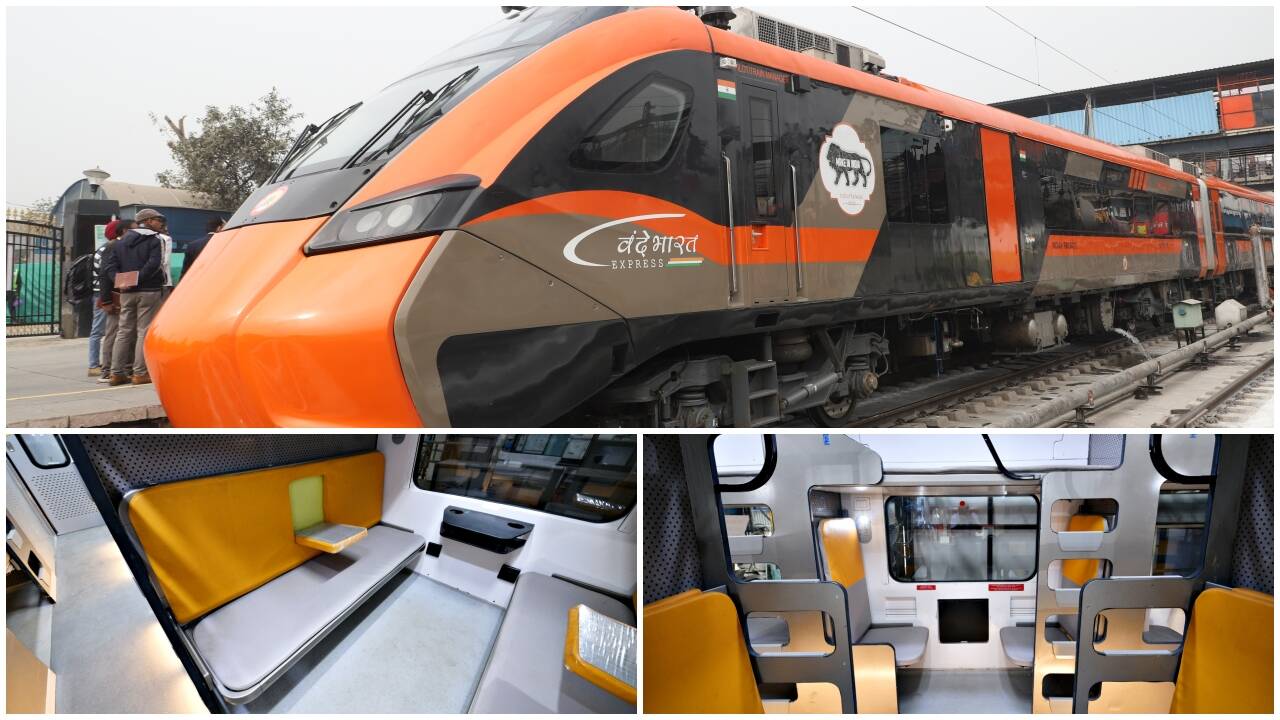
Vande Bharat Sleeper Train: The First Prototype
Indian Railways Modernization Push
Indian Railways is ramping up its infrastructure across a host of aspects: from trains and tracks to signalling and freight.It is undergoing a broader capacity and modernisation push, with the focus shifting towards faster, safer and higher-capacity rail infrastructure.The railway budget has risen from Rs 32,000 crore in 2014-15 to Rs 2.78 lakh crore in FY2026-27. Railway electrification has also expanded from about 20% before 2014 to 99.6% by July 2026, according to the Ministry of Railways.The network is also seeing the deployment of newer train services and technologies, including Vande Bharat trains, Vande Bharat Sleeper services and Amrit Bharat services.Kavach Version 4.0 has been commissioned on 2,633 route km as of July 2026, while the 508-km Mumbai-Ahmedabad High-Speed Rail corridor is being developed with a design speed of 350 kmph.At the station level, 261 of the 1,340 stations identified under the Amrit Bharat Station Scheme had been redeveloped as of July 18, 2026.The broader infrastructure push is aimed at creating high-capacity systems capable of meeting future demand, rather than simply addressing today’s requirements.