


Jolene, Jolene, Jolene, JoleneOh, I’m begging of you please don’t take my manJolene, Jolene, Jolene, JolenePlease don’t take him even though you can– Dolly Parton, singer, songwriter, philanthropist, legendDid Jolene listen? Did he leave Parton’s man alone? Or, did Parton lose her man to Jolene? I say Parton. But Dolly Parton didn’t lose her man—her husband of 59 years, Carl Thomas Dean, who died a year before her—to Jolene. Or, anyone else. People say, the American country singer, philanthropist and simply a legend, Dolly Parton, who died August 25th, was not the same since Dean’s death. It seems to be true. She died a year after her husband passed away. This was a rock-solid marriage. It must have gone through ups and downs, but the partnership and bond was unbreakable.Quite unlike the song that defined her career. Actually, three songs—’Jolene’, ‘I will Always Love You’ (Yes, the one Whitney Houston made famous in the film Bodyguard), and ‘9 to5’—in a glittering career spanning six decades. Parton had the title of the most honored country performers in history, earning 11 Grammy Awards, three Emmy Awards, nominations for two Academy Awards, six Golden Globes and a Tony Award. Doesn’t seem to be an achievement of someone in one lifetime. But it is.Today though we are going to talk about ‘Jolene’, and only ‘Jolene’. And the raw vulnerability of the song that has inspired innumerable covers, even other versions. We’ll get into all that. But for now, let’s trace the roots of Jolene…Dolly Parton wrote her 1973 hit song ‘Jolene’ after a red-haired bank teller flirted with her husband, Dean early in their marriage, sometime around 1966. This bank teller was a stunning red-head who spent extra time helping Dean at his local bank. Parton joked that Carl was going to the bank way too often for how little money they had. She even admitted she felt a bit insecure and jealous at the time.Now, the name ‘Jolene’ is another story. It came from a young fan with red hair and green eyes, who came up to the stage asking for an autograph. Parton loved the name and used it for the song, which was on her mind for almost a decade. ‘Jolene’ was finally recorded in May 1973 and released later that year. The track became her first solo number-one smash hit on the country charts. The rest, as they say, is history.
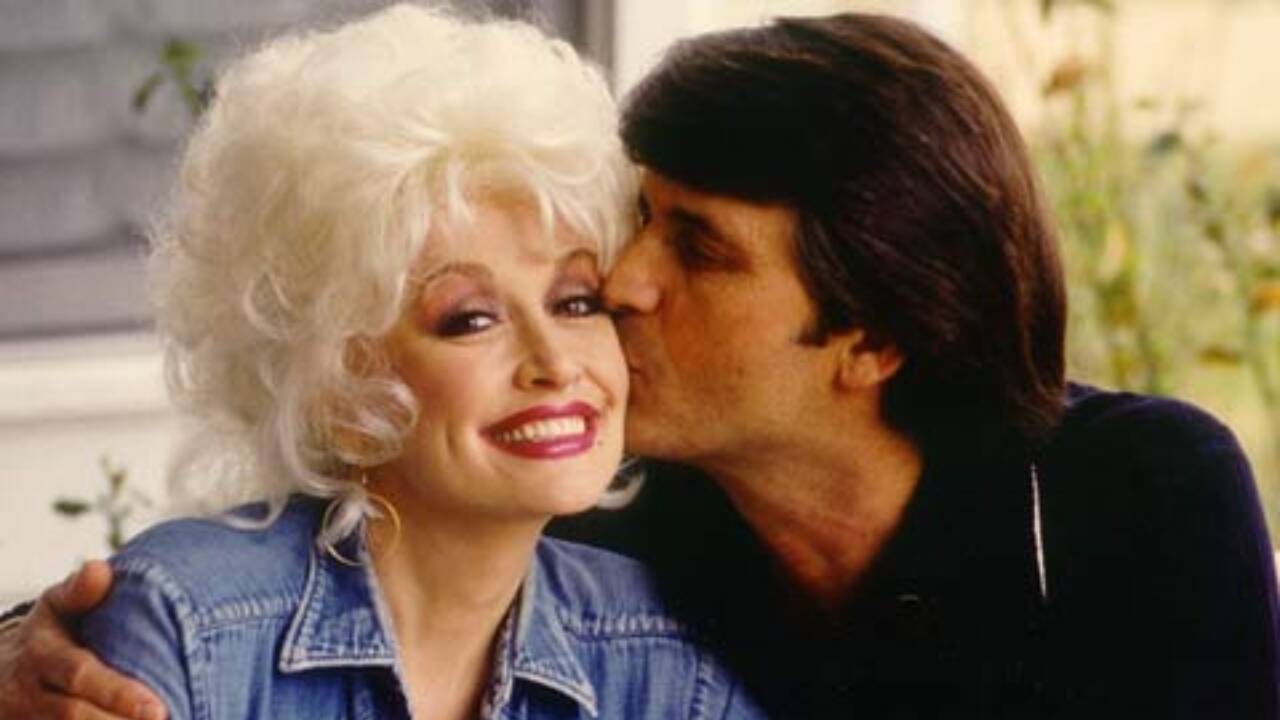
Dolly Parton with her husband Carl Thomas Green. They were married for 59 years
The reason ‘Jolene’ stands out among all her songs is because it bypassed the standard romantic conventions of country and pop music to deliver an unvarnished confession of human helplessness. Sample this:Your beauty is beyond compareWith flaming locks of auburn hairWith ivory skin and eyes of emerald greenYour smile is like a breath of springYour skin is soft like summer rainAnd I can not compete with you, Jolene…At its core, the song captures the acute torment of watching a romantic partner flirt with someone else, an experience that speaks directly to the universal fear of the utter devastation called heartbreak. Parton’s desperate plea to the title character not to take her lover is framed by the haunting phrase: “even though you can”.That is where this song’s genius lies. “Dolly Parton gave us songs that are deeply personal yet belong to everyone. She turned her vulnerability into timeless art,” says Molly Kashyap, businessman, music aficionado, and co-founder of the group National Conservation of Rock – a motley group of people around Delhi/NCR who are keeping the tradition of old rock alive and well through live shows and music gatherings with like-minded people.‘Jolene’ stands as one of the most honest portrayals of romantic insecurity. When sung by a living, breathing legend, it struck a raw nerve of listeners all over the world. For a second, we all feIt that no matter how famous or how common, this could be any woman’s deepest fear.This song feels more human than most songs of any age, let alone now, when “winning” and “moving on” and “getting over” and “revenge” are love tracks that get traction. Sorry, bad pun. But it’s true. Not that any of these emotions are any less valid. But where did romance go? And why don’t people write about the sweet and bitter pain of heartbreak like Parton did anymore?‘Jolene’ also represents a distinct shift from traditional infidelity narratives in popular music. In conventional mid-20th-century country songs about romantic rivalry, interactions between women were typically characterized by anger, moral judgment, or assertions of territorial ownership. Parton discarded these conventions. She structured the song as a direct, one-sided conversation between the threatened wife and the woman who holds her domestic happiness in her hands.The song’s power stems from the protagonist’s total surrender of personal pride – something utterly missing from the language of love in songs of our times, feels Ranjini Chatterjee, senior graphic designer & visual artist. “In a society that holds little to no room for vulnerability—where women who express their heartbreak are often labeled as “attention seekers”—Dolly Parton offered a sanctuary for many of us. ‘Jolene’ fostered a “women supporting women” mentality against archaic social norms of rivalry amongst women,” says she.Here comes the next lines of the iconic song: And I can easily understandHow you could easily take my manBut you don’t know what he means to me, JoleneHe talks about you in his sleepThere’s nothing I can do to keepFrom crying when he calls your name, Jolene, JoleneJolene, Jolene, Jolene, JolenePlease don’t take him even though you canIn an interview to ‘60 Minutes Australia’, in 2020, Parton said of ‘Jolene’: “Every woman can relate to it, and every man, really. I think women love it because I think there’s somebody out there that could turn the head of the person that you love. I think everybody has that fear, and it happens all the time”.But very few can write it with such raw power. Parton rather than belittling her rival, elevates Jolene’s physical beauty. Says Payal Chatterjee, senior sales executive with one of India’s top-most airlines, “As I kept listening to the song in the last 24 hours, it really struck me how instead of rage, her pleas would possibly work if Jolene really heard it. It takes a lot of guts to admit your own insecurity, especially to another woman. There is an unspoken beauty in her “begging”. It’s not begging really. It’s someone’s heart cut open for all to see.”Through vivid imagery, the narrator of the song praises Jolene’s “flaming locks of auburn hair,” “ivory skin,” “eyes of emerald green,” a voice “soft like summer rain,” and a smile “like a breath of spring”. By extolling these traits, Parton’s narrator of the song openly exposes her own perceived inadequacies without any ego, plainly stating, “I cannot compete with you, Jolene”.This admission highlights a complex gendered dynamic. The male partner—the husband whose wandering attention creates the crisis—is visually and vocally absent from the immediate dialogue. He is depicted as a passive figure who mutters Jolene’s name in his sleep, revealing his vulnerability to her charm while leaving his partner to manage the emotional damage.What Parton does with this song is highlight the structural fragility of love and relationships experienced by all of us. Especially, when the stability of the relationship totally depends on a partner’s uncertain devotion. Feels familiar, doesn’t it? We have all been the narrator. We have all been Jolene. We have all been the husband. Or, some of us. But it’s impossible to say that none of us have felt what the narrator of ‘Jolene’ feels – at some point in our lives.Here’s how the song goes next: Jolene, Jolene, Jolene, JolenePlease don’t take him even though you canI had to have this talk with youMy happiness depends on youAnd whatever you decide to do, JoleneAnd you could have your choice of menBy bypassing the husband and appealing directly to Jolene, the narrator places full agency with the rival. Surya Ragunaathan, music composer and singer of ‘Manike’ from Thank God, says, “This is a song about a woman pleading to another woman, acknowledging that she was better than her own self, to not take her man away from her. I cannot think of any singer, pop star or artist that could have this much strength of character to be vulnerable like this. To even think of this perspective and to be so openly and desperately beg “for my man”, was truly a hallmark of those simpler, more honest times… when artists and people had a kind of inner strength that I often feel is very lacking in today’s times.”The closing lines of the second verse: ‘My happiness depends on you / And whatever you decide to do, Jolene’ represents a complete yield of power. Parton captures a profound act of vulnerability, portraying a protagonist who places her future entirely at the mercy of another woman. The song is a powerful conversation between two women. Times have changed, and the many covers apart, ‘Jolene’ also has the distinction of being re-interpreted.Beyonce did it. Some liked it, most didn’t. But we aren’t here to judge. The song’s innumerable covers and interpretation are only testament to the power of the original one written by Parton. Beyonce’s spin on the song goes like this: ‘I’m warning you, don’t come for my man’. It’s understandable in times where young successful singers have made careers out of “winning after break-up” songs.Art and music curator Pankaj Mullick, also a member of National Conservation of Rock, has a unique take. He says, “What if in Jolene’s version of the song, she is empathetic to Dolly’s plea to leave her man alone. Not just that, but she has her own sad and scary tale to tell. And a warning, as well as a new approach. She first clears the air of any bad intent; she tells Dolly she had no idea the man was married. In fact, he explicitly told her he was unattached. He lied so well, so effortlessly, so smoothly that now, looking back at that moment, it scares her.” Wouldn’t that make for a great movie? Is anyone in Hollywood hearing?In another rendition, country trio Chapel Hart appeared on ‘America’s Got Talent’ and received rave reviews when they introduced their spin. It said: ‘You can have him, Jolene’. This was a completely new take that basically showed how ‘Jolene’ would never stop finding listeners who could discover new meaning in the song.But hear the original out again. There’s no beating ‘Jolene’ whatever interpretation is given to the song even in the future. So, in the end, here’s how the song goes…But I could never love againCause he’s the only one for me, Jolene, JoleneJolene, Jolene, Jolene, JoleneOh, I’m begging of you please don’t take my manJolene, Jolene, Jolene, JolenePlease don’t take him even though you canJolene, JoleneTo understand the unique status of ‘Jolene’, the song must be placed within the broader evolution of heartbreak music. Popular songs from the 1950s to the 1980s allowed romantic grief to exist without demanding an immediate display of triumph. Music in those times prioritised catharsis through raw, visceral emotional exposure.Contemporary breakup music is a stark contrast to this idea. Today’s pop, rock, Bollywood or songs talk—sometimes scream—personal triumph, revenge and self-empowerment. Modern songs frame romantic failure as something the protagonist must “win”. While such anthems can offer a sense of control, they can also present an artificial view of heartbreak.Because real heartbreak rarely follows a neat path to triumph; it involves self-doubt, fear and sadness. ‘Jolene’ has endured the test of time because it has rejected performative invulnerability. And in doing so, it has allowed us to acknowledge genuine hurt by having a straight conversation with the “other woman”. The power of ‘Jolene’ lies in its grace. In giving agency to the rival. Released in 1974, Parton’s ‘Jolene’ is unparalleled because it doesn’t shy away from the unbearable yet inevitable pain of heartbreak. Jolene refuses to apologize for it. Neither should we, frankly.