
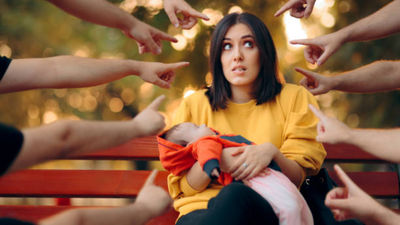
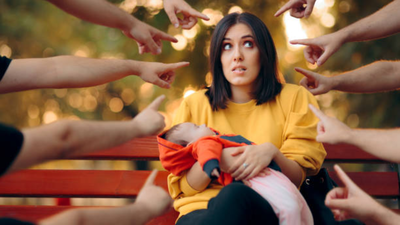
Parents in the thought of becoming the “perfect parents” go through a particular kind of tiredness that doesn’t show up on a sleep tracker. It’s the tiredness of scrolling through a feed at 11 p.m., right after finally getting the kids down, and landing on a picture of another mother’s color-coded pantry, or another father’s DIY treehouse, or a birthday party that looks like it was styled by a magazine.You close the app, look around your own living room littered with half-eaten crackers and stray socks, and something in you deflates a little.
28 Jul 2026 | 16:22
How do you teach children about money and financial responsibility?
This feeling has a name now, and it isn’t just in your head. Researchers at Ohio State University’s College of Nursing surveyed more than 700 parents in 2023 and found that well over half reported feeling burned out.That number should stop us in our tracks. Parenting has always been demanding, but something about this particular moment in history has made it feel unbearably heavy and a lot of that extra weight, psychologists say, is being loaded on by the glowing rectangle in our pockets.
Why the feed feels like a report card
Parenting didn’t come with a live audience. A generation ago, if a toddler threw tantrums at the grocery store, it was witnessed by a handful of strangers and forgotten by dinnertime. Today, that same behaviour gets quietly measured, in a parent’s own head, against the smiling, well-behaved children they scrolled past that morning.Somewhere in the last two decades, parenting has transformed and it quietly turned into a kind of achievement contest, with social media keeping score at every turn.This kind of anxiety isn’t imposed on parents from the outside world at all. It comes from the media they consume and the circles they move in, and it slowly warps how they judge themselves. It isn’t that today’s parents are trying harder than their own parents did. It’s that they’re being measured against a highlight reel instead of a real day.
When celebrities admit the curtain is fake
What makes this pressure so strange is that even the people who seem to have it “all figured out” online are the ones saying, quite openly, that it’s an illusion.Chrissy Teigen, who has millions of followers and built part of her career on being candid online, has said she wants to keep her own children off social media for as long as possible, until they finish high school. Because she wants her children to be in a safe and happy space.Angelina Jolie, a mother of six, has said something similar in her own way. She’s spoken about being deliberately honest and unpolished with her kids, and has openly admitted she’s not a perfect parent.
The numbers behind the guilt
This isn’t just a handful of famous quotes; the data lines up with it. A large global study by Dove, focused specifically on mothers, found that nearly nine in ten feel pressure to be a perfect parent, and roughly seven in ten regularly question whether what they’re doing is even good enough.Parents draw constant comparison with other parents putting them in difficult introspection which has brought nothing but worries in their lives.Nobody in these comparisons is necessarily lying. It’s simply that nobody is showing the whole picture, and measuring your blooper reel against someone else’s highlight reel was always going to end badly.
Putting the phone down without the guilt
None of this makes social media the villain, and sharing a proud parenting moment online isn’t dishonest. The problem isn’t the sharing, it’s the forgetting. We forget that the perfect birthday photo happened five minutes after a meltdown.We forget the spotless kitchen was tidied only for the picture. We forget that everyone editing their life for an audience is human, tired, and unsure, just like the rest of us.Maybe the most useful thing any parent can do with all this is simple: notice the exact moment a comparison starts, and gently remind yourself that you’re weighing a real, complicated day against someone else’s carefully chosen ten seconds. Nobody wins that comparison, because it was never a fair one to begin with.