
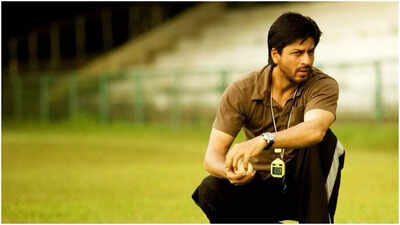
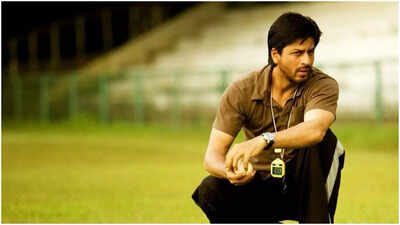
Last month, when Gen Z protesters gathered at Jantar Mantar, one of the lines on a placard read: “Koi bhi desh perfect nahi hota. Usse perfect banana padta hai.” The dialogue, from Rakeysh Omprakash Mehra’s 2006 film Rang De Basanti, has long been lodged in the way young India talks about duty. And film writers say, on the streets, it acquired a new life.As India marks its 80th Independence Day, we asked the people who write these lines – screenwriters, directors and lyricists about that one patriotic dialogue that has never left them.Their answers reached as far back as Garam Hawa, Haqeeqat to Chak De! India, released nearly two decades ago in 2007 – spoken by a soldier, a hockey coach, a journalist – and made clear there is no single definition of patriotism.What writers chose shows that the dialogues that endure are about what citizens owe the country, and what the country owes them back: the willingness to question, to participate, to keep building.Maybe that’s why they keep resurfacing long after the credits roll – on Independence Day, certainly, but just as often in day-to-day conversation, in school plays, on protest placards, in the moments when the country is once again asking itself who it wants to become.“Chalo, chalo Pyare Lal, nayi-nayi azaadi mili hai, toh sab iska apne-apne hisaab se matlab nikaal rahe hain” – Garam Hawa (1973)“In this scene from MS Sathyu’s Garam Hawa, a tonga driver asks for two rupees instead of fifty paise. As Pyare Lal argues with him over the fare, Salim Mirza steps in with this line.I like this dialgue. Iss chhote se samvad mein azaadi ke alag-alag matlab bhi hain aur ek behad zaroori sawal bhi ki aakhir nayi mili azadi kiske liye kya maayne rakhti hai?–Raj Shekhar, lyricist Operation Safed Sagar and General Secretary of Screenwriters Association of India“Naa raaja rahega, naa raani rahegi yeh duniya hai faani faani rahegi, naa jab ek bhi jindgani rahegi toh mati sabhi ki kahaani kahegi” -Navrang (1959)“Technically, these are lyrics written by Shri Bharat Vyas. But I look at them as dialogue because in the film Navrang, keeping in the traditions of how songs were used in that golden era of Hindi cinema, a British soldier’s dialogue provokes the bard to sing these lines as a reply to that dialogue. Why do I love these lines? – It is a universal truth. Kings and queens come and go. So do ideological regimes. But the land, the soil, remembers. Everything. A totally impartial, silent chronicler of history.It is patriotic for me because I always feel it refers to our ancient and wise civilisation that has absorbed so much and has always been inclusive.These lines are a plea against the arrogance of humans in power. It connects.”-Charudutt Acharya, president Screenwriters Association of India “Main nahin maanta hamaara desh duniya ka sabse mahaan desh hai. Lekin yeh zaroor maanta hoon ki hum mein qaabiliyat hai, taaqat hai, apne desh ko mahaan banaane ki” – Swades“I love this dialogue because it was true yesterday, it is true today, and it will be true tomorrow.India is a young nation with an ancient soul. We are over a billion people, our challenges are bigger, but so is our potential. We cannot stop, settle or believe we have arrived. We have to keep evolving, solving…Non stop. For me, loving your country is not about saying it is the greatest. It is about asking yourself every day, what am I doing to make it greater? That is why this line will always stay with me. It doesn’t just make you feel proud of India. It makes you feel Act for India.”-Bharat Bala, writer, producer of Virtual Bharat“This dialogue from Swades resonates with me because it is rooted in responsibility rather than rhetoric. It doesn’t ask us to celebrate India uncritically, it asks us to participate in its making. To me, patriotism is not about claiming greatness, but about contributing, questioning and caring enough to make things better. (Unfortunately) even after all these years, the line feels remarkably relevant and honest.“-Vikas Kumar, producer“Yeh hamara desh, yeh Buddh, Ashok, Gandhi, aur Nehru ka desh hai … shanti ka pujari zaroor hai, lekin buzdili ka kayal nahi”. -HaqeeqatI like this dialogue from Haqeeqat because it associates great Indians, actual people who followed the principles, with what it is to be Indian.-Shibani Bathija, writer of My Name Is Khan“Koi bhi desh perfect nahi hota. Usse perfect banana padta hai.” – Rang De BasantiI love this dialogue because it captures what patriotism really means to me. A nation isn’t built by governments alone; it is built by its people. And in a democracy like India, we are not just citizens instead we are stakeholders.Every generation has to take responsibility for the India it wants to see. And recently, the way Gen Z has stepped up from the streets of Jharkhand to Jantar Mantar, raising their voices, demanding accountability and saying that they want change and are willing to fight for it, has genuinely refreshed my faith in this dialogue.India doesn’t just occasionally offer us hope, it constantly challenges us to act. It reminds us, again and again, that change is not something we wait for; it is something we participate in.That, to me, is patriotism. Not expecting a perfect India, but having the courage to help make India better.Kallol mukherjee, documentary filmmaker, Herland“Mujhe states ke naam na sunai dete hain na dikhai dete hain. Sirf ek mulk ka naam sunai deta hai- INDIA’ -Chak De! India“In a world where divisiveness thrives; us’ and ‘them’ is a narrative that is taught even to little children at homes; where caste, class, colour, gender, sexual preference, ideology – anything and everything is a basis for discrimination and isolation, this one dialogue, extremely succinctly, talks of UNITY. It embodies togetherness, love and pride in our people. It offers a narrative that is inclusive. And that is something that we need more than ever today.“-Vibha Singh, screenplay writer The Test Case“I think this is one statement that really connected with me, apart from the whole film. This dialogue talks about secularism and unity – that is the need of the hour. We (as a society) are losing our secular nature over the last few years. I think this is a good reminder of what the foundation of this country is built on: that though we are different in terms of states, religions and castes, we are all Indians, and that is the unity we need. This is a line that has stayed with me.”-Sudeep Nigam, writer Avrodh: The Siege WithinHindustan Zindabad tha, zindabad hai, aur zindabad rahega – Gadar I think this is one of the most well-crafted scenes and sequences in the history of Indian cinema. You have a character (Tara Singh, a Sikh truck driver from India, who crosses into Pakistan to bring back his wife, Sakeena) who is innocent and honest. They try to insult him by asking him to say, “Pakistan zindabad,” and he is willing to do that. Then they say, “Hindustan murdabad,” and that’s when he says this dialogue. The context is that he is saying these words in front of people who are thirsty for his blood.This character – what he does for me is that he sums up the ethos of being a true Indian.A true Indian has no problem with any other country. A true Indian is not expansionist by nature. He is extremely proud of the fact that he is an Indian. Being an Indian is nicely summed up in this particular scene and in that particular dialogue. Of all the screenwriting workshops that I have taken so far, this is one scene that I always decipher.-Abhijeet Deshpande, writerShaheedon ki chitaon par lagenge har baras mele, watan par mitne walon ka yahi baaki Nissan hoga – Shaheed (1965)This is one dialogue that has stayed with me. Then the dialogue Hindustan Zindabad tha, zindabad hai, aur zindabad rahega from Gadar, Border dialogues, Swades have all been embedded in my memory.Kapil Mattoo, writer-director Tasrufdar“Main Hindustan hoon, Himalaya meri sarhadon ka nigehbaan hai, Ganga meri pavitrata ki saugandh…” – Mughal-e-Azam“It shows a map of undivided India, and there is a voice-over written by Zeenat Aman’s father, Amanullah Khan. I like this dialogue because it presents Akbar as a great patriot who loved India. But above all, he loved India regardless of differences of religion, custom or faith. He loved people as human beings and as Indians. I like that vision of India, and it’s highly patriotic. This dialogue – this idea of “Himalaya meri sarhad” – and it reminds me of this shlok from the Vishnu Purana that defines Bharat: “Uttaram yatsamudrasya Himadreshchaiva dakshinam, varsham tad Bharatam nama Bharati yatra santatih.”-Mahmood Farooqui, co-director Peepli Live“Main likhta hoon sirf isliye kyunki logon ko sacchai jaan ne ka haq hai, aur un tak sachchai ko pahunchana mera farz hai. (New Delhi Times, 1986)“This dialogue may not sound patriotic at face value, but to me, this is what patriotism looks like. As a writer, I believe writers are also chroniclers of their times and sometimes, journalists in their own way. Telling the truth, questioning power and helping people see their reality clearly is also a form of service to one’s country.”Puneet Sharma, lyricist Sanju