
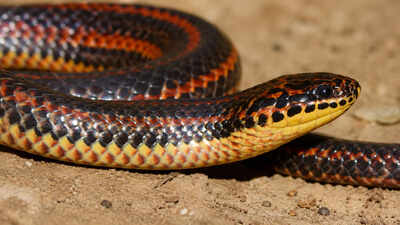
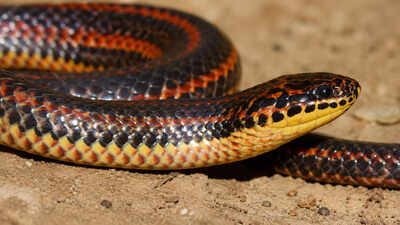
For decades, the rainbow snake appeared to have vanished from parts of Florida where it had once been documented. That changed in February 2020, when hiker Tracey Cauthen encountered a strikingly colourful snake while walking through Ocala National Forest. She photographed the roughly four-foot-long animal, providing researchers with a verifiable record rather than an unconfirmed report. The Florida Museum of Natural History and Florida wildlife officials identified the animal as a rainbow snake (Farancia erytrogramma), According to CNN, it became the first recorded sighting in Marion County since 1969. The discovery was particularly significant because rainbow snakes are notoriously secretive and spend much of their lives in or around water. Although their vivid colours make them distinctive when encountered, locating one in the wild can be extremely difficult. The species is non-venomous and primarily aquatic, living around springs, rivers, swamps, marshes and other wet habitats. Its elusive behaviour and dependence on aquatic environments help explain why a single documented encounter can become valuable evidence for scientists tracking where the species still survives.
A four-foot snake with an appearance unlike most Florida reptiles
Rainbow snakes are among Florida’s most distinctive-looking snakes, with adults typically measuring 27 to 48 inches long. Their bodies are glossy black and can appear blue or violet in sunlight, while three narrow red stripes run along the back and sides. Yellow or pink colouring appears along the lower body, while the chin and throat are yellow. Despite their dramatic appearance, these snakes are not dangerous to people or pets. The Florida Museum classifies them as non-venomous and describes them as generally docile. When approached, a rainbow snake will usually remain still or move away slowly rather than attack. Its pointed tail tip can look like a stinger, but the museum stresses that the structure is completely harmless. Their unusual appearance is therefore not a warning signal but simply part of the species’ natural colouration. Their secretive behaviour, rather than aggression, is one reason encounters remain uncommon.
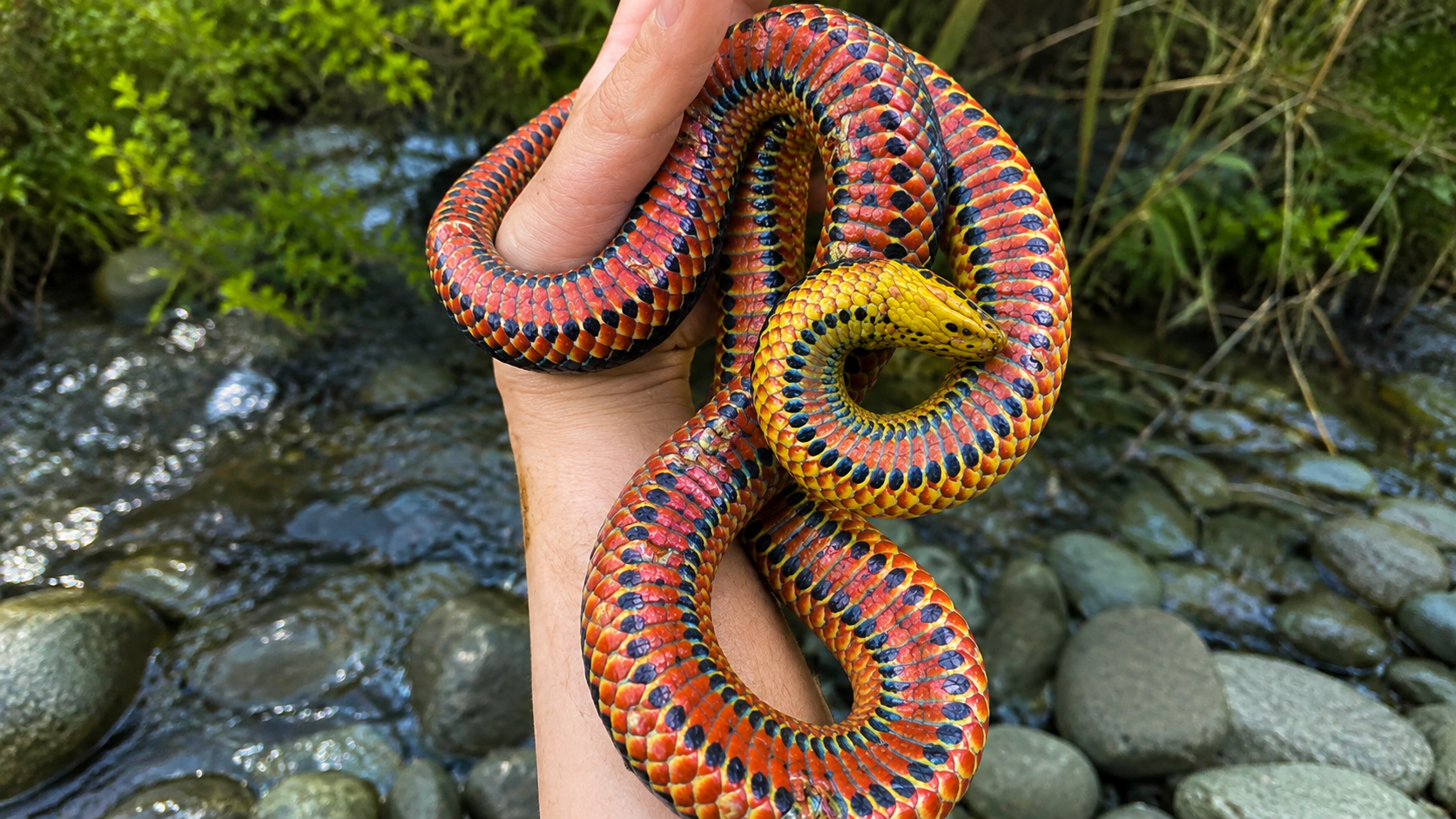
A four-foot snake with an appearance unlike most Florida reptiles (Image: Parker Gibbons)
Rainbow snakes spend much of their lives hidden in Florida’s waterways
The rainbow snake’s habitat helps explain why decades can pass without a confirmed sighting. The species is primarily aquatic, with individuals living around clear springs and rivers and sometimes appearing in creeks, lakes, cypress swamps, marshes and tidal mudflats. They can hide beneath floating vegetation, along waterbanks and under logs or other shoreline debris. They are also primarily nocturnal, and their diet makes their dependence on aquatic ecosystems particularly clear. Adult rainbow snakes feed mainly on American eels, swallowing their prey alive without constriction, while younger snakes can eat tadpoles and earthworms. The species’ reliance on aquatic prey means that a confirmed sighting can provide useful information about the condition and distribution of the habitats it occupies. The Florida Museum also notes that rainbow snakes occasionally cross roads at night, particularly during or after heavy rainfall. These brief movements may provide some of the few opportunities for people to encounter an animal that otherwise spends most of its time concealed near water.
The 2020 discovery did not mean Florida’s rainbow snakes were suddenly abundant
A single confirmed snake cannot establish that a population has recovered or that the species is widespread in an area. Instead, Cauthen’s photograph filled an important gap in the historical record by demonstrating that rainbow snakes were still present in Marion County after decades without a documented observation. CBS Miami, reporting on the discovery and subsequent conservation effort, said the Florida Museum confirmed the 2020 animal as the county’s first recorded rainbow snake sighting since 1969. There is also a much more uncertain story farther south. The Southern Florida rainbow snake, a separate subspecies, is known only from Fisheating Creek in Glades County. The Florida Museum says only three specimens have ever been found, all between 1949 and 1952, and repeated searches since then have been unsuccessful. The museum therefore considers that population potentially extinct. This distinction is important: the 2020 Marion County photograph showed that the common rainbow snake was still present in an area where it had not been documented for 51 years, but it did not prove that every historical population of rainbow snakes remains secure.
In 2025, Florida officials asked people to help find more rainbow snakes
The rarity of confirmed observations is why wildlife officials have turned to the public. In 2025, the Florida Fish and Wildlife Conservation Commission (FWC) asked Floridians and visitors to report rainbow snake encounters, particularly with photographs that could allow scientists to verify the species and location. Kevin Enge, a research scientist with the FWC’s Fish and Wildlife Research Institute, told CBS Miami that officials needed help understanding where rainbow snakes still occur in Florida, explaining that every sighting report provides valuable information about their current distribution and the species’ health. The request is straightforward: if someone encounters a rainbow snake, they should record the photograph, location and date and report the observation rather than attempting to capture the animal. The Florida Museum likewise encourages people to submit photographs or videos of interesting observations to its herpetology staff or through iNaturalist. For a snake that can remain hidden for decades between confirmed records, a single photograph can therefore become much more than an unusual wildlife picture. It can help scientists map where the species survives and determine whether the rainbow snake is truly returning to places where it once seemed to have vanished.