
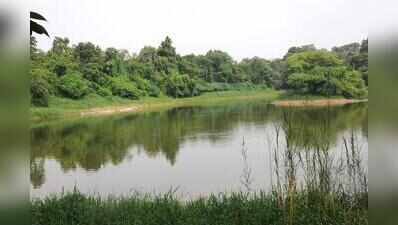
Patna: Once, Bihar’s towns and villages grew around water. Ponds, or pokhars, along with the traditional ahar-pyne irrigation network, shaped daily life, sustained farming, recharged groundwater and provided spaces for festivals, rituals and community gatherings. Today, many of these centuries-old water bodies are disappearing beneath concrete, roads and expanding settlements, leaving behind a landscape poorer in both ecology and memory.Across the state, rapid urbanisation, unplanned growth and relentless real estate expansion have pushed ponds, tanks, lakes and wetlands towards extinction. Surveys and environmental studies suggest that numerous historic water bodies have either been encroached upon or erased altogether to make way for housing colonies, commercial establishments and infrastructure projects.The change is stark in Darbhanga, once known for its extensive network of ponds. Conservationists estimate that nearly one-fourth of the city’s registered ponds have already been drained or filled.Indian National Trust for Art and Cultural Heritage (Intach) state co-convener Shiv Kumar Mishra blamed rampant encroachment and weak enforcement for the crisis. “Private developers and individual land grabbers operate with impunity, capitalising on weak local surveillance and sluggish administrative responses,” he said.Patna offers perhaps the clearest example of this decline. Until a few decades ago, the city was dotted with ponds that met local water needs and softened the urban landscape. Most have now vanished beneath concrete.Older residents still remember a large pond near the IMA Hall at the south-eastern corner of Gandhi Maidan. It supported fisheries and provided a resting place for passers-by. The pond has long since disappeared, replaced by Netaji Subhash Chandra Bose Park.Former Geological Survey of India director N Dayal said more than a dozen ponds in Patna, remembered by older generations, have been lost. He added that around 35 acres of lakes were filled before the construction of the All India Institute of Medical Sciences (AIIMS), Patna. Other landmarks, including the Indira Gandhi Planetarium, the area around Vaishali Cinema, the Accountant General’s office and the Saidpur campus of Patna University, stand on land that once held thriving water bodies.According to Dayal, Patna district once had nearly 1,000 lakes, but little more than 200 survive today. Similar losses have been recorded in Gaya, Darbhanga, Motihari, Muzaffarpur and Bhagalpur.Environmentalist Mehta Nagendra Singh alleged that wetlands have often been converted into concrete-lined structures or commercial recreation zones in the name of beautification.“Municipal bodies and local development authorities have frequently transformed natural wetlands into concrete-lined pits or commercial entertainment zones under the guise of beautification,” he said.He also alleged that municipal waste and untreated sewage continue to be dumped into surviving lakes, degrading water quality and damaging aquatic life.As administrative efforts have fallen short, citizen groups have increasingly turned to the courts. Organisations such as Talab Bachao Abhiyan and concerned residents approached the National Green Tribunal and the Patna High Court, prompting closer monitoring of encroachments.Judicial scrutiny intensified when the Supreme Court intervened in matters relating to river floodplains and urban lakes, directing the state govt to halt controversial alterations and commercialisation around heritage water bodies.Talab Bachao Abhiyan convener Narayan Ji Chaudhary described the intervention as a turning point. “These forceful interventions signal a major judicial pivot towards asserting ecological accountability and prioritising long-term environmental survival over short-sighted commercial land conversion,” he said.Environmentalists warn that unless strict protection, scientific restoration and community participation are ensured, Bihar may lose not only vital water resources but also an important part of its cultural heritage.