
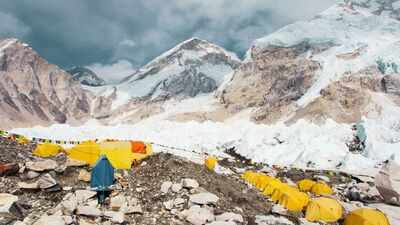
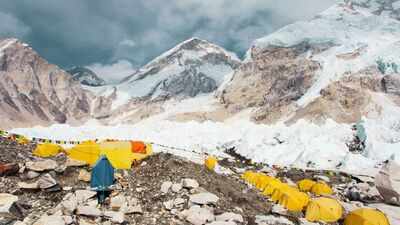
Mount Everest is probably one of the most mysterious natural wonders on Earth. It hides mysteries that scientists are still researching and trying to uncover. The world’s tallest mountain might be covered in snow today (rising 8,848.86 metres above sea level), but many studies back the fact that it was once part of the sea. The rocks close to the top of the world’s highest mountain tell a different story which is connected to the ocean.Hidden inside limestone near Everest’s summit are the remains of creatures that lived in an ancient marine environment hundreds of millions of years ago. In simple words, there are some rocks above 8,000 metres which were once part of a seabed. It’s quite fascinating to see these scientific discoveries trying to unfold the mysteries of Everest.The scientific discoveries
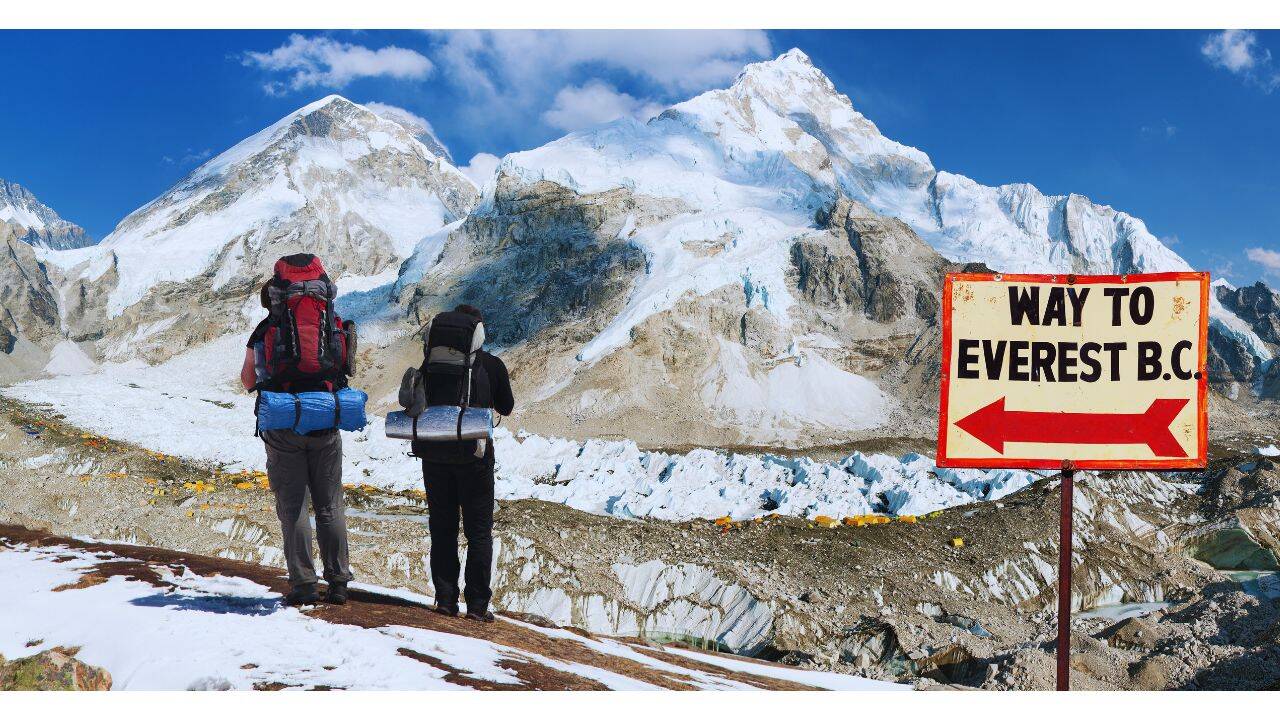
Climbers at Everest (Canva)
These are not merely a popular geological curiosity but backed by decades of scientific research. In 2005, a study named, “Geology of the summit limestone of Mount Qomolangma (Everest) and cooling history of the Yellow Band under the Qomolangma detachment,” was published. Island Arc. Researchers examined limestone from the summit area and identified skeletal fragments of trilobites, ostracods and crinoids.These described the rocks as part of the Qomolangma Formation from the Ordovician age.Fossils at the top of the world
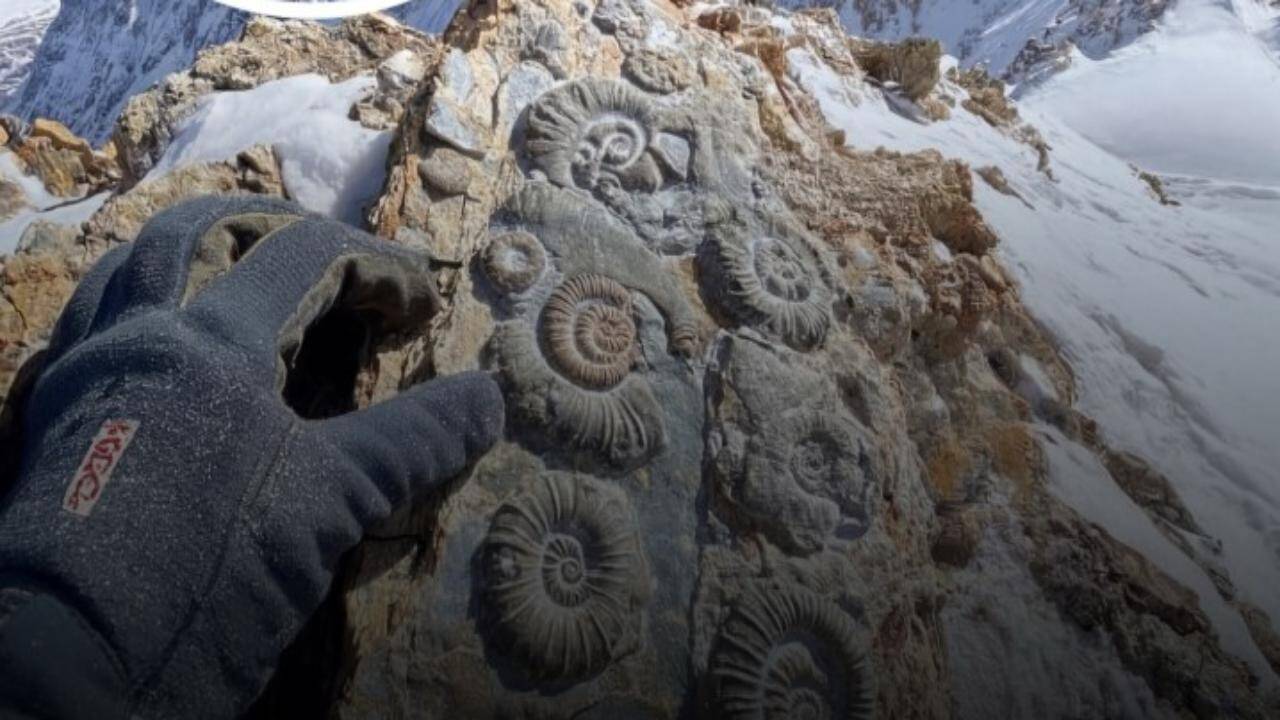
Fossils at Everest (Instagram)
Imagine finding marine fossils on Everest. It sounds almost impossible. But the summit pyramid of Everest is made partly of the Qomolangma Formation and as per geological studies, these rocks were originally deposited in a marine setting.Their presence puts light on the fact how the Himalayas formed over 50 million years ago and these are also a crucial evidence for plate tectonics. Research from the Everest Education Expedition at Montana State University also describes the summit as being composed of fossil-bearing marine limestone from the Lower to Middle Ordovician period.The 2005 Island Arc study also offers evidence. Scientists found fragments of trilobites, ostracods and crinoids preserved in the limestone. These organisms lived in the marine environment in which the sedimentary rocks were originally deposited.A 2020 study in the Journal of Structural Geology, “The structural evolution of the Qomolangma Formation, Mount Everest, Nepal,” also reviewed earlier fossil discoveries and found crinoid, brachiopod, ostracod and trilobite remains in the summit rocks. The researchers also confirmed that the rocks of the summit record a complicated history of deformation as the Himalayas evolved.From shallow sea to Himalayan summitSo how did marine limestone end up at the top of Everest?Long before the Himalayas existed, the region was associated with the northern margin of the Indian tectonic plate and the ancient Tethyan marine realm. Sediments accumulated in marine environments were compressed and transformed into rock.The Indian plate subsequently moved northward and eventually collided with the Eurasian plate. That collision began the enormous geological process that created the Himalayas.It is more accurate to picture the ancient seabed itself being uplifted. Layers of sedimentary rock that had formed under marine conditions were folded, faulted and pushed upward as the two continental plates converged.Lessons for travellers
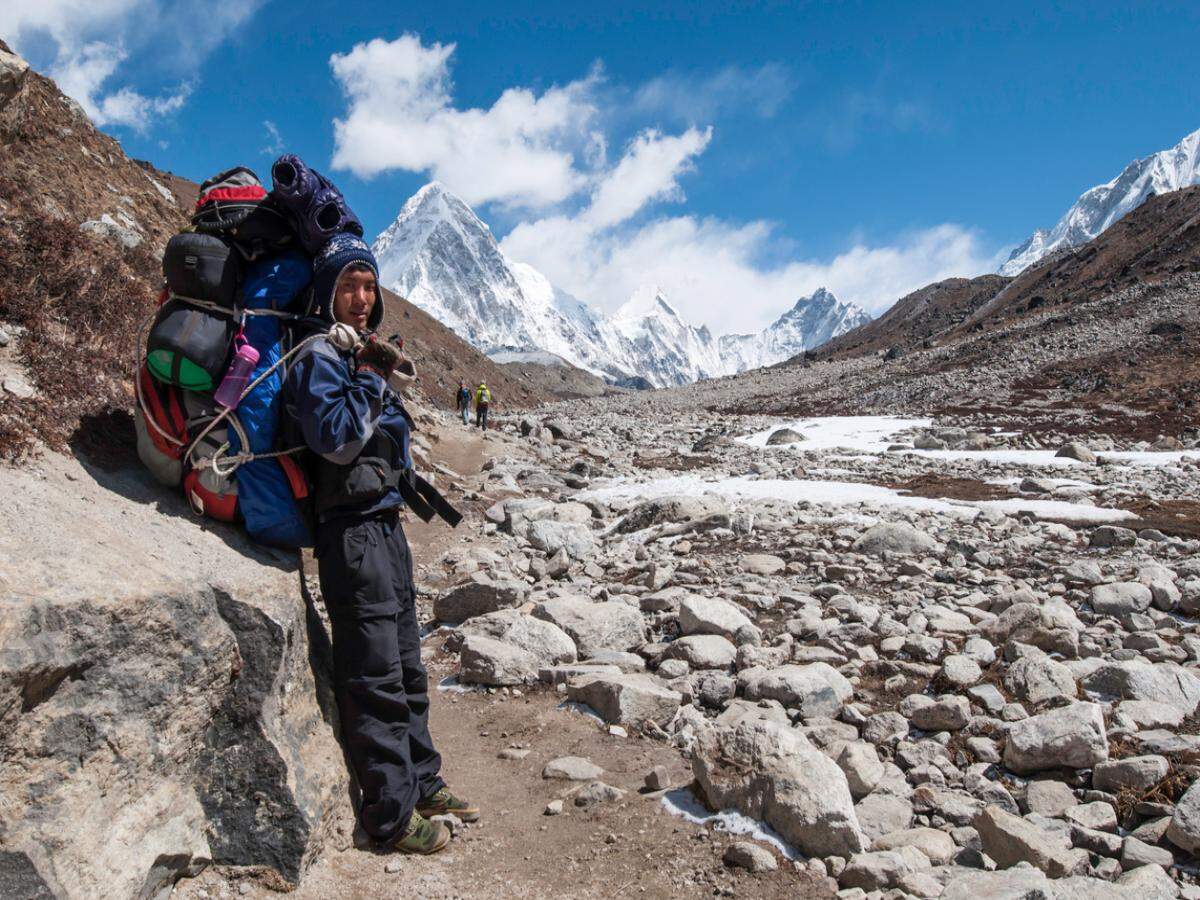
Sherpa at Everest (Canva)
For travellers, Everest is often imagined as something permanent. Its scale can make human history seem incredibly tiny. Yet the rocks beneath climbers’ feet tell the opposite story.A mountain that appears timeless is actually part of an ongoing geological process. It means nothing is permanent. Ancient marine sediments became rock; continental movement rearranged those rocks; immense tectonic forces lifted them thousands of metres; erosion and glaciers continue to reshape the mountain today.The fossils near the summit are therefore more than unusual discoveries. They are evidence of how dramatically Earth’s landscapes can change over geological time.The next time you see photographs of Everest, there is another image worth imagining: a warm ancient sea, hundreds of millions of years ago. Everest may be the world’s highest mountain today, but its rocks carry memories of a very different planet.