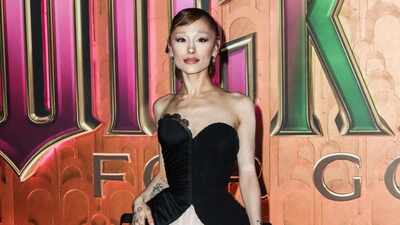
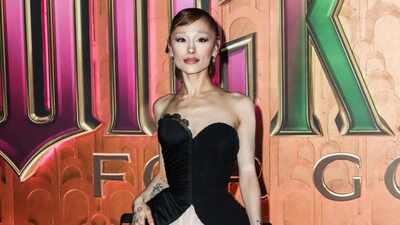
“There are many different ways to look healthy and beautiful.”For someone like Ariana Grande, who has been living her life in front of the camera since she was a teenager, her message cut through the noise when in 2023 she made the rare decision to address years of relentless commentary about her body.Three years later, as the superstar songstress gears up to end her ‘Eternal Sunshine Tour’ and step back from the public arena, the message echoes once again, perhaps with more urgency than ever.Nobody can argue that Ariana Grande hasn’t been under the harshest, most persistent spotlight in contemporary music. For years, she’s either serenaded her listeners while performing on the stage or surprised the audience with her acting chops. Fame and fan mania have followed as she has added more feathers to her hat. She’s the popstar who can’t step on a red carpet, walk to a coffee shop, or post a photo without sending the whole internet into a frenzy. And more often than not, that frenzy has contributed to igniting a new surge of speculation — about her appearance, her face, her body, and how healthy she looks. It’s never just about the music or the projects she stars in. Now, with her plans to withdraw from public life after her tour wraps in London, that scrutiny seems to have reached its fever pitch.
The recent development
Recently, Grande’s representative put it plainly: once the tour ends, Grande plans to “take a step back from visibility,” citing years of relentless public obsession. Per People, she’s not just skipping out on talk shows; she’s backing out of the West End’s Sunday in the Park with George, which was a major commitment by any measure. And, while her inner circle insists this decision has been in the works for a while, it’s coming at a moment when gossip about her appearance is impossible to ignore.Here’s the sober question Grande’s situation drags into the daylight: at what point does public “concern” hand the microphone to outright intrusion? The line between empathy and entitlement blurs fast when social media dissects photos with the eye of a coroner.
Scrutiny vs concern: The dilemma of public life
This is an old conversation. Social media lights up every time Grande’s body looks different: photos spark flurries of amateur diagnoses, some genuinely concerned, others performing defense, and plenty just speculating recklessly. People read eating disorders or illness into the size of her arms or the curve of her jaw.In 2023, Grande turned to TikTok to address it herself, something she’s rarely done. “There are many different kinds of beautiful,” she reminded everyone, while asking people not to comment on her body at all. In that same video, she offered a confession: the version of herself so many considered “healthy” had actually been deeply unwell. She’d been drinking heavily, struggling with depression and anxiety, relying on unhealthy coping mechanisms. No one, not the fans, not the press, not the critics, had any idea of what went on behind the glaring lights of fame.Grande urged compassion, not commentary: the simplest, hardest advice. Judging by what followed, from the endless posts to debates, little sunk in.In 2026, when her most recent album, Petal, dropped, the online conversation hardly touched the music; it spiraled back toward her body. Even Instagram started redirecting users who hunted for related content toward resources for eating disorders, acknowledging just how far things had gone. And no matter how many times Grande or her team tried to clarify her motives for withdrawing (“a pre-planned decision, not a panicked reaction”), rumors only multiplied.ID@undefined Caption not available.ID@undefined Caption not available.Grande found herself defending her boundaries, not just her art. At a Chicago show, she explained, again, that stepping out of the spotlight wasn’t an act of retreat or defeat; it was an act of self-respect. “Boundaries need to be set,” she said, framing her absence as a deliberate choice, not the fallout of scandal.
The Jameela Jamil discourse that added to the chatter
Although Ariana advocated for “boundaries,” that didn’t stop more voices from weighing in on her health situation, judging by her appearance. Actor and activist Jameela Jamil joined the conversation, suggesting that not only was Grande at risk, but those working with her were enabling harmful narratives by publicizing certain images.
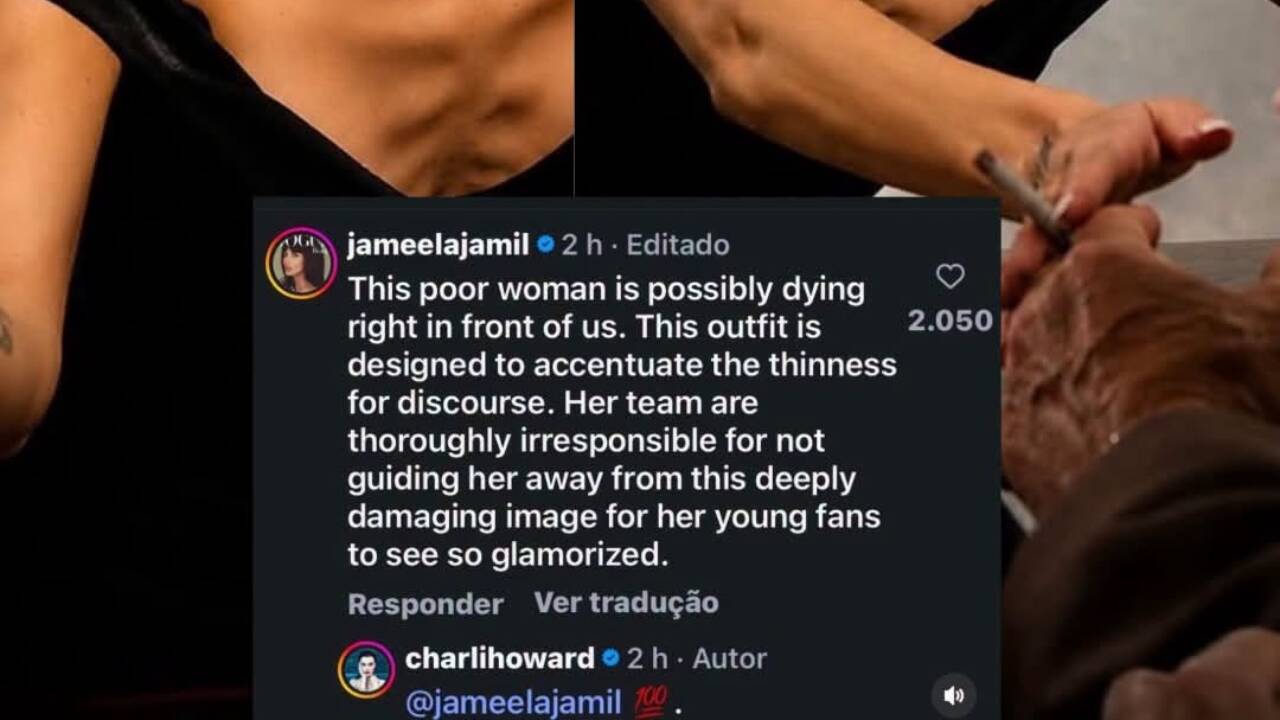
Jameela Jamil’s take on Ariana Grande’s “appearance.”
The music video for Ariana’s new song, ‘Petal’, triggered the online discussion about her drastic weight loss, and her fans expressed concern over her health due to her gaunt appearance. As model Charli Howard made an Instagram post discussing Grande’s look in the music video, ‘The Good Place’ actress wrote, “This poor woman is possibly dying right in front of us,” adding that the singer’s team was “thoroughly irresponsible” for glamorizing her thin frame.Jamil, who has her own history speaking out against the industry’s beauty standards and has survived an eating disorder herself, accused Grande’s team of promoting damaging aesthetics. Her strong words did what strong words always do: split the audience. Some heard overdue honesty. Plenty of others heard another layer of noise, another public dissection of a very private struggle. Jamil insisted she meant to help, but by then, the cycle was too well-worn. Concern becomes spectacle, as every attempt at empathy only seems to breed more scrutiny.
The bane of pop culture
This is a paradox at the heart of pop culture. Fans feel a genuine connection to stars like Grande, built through years of music, interviews, and curated glimpses behind the scenes. That investment, the sense of knowing a favorite celebrity, can twist into monitoring. Online, fans and strangers alike pick apart every perceived physical change. Curiosity hardens into entitlement, the kind that treats access to a public figure’s body as a basic right. Weight loss is coded as evidence; candid expressions turn into clues; images become fodder for endless analysis.Now, what impact can years of relentless body-related commentary have on a person’s mental health, self-image, and willingness to remain in the public eye? Can setting firm boundaries, such as stepping away from social media or public appearances, be psychologically protective?Experts keep pointing out the obvious: no one can diagnose someone from a handful of paparazzi photos or music videos. Bodies change. That’s what bodies do, whether you’re famous or anonymous. Stress, medication, age, hormone swings, private struggles — all of them leave a mark, but mostly out of sight.“Many people assume they can judge someone’s health simply by looking at their body size or weight. From a nutrition and health perspective, why is it inaccurate and potentially harmful to make health assessments based solely on appearance?” says Ms. Archana, Chief Dietician, KIMS Hospitals, Mahadevapura, Bengaluru. “Many people equate a slim body with good health and a larger body with poor health, but this assumption is scientifically inaccurate. Health is far more complex than body size alone. As dietitians, we assess an individual’s health using multiple factors, including dietary habits, physical activity, blood sugar levels, cholesterol, blood pressure, metabolic health, sleep quality, stress, family history, and overall lifestyle-not just the number on the weighing scale.”Ms, Archana adds, “Someone in a larger body can have normal blood pressure, healthy blood sugar levels, and excellent cardiovascular fitness, while a person with a smaller frame may have nutrient deficiencies, poor eating habits, high cholesterol, or other underlying health conditions. Body weight is only one piece of the puzzle and should never be viewed as the sole indicator of health.”What makes Grande’s ordeal particularly instructive is how digital culture amplifies these patterns. There’s nothing new about female celebrities facing exhausting, contradictory standards. In fact, it’s been normalized for ages: they’re expected to look young forever, slim but not too slim, healthy but never different. The demands never let up, and social media has made the commentary omnipresent. Every candid gets screenshotted, slowed down, meme-ified, and poured over. The algorithm rewards whatever draws the most attention and emotion, never mind the truth.
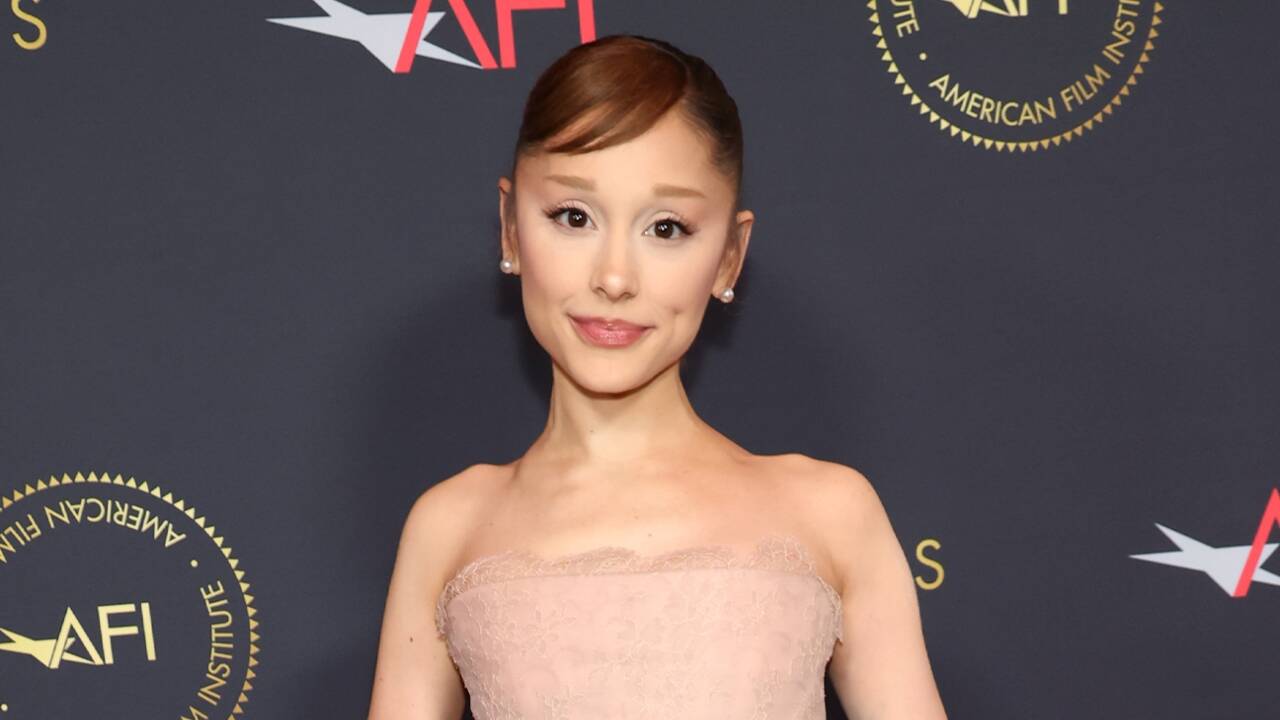
The curious case of concern
Ironically, even ‘concern’ spreads the very images fans claim to worry about. By participating in the spectacle, like analyzing, debating, airing unsolicited opinions, people reinforce the message that a famous person’s body is not their own. Feminist theorists call this “body appropriation,” and it’s not theory; Grande is living through it in public view.Sure, some celebrities have finally started pushing back, demanding space and privacy. Grande isn’t walking away from her audience or her career. She’s not alone. More public figures are setting boundaries, pulling back from social media, or disappearing between projects to protect their sanity. The myth that celebrities owe us constant access is starting to crumble, even if that change is coming slowly.But the discussion, as well as the debate, is bigger than just one pop star.Grande’s story reveals something off-kilter in the culture at large: a failure to distinguish compassion from scrutiny, concern from control. Social media has blurred the boundary between what’s personal and what’s up for public consumption; flattened the wall between support and spectacle.Nowadays, well-meaning worry gets mistaken for the impulse to comment, analyze, and criticize. The question we ought to ask isn’t whether Ariana Grande is okay or not. It’s why we think we deserve access to her private life, or that we can simply demand answers about her health journey in the capacity of her admirers, unless she shares them willingly, on her own.Per Ms, Archana, “It would be better not to assess people’s appearances but rather discuss those actions that will ensure that they maintain good health in the future, like following a healthy diet, leading an active lifestyle, sleeping enough, dealing with stress, and undergoing regular health screenings.”Grande’s withdrawal is, in its way, a final statement. Maybe she can’t escape the endless attention, but she can refuse to feed it. Instead of pouring more energy into guessing her motives or monitoring her next steps, the most respectful choice would be to take her at her word and honor the boundaries she’s fighting to defend.