


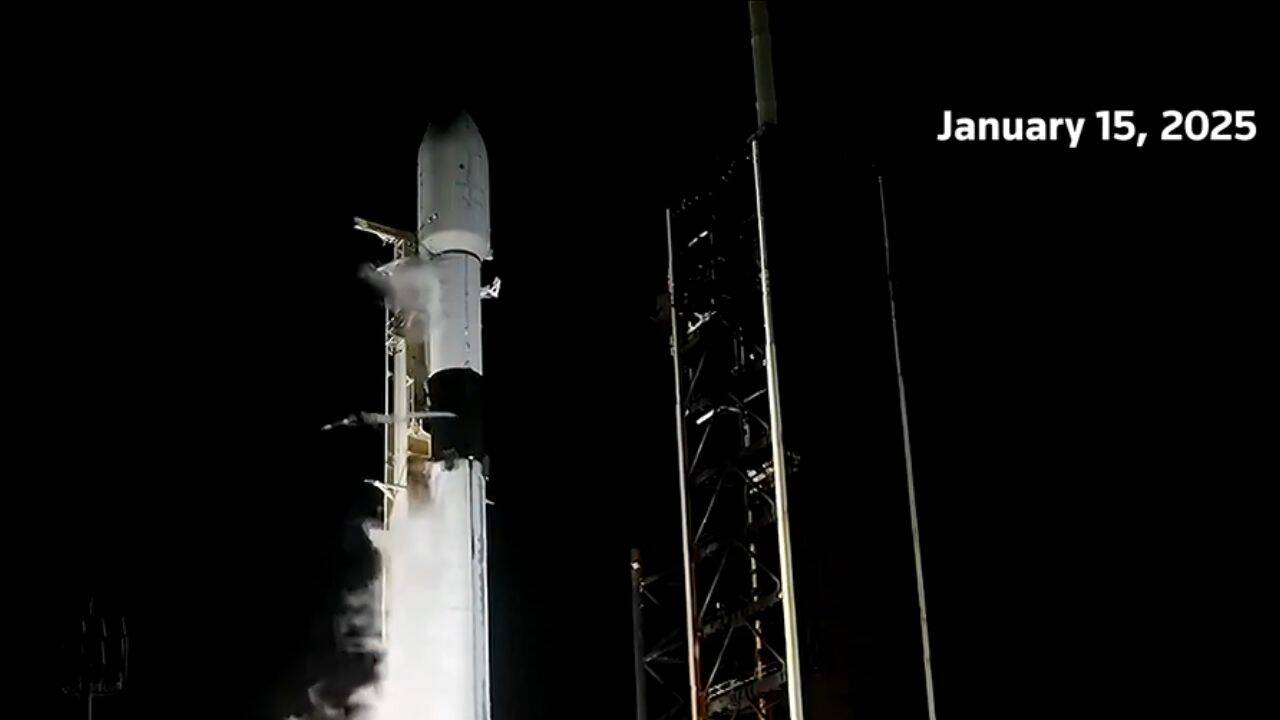
SpaceX has been achieving many of its targets these days, even by accident. After months of anticipation, a discarded upper stage of a SpaceX Falcon 9 rocket is believed to have careened into the Moon early Wednesday morning near the Einstein Crater. It exploded on impact, causing a flash that may have been visible from Earth and creating a large crater.The discarded Falcon 9 rocket part had been lingering in space for over a year. According to an Al Jazeera report, the debris weighed four tonnes and was the size of a school bus. It was jettisoned during a January 2025 mission that brought two lunar landers, Firefly’s Blue Ghost and ispace’s Hakuto-R, to the Moon. Astronomers soon suspected that it would fall into the Moon’s orbit, and in late April, a report confirmed the suspicions that it would slam into the rocky satellite. It struck the lunar surface with the force of roughly three tonnes of TNT.
What happened with the experiment?
NASA estimated it would blow open a crater about 60 feet wide and 12 feet deep, though others have estimated that it could be up to 100 feet wide.
NASA and its Lunar Reconnaissance Orbiter probe and South Korea’s Pathfinder Lunar Orbiter are planning to take images of the site after impact, which may show the wreckage of the rocket. But since the explosion was difficult to observe in the moment, it might take some time before scientists can piece together everything that happened. Astronomers, who have been closely monitoring the stray rocket, projected it would smash into the lunar surface at 5,400 miles per hour, which is about seven times the speed of sound here on our home planet. At such a velocity, NASA estimated it would blow open a crater about 60 feet wide and 12 feet deep, though others have estimated that it could be up to 100 feet wide.Interestingly, another crater will make little difference to the Moon. Because it has no protective atmosphere, its surface is bombarded by meteoroids on a daily basis. One “with the same energy as the upper stage hits the Moon about every six days,” according to NASA.The European Southern Observatory’s (ESO) Very Large Telescope, which captured the evidence of the impact, observed “spectral lines,” a colourful illustration of the sodium and lithium gas, in the plume of lunar dust stirred up by the impact. The ESO telescope recorded these “chemical fingerprints” of the plume, which were visible for five to 10 minutes, the observatory said. The plume measured a few tens of kilometres in size, according to Carl Schmidt, an astronomer from Boston University’s Center for Space Physics.The manner in which the impact plume interacted with the sunlight allowed astronomers to glean some clues about its composition. The sodium gas in the spectra is believed to have originated from the lunar soil, while the traces of lithium may have come from the rocket stage itself, Schmidt said to The Guardian.
An unpreventable collision
Such rocket hardware typically re-enters Earth’s atmosphere to burn up or splash down into remote ocean zones after delivering payloads into orbit. But over 18 months, gravitational forces exerted by the sun, Earth, and moon gradually altered its flight path, setting it on an inevitable collision course. SpaceX said the trajectory leading to the crash was unintentional but unpreventable, given the vehicle’s remaining fuel reserves.“What has happened is essentially a mixture of solar activity and gravity forces have put it on a path toward the moon,” Julianna Scheiman, SpaceX director of NASA science and Dragon programmes, told reporters on Monday.“It doesn’t present any immediate danger, though it does highlight a certain carelessness about how leftover space hardware is disposed of,” said space tracking expert Bill Gray to The Associated Press news agency. He added that “things are getting crowded up there.”
A lesson for the future

The impact will raise questions about best practices for space junk and whether it’s negligent to discard spent rocket parts near the Moon’s orbit.
The impact will raise questions about best practices for space junk and whether it’s negligent to discard spent rocket parts near the Moon’s orbit. This isn’t the first time that human debris has smashed into the lunar surface. NASA deliberately steered the discarded stages of its Saturn V rockets into the Moon during the Apollo missions in the 1970s. And in 2009, it also crashed a rocket part into the Moon to study the impact.However, this is the second time debris has accidentally crashed into the Moon. The first occurred on March 4, 2022, when part of a Chinese Long March 3C rocket launched in 2014 impacted the lunar far side, carving out an unusual double crater.Similarly, with the SpaceX accidental landing, scientists hope to earn more insights into the physics of the material kicked up by the explosion in a low-gravity environment, where ejecta could travel for miles. “This may be of some — probably minor — scientific interest, and we may learn some things from it,” Bill Gray, an astronomer who created the Project Pluto software used to track near-Earth objects, and who published the report predicting the rocket part’s crash landing, wrote on his website. “It doesn’t present any danger to anyone, though it does highlight a certain carelessness about how leftover space hardware (space junk) is disposed of.”As for SpaceX, the company’s CEO has been promising the Moon when it comes to SpaceX’s lunar ambitions. Its Starship megarocket is being built to bring cargo to the lunar surface, and hopefully deposit NASA astronauts there in a historic return. He even plans to construct a Moon base with a factory that can churn out AI satellites. But so far, no SpaceX craft has made it into the Moon’s orbit, let alone land on it.