
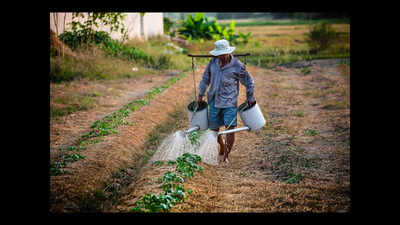
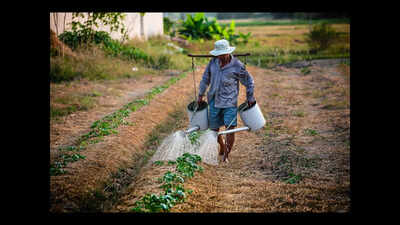
The Indian agricultural calendar is closely tied to the rhythm of the monsoon. Every year, the arrival, progress, and withdrawal of seasonal rains determine when farmers sow crops, how much land is brought under cultivation, and, ultimately, the country’s food production. Even a slight delay in the monsoon or an uneven distribution of rainfall can disrupt the sowing of crops, affect yields, and influence food inflation, rural incomes, and economic growth.This annual cycle is organised around three major cropping seasons, kharif, rabi, and zaid, each shaped by distinct climatic conditions. However, agriculture in India is not governed by seasons alone. Variations in rainfall, temperature, soil type, irrigation facilities, and topography have led to the development of diverse agroclimatic and cropping zones, allowing different regions to specialise in specific crops.Understanding India’s agricultural calendar is essential not only for farmers but also for policymakers, economists, and civil services aspirants. It provides insights into how climate, geography, and farming practices interact to shape food security, agricultural productivity, and the broader economy. With climate change making weather patterns increasingly unpredictable, knowledge of India’s cropping seasons and agricultural planning has become more relevant than ever.
The concept in simple terms
India’s agricultural calendar refers to the annual schedule of crop cultivation, including the time of sowing, growing, and harvesting. It is closely linked to the country’s climate, particularly the southwest monsoon.Farmers choose crops based on factors such as rainfall, temperature, soil type, irrigation facilities and market demand. Since climatic conditions vary widely across India, different regions follow different cropping patterns.The agricultural calendar is broadly divided into three cropping seasons:
- Kharif (Monsoon crops)
- Rabi (Winter crops)
- Zaid (Summer crops)
Together, these seasons determine the production of cereals, pulses, oilseeds, fruits, vegetables, and commercial crops that support India’s food security and economy.
How does India’s agricultural calendar work?
Agricultural operations begin with the arrival of the southwest monsoon, which provides most of the water required for rain-fed farming.
Kharif season
The kharif season starts with the onset of the southwest monsoon, generally in June, and crops are harvested between September and October.These crops require warm temperatures and adequate rainfall.Major kharif crops include:
- Rice
- Maize
- Cotton
- Soybean
- Groundnut
- Bajra
- Jowar
- Tur (Arhar)
Since nearly half of India’s net sown area remains rain-fed, the timely arrival and distribution of monsoon rainfall are crucial for kharif production.
Rabi season
Rabi crops are sown after the withdrawal of the monsoon, usually from October to December, and harvested between March and April.They require relatively cool weather during growth and dry conditions during harvesting.Major rabi crops include:
- Wheat
- Mustard
- Gram
- Barley
- Peas
- Lentils
Rabi production depends largely on irrigation, soil moisture retained after the monsoon and winter rainfall in northwestern India.
Zaid season
The zaid season falls between the rabi harvest and the next kharif sowing, generally from March to June.These crops are grown mainly in irrigated areas.Common zaid crops include:
- Watermelon
- Muskmelon
- Cucumber
- Summer maize
- Green gram
- Vegetables
Although comparatively smaller in area, zaid crops contribute to crop diversification and farmers’ incomes.
What are cropping patterns and cropping systems?
A cropping pattern refers to the proportion of area under different crops at a given time. It varies according to rainfall, irrigation, soil fertility, climate, and market conditions.A cropping system refers to the sequence and management of crops grown on the same land over time.Some common cropping systems include:
- Monocropping: Growing a single crop repeatedly on the same field.
- Mixed cropping: Cultivating two or more crops together to reduce risk.
- Intercropping: Growing different crops simultaneously in a planned arrangement.
- Crop rotation: Alternating crops across seasons to maintain soil fertility and reduce pests.
These practices improve productivity, conserve resources, and enhance resilience against climate variability.
What are agro-climatic and cropping zones?
India’s diverse geography results in significant variations in climate and soils. To promote scientific agricultural planning, the country has been divided into agro-climatic zones based on rainfall, temperature, topography, and soil characteristics.These zones help governments and research institutions recommend suitable crops, irrigation methods and farming practices.For example:
- The Indo-Gangetic Plains are ideal for wheat and rice.
- The Deccan Plateau supports cotton, millets and pulses.
- Coastal regions favour rice, coconut and spices.
- Hill regions are suitable for tea, apples and temperate fruits.
The concept of agro-climatic zoning enables location-specific agricultural planning and resource management.
How do monsoon delays affect the agricultural calendar?
The timing and distribution of rainfall have a direct bearing on agricultural operations.Delayed or deficient monsoon rainfall can:
- Delay sowing of kharif crops.
- Reduce the area under cultivation.
- Lower crop yields.
- Increase dependence on irrigation.
- Raise production costs.
- Affect fodder availability for livestock.
These impacts extend beyond agriculture and influence food prices, rural employment and economic growth.
Why does the agricultural calendar matter for India’s economy?
Although agriculture contributes around one-sixth of India’s Gross Value Added (GVA), its economic influence is much broader.A favourable agricultural season supports:
- Higher food production.
- Stable food inflation.
- Stronger rural consumption.
- Better farm incomes.
- Increased demand for fertilisers, tractors, and farm equipment.
- Growth in agro-processing industries.
Conversely, poor crop performance can increase food prices, affect exports, strain government finances through higher support measures, and influence monetary policy.Thus, the agricultural calendar remains an important indicator for policymakers, economists, and businesses.
Important institutions and initiatives
- Indian Council of Agricultural Research (ICAR): Apex body for agricultural research and education.
- India Meteorological Department (IMD): Provides weather forecasts and monsoon predictions.
- Ministry of Agriculture and Farmers’ Welfare: Formulates agricultural policies and programmes.
- Commission for Agricultural Costs and Prices (CACP): Recommends Minimum Support Prices (MSPs).
- Pradhan
Mantri Krishi SinchayeeYojana (PMKSY): Promotes efficient irrigation and water-use efficiency. National Innovations in Climate Resilient Agriculture (NICRA): Develops strategies to improve climate resilience in agriculture.
India angle
Agriculture supports the livelihoods of a large section of India’s population and remains closely linked to food security, inflation, and rural development. As climate change increases the frequency of erratic rainfall, heatwaves and extreme weather events, improving irrigation, promoting climate-resilient crops, expanding weather advisory services, and encouraging sustainable farming practices have become key policy priorities.Understanding India’s agricultural calendar is therefore essential not only for farmers but also for planning food procurement, water management, disaster preparedness and economic policy.
Prelims Fact Box
| Term | Key Fact |
| Kharif Crops | Sown with the onset of the southwest monsoon (June–July) and harvested in September–October. |
| Rabi Crops | Sown after the monsoon (October–December) and harvested in March–April. |
| Zaid Crops | Grown between the rabi and kharif seasons, mainly in irrigated areas (March–June). |
| Cropping Pattern | Distribution of land under different crops in a region during a year. |
| Crop Rotation | Growing different crops in succession to maintain soil fertility and reduce pest attacks. |
| Agro-climatic Zone | Region classified based on climate, soil and topography to guide agricultural planning. |
| Net Sown Area | Total land sown with crops at least once during an agricultural year. |
| Cropping Intensity | Ratio of gross cropped area to net sown area, expressed as a percentage. |
UPSC Mains Practice Question
“India’s agricultural calendar is closely linked to the monsoon and regional climatic conditions.” Discuss how changing weather patterns are affecting cropping seasons, agricultural productivity and food security in India.
Practice MCQs
1. Which of the following crops is primarily associated with the kharif season?A. WheatB. MustardC. RiceD. BarleyAnswer: C2. Zaid crops are generally cultivated:A. During winterB. Between the rabi and kharif seasonsC. During the northeast monsoon onlyD. Only in hilly regionsAnswer: B3. Crop rotation is primarily practised to:A. Increase the use of chemical fertilisersB. Maintain soil fertility and reduce pest infestationC. Increase groundwater extractionD. Reduce irrigation efficiencyAnswer: B4. Which institution is responsible for issuing India’s official monsoon forecasts?A. ICARB. IMDC. NABARDD. FCIAnswer: B5. Agro-climatic zoning primarily helps in:A. Determining parliamentary constituenciesB. Recommending suitable crops and farming practices for different regionsC. Fixing agricultural export dutiesD. Conducting the Population CensusAnswer: B
Five Key Terms
- Kharif
- Rabi
- Zaid
- Agro-climatic Zones
- Cropping Pattern
Frequently Asked Questions (FAQs)
1. Why is the agricultural calendar important?It helps farmers, policymakers and markets plan sowing, harvesting, irrigation, procurement and storage while ensuring food security and stable supplies.2. What is the difference between kharif and rabi crops?Kharif crops are grown during the monsoon and depend largely on rainfall, whereas rabi crops are cultivated during winter and rely more on irrigation and residual soil moisture.3. What are agro-climatic zones?These are regions classified according to climate, rainfall, soils and topography to support location-specific agricultural planning and improve productivity.4. How does a delayed monsoon affect agriculture?It can postpone sowing, reduce the area under cultivation, lower yields, increase irrigation needs and affect farmers’ incomes, food prices and overall economic activity.5. What is cropping intensity?Cropping intensity measures how intensively agricultural land is used. It is calculated by dividing the gross cropped area by the net sown area and is expressed as a percentage. A higher cropping intensity indicates that the same land is cultivated more than once in a year.