
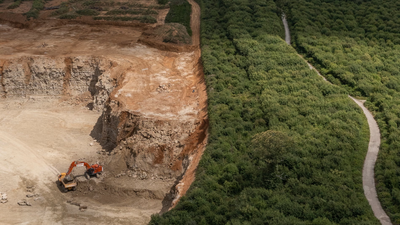
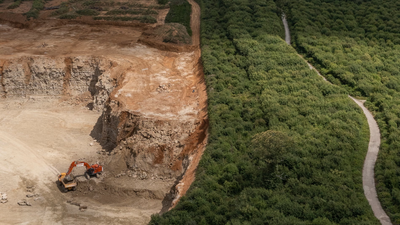
In 1600, Oaken Wood near Maidstone was already an established English woodland; in 2026, Kent County Council proposed turning 41 hectares of it into a stone quarry, reports the Guardian.The Reform-led council voted this month to include the ancient woodland site in its updated Kent Mineral Sites Plan. The vote formally marks the hard rock under the forest floor as an essential supply of Kentish ragstone, opening the door for the nearby Hermitage Quarry to expand.Local campaign groups, wildlife charities, and councillors from Maidstone Borough Council are fighting the proposal. If central government approves the plan, the project will clear at least 41 hectares of a Plantation on Ancient Woodland Site (PAWS).Environmental groups point out that this single project would destroy more ancient woodland than building the HS2 rail line and the Lower Thames Crossing combined.
Building stones versus living nature
Workers have dug up Kentish ragstone since Roman times, and builders used it to build Roman London. Kent County Council says getting new stone is necessary to supply construction work and repair historic national landmarks, including Canterbury Cathedral and the Tower of London.Opponents say it is wrong to destroy irreplaceable woods to fix old buildings.Oaken Wood has grown continuously for more than 400 years and is cared for through traditional sweet chestnut coppicing. In this system, workers chop down sections of trees every seven years, allowing new shoots to grow from the old stumps while letting sunlight reach the forest floor.The forest is an official Local Wildlife Site and holds at least 26 rare ancient woodland plant species, including bluebells. It gives a home to struggling red-listed birds like nightingales and nightjars, along with owls, dormice, 18 butterfly species, and rare insects.The soil underneath holds a network of fungi and seeds built up over centuries. Research cited by Kent Wildlife Trust shows that while ancient woods make up just 2.5 percent of UK land, they store 37 percent of all woodland carbon. Up to 75 percent of that carbon sits underground in the soil rather than inside the trees.
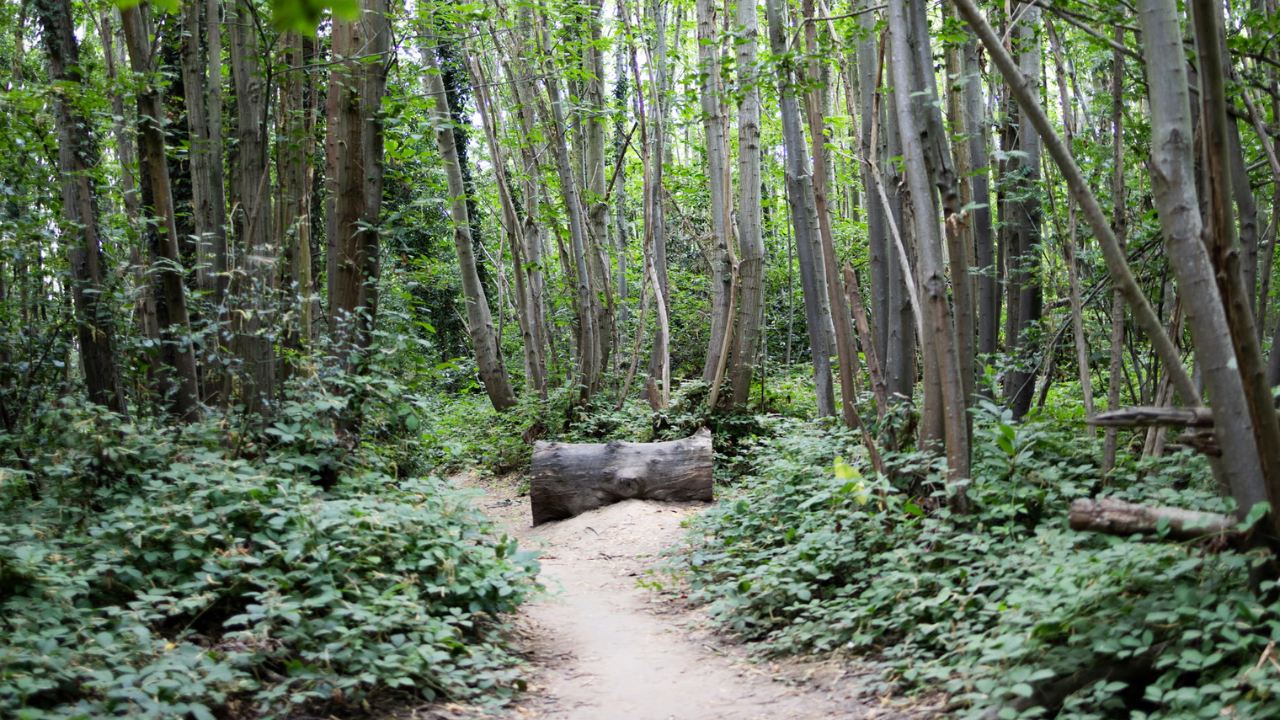
Whole sections of the wood are felled in rotation allowing stumps to regrow and as they do so absorb more carbon from the atmosphere than a fully grown tree.
The debate over moving topsoil
The quarry owner, Gallagher Group, suggested a plan to limit environmental damage. The company said workers would dig up topsoil and move it to another site, chop down the sweet chestnut trees, and plant twice as many native trees in a new restored woodland.Campaigners and legal experts say moving soil cannot recreate a natural ecosystem.Brontie Ansell, managing director of Lawyers for Nature, stated:“It’s protected in exactly the same way, legally, because it’s not just about the fact that there’s newish growth of trees. You’ve got all the soils, you’ve got the fungi, you’ve got all of the wildlife. It is still irreplaceable. You couldn’t just create this somewhere else.”Green Party councillor Rachel Rodwell, who serves on Maidstone Borough Council alongside fellow councillor Allison Sweetman, criticized the plan to move the dirt:“It’s just treated like garden topsoil. And they forget the interconnectivity. It’s not [just] the soil, it’s a living system.”Rodwell added:“We’re treating nature as a commodity or a resource and we’re forgetting we’re part of the same system. And it’s this sense of entitlement that we can just strip it away and plunder it. It’s replicated across the country, across the globe.”
Planning rules and missing math
Under the National Planning Policy Framework (NPPF), planning rules say councils must block projects that ruin ancient woods unless there is a “wholly exceptional” reason and a solid plan to replace what is lost.Charities say the project fails both tests. Kent Wildlife Trust and The Woodland Trust note that standard guidance from Natural England and the Woodland Trust says developers should plant 30 new hectares of trees for every 1 hectare cut down. Destroying 41 hectares at Oaken Wood means planting roughly 1,230 hectares of new trees, a size the council has not shown it can deliver.This expansion comes after an earlier project swallowed 31 hectares of ancient woodland next to the quarry about ten years ago. If this new plan goes ahead, 72 hectares of Oaken Wood will be gone.Opponents also question how the council picked the site. A study into other quarry locations rejected alternative spots simply because they were “too small,” without checking if digging across several smaller sites could yield enough rock to save the ancient wood.
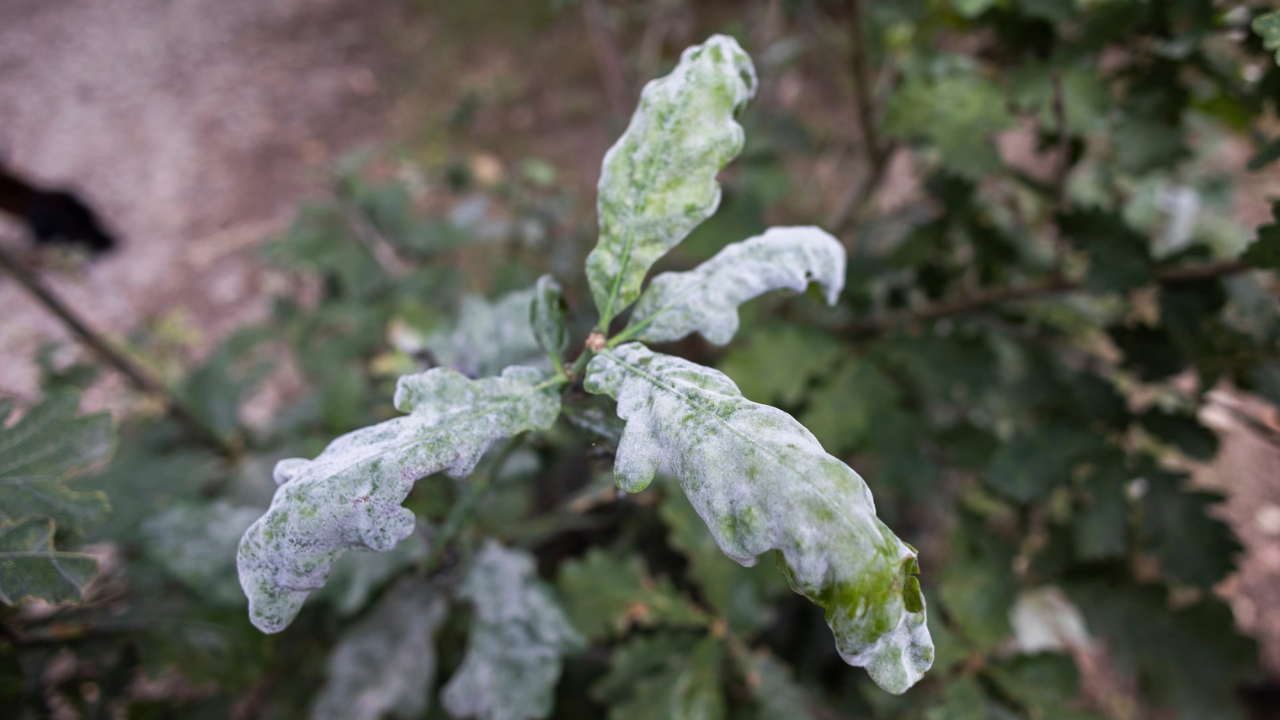
Near the quarry, white powder – apparently rock dust – lays in a film across the forest foliage. Photograph: Graeme Robertson/The Guardian
Public input and next steps
Local opposition is growing. More than 25,000 residents raised concerns during an earlier consultation between 2023 and 2025. Maidstone Borough Council backed local efforts by passing a Rights of Nature motion in April.A public consultation on the updated Kent Mineral Sites Plan will run from late July through September. During this time, residents and environmental groups can submit comments on whether the council’s plan is legal, justified, and follows national planning rules before government officials make a final decision.