
It might seem ridiculous to some now if they had to imagine a summer without the fun and joy of summer camps. Imagine not having a few days of swimming, playing games, running around an open field, camping, and whatnot in the lap of nature!Would you believe that summer camp didn’t always exist as a regular habit until 200 years ago, when someone invented the idea?Yes — in 1861, America’s first organized summer camp didn’t just give kids a break from the daily grind; it nudged the entire idea of childhood in a new direction.If you picture summer camp today, you probably see marshmallows roasting on a campfire, canoes on a glassy lake, and kids giggling with friends under starry skies. Millions of American kids have memories like these, swapping stories and friendship bracelets while they leave phones and screens behind for a few golden weeks. But the original summer camps weren’t just about fun in the sun or passing time when schools closed. Their beginnings run deeper, tangled up with big questions about what children needed, especially during one of America’s most dramatic growth spurts.
Summer camp: The history of how it came to be
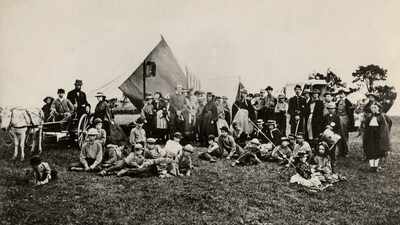
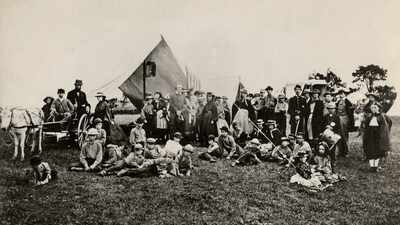
In the mid-1800s, America was hurtling through an industrial revolution. Cities ballooned, factories cranked into life, and for a growing number of families, childhood meant long hours at work, air thick with smoke, and crowded, sometimes grim urban neighborhoods. It wasn’t just the work itself that worried reformers; it was the loss of childhood altogether. Doctors, teachers, and advocates started asking if kids still had the chance to just be kids: curious, adventurous, and healthy. That worry set the stage for a new experiment.That’s where Frederick W. Gunn stepped in. Gunn was an abolitionist and a teacher, running what would become The Frederick Gunn School in Washington, Connecticut. In the summer of 1861, just as the Civil War exploded, Gunn and his wife Abigail packed up about thirty boys and a dozen girls to hike 30 miles across Connecticut to the shore. They slept under tents, fished, cooked their meals, and practiced teamwork through military-style drills. They called it “gipsying,” the Victorian word for an outdoor adventure, but Gunn’s trip was different. He wanted the kids to wrestle with the land, learn self-reliance, and strengthen their bodies and character. His formula was simple: nature, teamwork, and responsibility all mixed in with campfire fun. That very idea became camping’s DNA.After that first trip, Gunn organized more expeditions, even through the chaos of the Civil War. Later, he set up seasonal camps on Lake Waramaug, and word of his approach spread. Suddenly, what had started as an experiment inspired copycats in towns and cities far beyond Connecticut.
Why were the summer camps invented in the first place?
Now, you often hear that summer camps were invented to save children from factory work. But that story isn’t so neat. It’s true that by the late 19th century, factory life shaped millions of lives: kids toiled in textile mills, mines, and workshops, often all summer long. Many parents and reformers looked at the crowded cities and harsh workplaces and hoped nature could heal what industrialization threatened to erase: kids’ physical health, confidence, and connection to the outdoors.But the original summer camps didn’t magically whisk kids out of factories. In those early years, most camps welcomed middle- or upper-class kids, the families who could pay for the experience. These children probably weren’t destined for factory floors. In the beginning, camps were more about helping privileged kids escape the grime and chaos of urban life, not rescuing child workers directly.However, over time, more charitable organizations and churches worked to extend camps to working-class children. The Young Women’s Christian Association, for example, set up “Sea Rest” in 1874 to let exhausted female factory workers relax by the shore. By the turn of the 20th century, community and faith groups ran camps for poor children, city kids, and young women who rarely glimpsed green space.
The evolution of summer camps
As the camp movement grew, so did its purpose. The YMCA, YWCA, Girl Scouts, Boy Scouts, and other groups saw camps as a way to help kids grow, building not just muscles, but character, creativity, and leadership. Canoeing, hiking, crafts, plays, singing, and team sports turned summer days into a training ground for resilience.Even as camps evolved, core beliefs stuck around. Camp leaders argued there was more to life than classroom lessons. Kids learned resourcefulness by chopping wood, pitching tents, and solving problems together. Camp traditions, like telling stories around a fire, paddling canoes, swimming, and singing songs, are all part of a legacy that started with those earliest expeditions.
Where does the tradition stand now?
Camps have changed a lot since Gunn’s day. Now, you find everything from robotics labs to music production next to the old swimming holes and hiking trails. Camps work hard to be safer and more inclusive. But the main idea hasn’t shifted much. At their heart, camps are still about helping kids be brave, try new things, form friendships, and carry memories home, maybe a little bit braver and bolder than when they arrived.
Did summer camps actually ‘save’ kids from laboring in factories?
Not in the way the legend suggests. Child labor didn’t vanish because kids went to camp; it took new laws, education reforms, and decades of activism. In fact, in the United States of America, the Fair Labor Standards Act of 1938 ended widespread child labor in industrial factories and mines under federal law (though agricultural exemptions remained)But the camps did something else: they nudged the culture to see children as explorers and learners, not just as miniature workers. They gave childhood room to breathe. Every time a kid sits around a campfire, singing with friends or sharing stories under the stars, it’s a small echo of Frederick Gunn’s bold idea from 1861, founded on the belief that letting kids run wild in the woods could actually shape the adults they’d one day become.