
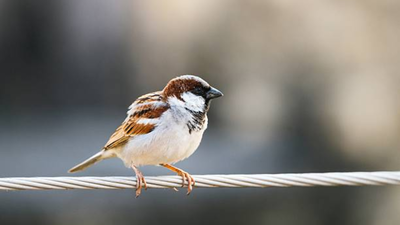
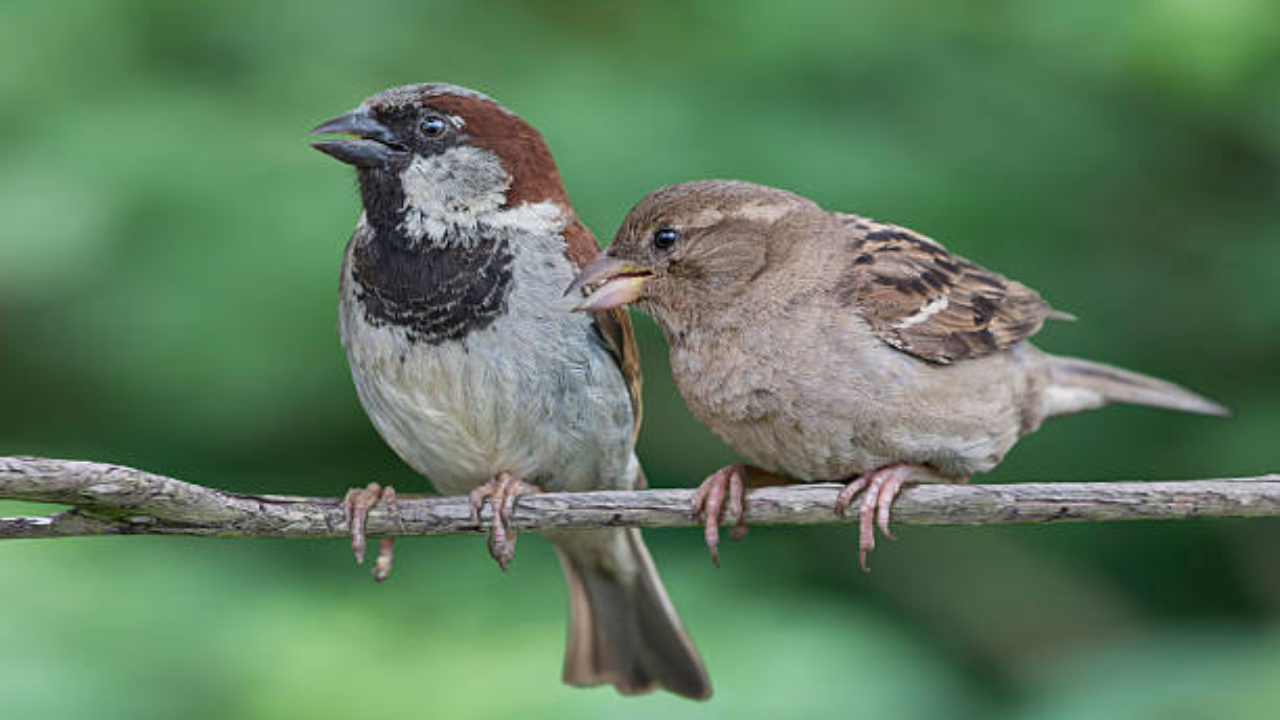
The house sparrow is probably one of the easiest birds to ignore. You see them everywhere. They hop around restaurant tables, gather beneath outdoor benches, nest under roof tiles and squabble noisily around bird feeders. They’re so common in North American cities that it can be easy to assume they’ve always been there.The small brown bird that many people now consider part of the everyday urban landscape is actually an introduced species. House sparrows, or Passer domesticus, are native to Europe, parts of Asia and northern Africa. In the 19th century, people deliberately carried them across oceans and released them in places where they didn’t naturally occur.The reasons varied. Some people simply missed the birds they had grown up with in Europe. Others believed the sparrows could help control insects and agricultural pests.That second idea sounds reasonable on paper. Bring in an insect-eating bird, let it loose around farms and cities, and perhaps it will take care of some unwanted bugs.Once house sparrows established themselves in North America, they found an environment that suited them remarkably well. They were comfortable around people, could eat a wide variety of foods and were perfectly happy nesting in buildings and other man-made structures.
istock
Today, the house sparrow is one of the most familiar introduced birds in North America. It has become so deeply woven into the human landscape that its origin story is almost forgotten.
The first sparrows arrived earlier than you might think
The history of the house sparrow in North America is a little more complicated than the commonly repeated “1860 introduction” story.The first widely documented introduction occurred in Brooklyn, New York, in the early 1850s. Historical records have traditionally described several releases, but a 2010 study published in Biological Invasions challenged some of those assumptions.Researchers Michael Moulton, Wendell Cropper, Michael Avery and Linda Moulton examined historical records and argued that an initial introduction of just 16 birds in 1851 may have been enough to establish the species in New York. Their work questioned the long-held belief that several separate releases of roughly 100 birds each were necessary for the population to take hold.
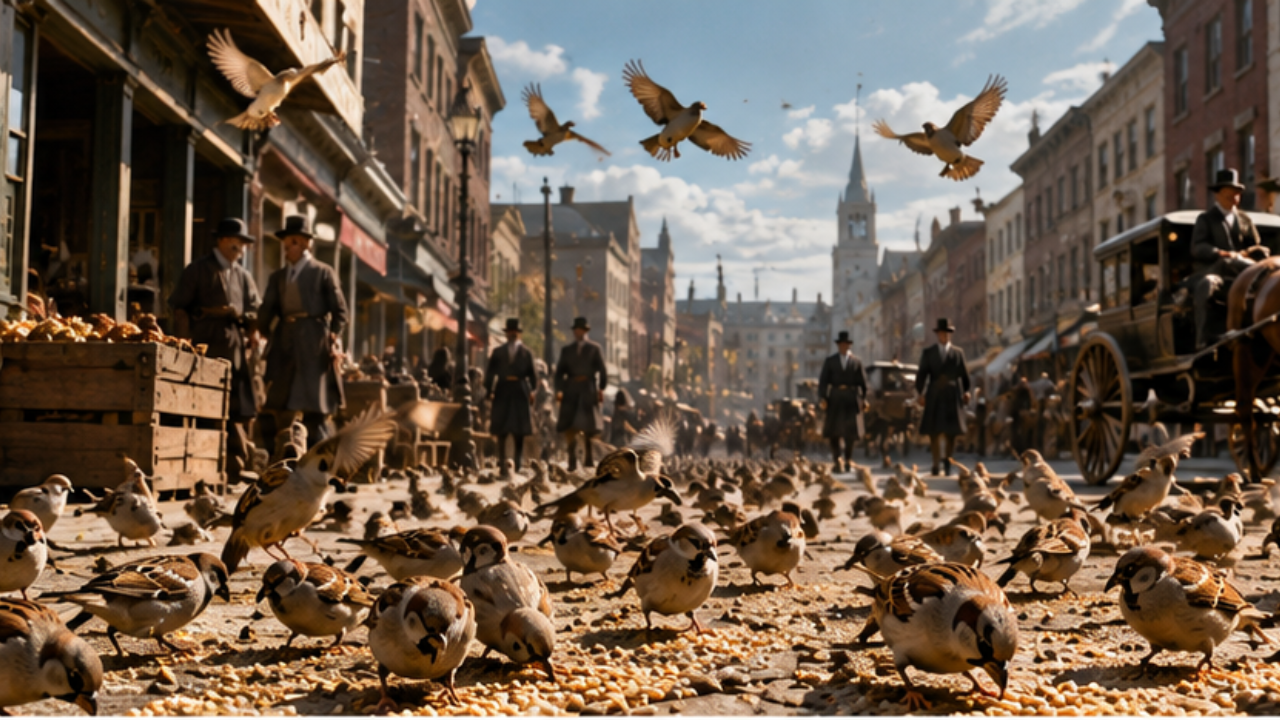
Image: AI
The sparrows didn’t stay in Brooklyn. They were deliberately introduced to other parts of the United States, including cities and agricultural regions.
Why did anyone think sparrows were a good idea?
The 19th century was a very different time in the way people thought about wildlife.People routinely moved animals from one country to another. Sometimes the goal was hunting. Sometimes it was farming. Sometimes it was simply nostalgia. Immigrants wanted to recreate a familiar environment in a new home.The house sparrow benefited from all of these motivations.A review of the species’ introduction history published by researchers at Penn State notes that house sparrows were deliberately introduced to North America and other parts of the world partly because people wanted familiar species around them and partly because they were believed to have value in controlling agricultural pests.The insect-control idea wasn’t entirely absurd. House sparrows do eat insects, especially when feeding young chicks. But their diet is flexible. They also eat seeds, grains and food discarded by humans.And that flexibility turned out to be one of their greatest strengths.A bird that depends entirely on one type of food can struggle when conditions change. A house sparrow can simply switch.In a city, it can pick up crumbs. On a farm, it can feed on grain. Around gardens, it can eat seeds. During breeding season, insects become an important part of its diet.The species is exceptionally comfortable around buildings and infrastructure. Houses provide nesting spaces. Farms provide food. Cities offer shelter and discarded scraps. Grain storage and transport systems create additional feeding opportunities.In other words, humans accidentally built an enormous network of sparrow-friendly habitats.The National Park Service describes the house sparrow as one of the introduced species that has succeeded particularly well in North America. The agency says the birds are closely associated with human activity and are commonly found around farms and cities.The house sparrow effectively turned human civilization into its habitat.
But the sparrow’s success created a problem for native birds
The biggest concern isn’t that house sparrows are noisy or that they eat seeds from bird feeders.

Image: AI
House sparrows are cavity nesters, meaning they use holes and enclosed spaces to raise their young. Unfortunately, those same nesting sites are also valuable to native birds.Bluebirds, tree swallows and other cavity-nesting species may compete with house sparrows for limited nesting spaces. The sparrows can be aggressive, and they may take over nest boxes or other cavities that native birds would otherwise use.The Cornell Lab of Ornithology highlighted this issue in its coverage of invasive bird species, reporting that house sparrows had become major competitors for nesting sites. In data collected through Cornell’s Birdhouse Network in 2003, house sparrows accounted for 43 per cent of recorded competitor species taking over nest boxes intended for native birds.Scientists have also found that competition between introduced bird species can be complicated.A study published in Ecological Society of America examined competition between introduced house sparrows and house finches, finding evidence of interference competition and suggesting that the relationship could vary depending on the scale at which researchers looked at the birds.That’s a useful reminder that invasive species stories aren’t always as straightforward as “new bird arrives, native bird disappears.”The effects depend on the place, the habitat and the species involved.The house sparrow was introduced partly because people believed it could help control unwanted insects. Yet the bird’s real success came from something else entirely: its ability to live alongside humans.That adaptability is one reason the species has spread so widely around the world. A review of its introduction history notes that house sparrows now occur on every continent except Antarctica.The bird’s story also shows why invasive species can be so difficult to predict.