
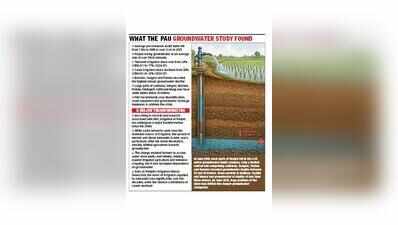
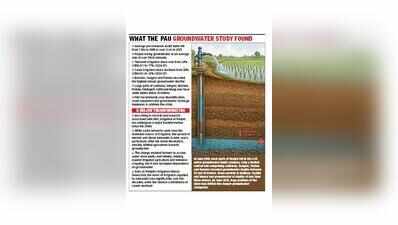
Ludhiana: Although Punjab’s struggle with groundwater is common knowledge, a PAU study warns that the deterioration is faster than previously imagined. Groundwater reserves in the state have been dwindling fast over the past 27 years.The average pre-monsoon water table dipped sharply from 7.8 metres below ground level in 1998 to over 21 metres in 2025, said a recent Punjab Agricultural University (PAU) study on the spatial and temporal dynamics of groundwater in the state.The study points out that Punjab continues to witness an average annual groundwater depletion rate of more than 50 cm, underlining the growing pressure on underground water resources.Transformation of irrigationResearchers also highlighted the complete transformation of the state’s irrigation pattern over the last six decades. In 1966-67, canals irrigated nearly one-third of the cultivated area, while wells and tubewells accounted for only around 24% of irrigation.By 2024-25, the scenario had reversed. Wells and tubewells irrigated nearly 77% of the cultivated land, while the share of canals fell to about 22%.Historical irrigation data presented in the study shows that canal-irrigated area declined from around 58% in 1960-61 to 22% in 2024-25. During the same period, groundwater-based irrigation increased from 41% to nearly 77%, reflecting the state’s increasing dependence on tubewells.Groundwater sinks deepThe study’s groundwater maps illustrate the extent of the deterioration. In June 1998, most parts of Punjab fell in the 3-10 metre groundwater depth category. Only a limited central belt comprising Ludhiana, Sangrur, Patiala and Barnala recorded groundwater depths between 10 and 20 metres. Some pockets in Muktsar, Fazilka and Mansa had groundwater at depths of less than three metres.By June 2025, large portions of the state had shifted into deeper groundwater categories. The 3 to 10 metre category had almost disappeared from central Punjab. Extensive areas of Sangrur, Barnala, Patiala, Fatehgarh Sahib, Ludhiana and Moga recorded groundwater levels beyond 30 metres below ground level, the most critical category identified in the study.A broad stretch across central and eastern Punjab showed groundwater depths between 20 and 30 metres. Relatively better groundwater conditions remained confined to the northern foothill districts of Pathankot and Gurdaspur and parts of the south-western districts of Fazilka and Muktsar, where groundwater levels continued to fall within the 3-10 metre range.Worst hit districtsThe district-wise assessment identified Barnala, Sangrur and Patiala as the worst-affected districts. Barnala and Sangrur recorded an average annual groundwater decline exceeding 100 cm, while Patiala experienced a decline of more than 80 cm annually. The study noted that groundwater levels continued to decline even after the monsoon.Slower decline in south-west PunjabAccording to the researchers, groundwater depletion is most severe in central Punjab. In contrast, south-western districts have experienced comparatively slower declines, largely because poor groundwater quality in many areas limits its extraction and usage.Why water is drying upThe study concludes that increasing cropping intensity and heavy reliance on tubewell irrigation have accelerated groundwater depletion over the past three decades.It recommends measures such as crop diversification, expansion of canal irrigation, efficient water management and artificial groundwater recharge to ensure long-term water security and agricultural sustainability.Samanpreet Kaur, principal scientist in PAU’s department of soil and water engineering, said recent govt efforts to improve canal water coverage appeared promising and could help slow the rapid fall in groundwater levels.Abrar Yousuf, assistant professor at PAU, said drip irrigation, watershed management and water conservation structures such as check dams, percolation tanks, farm ponds, earthen dams and gabion structures (modular cages, cylinders or boxes made of wire mesh and filled with rocks, stones or soil) in Kandi areas could help restore water balance.He added that community-led efforts, including initiatives by youth groups in Rurka Kalan village of Phillaur, have demonstrated that sustained water conservation measures can help curb groundwater depletion.Box: Key Findings of PAU Groundwater Study–Average pre-monsoon water table fell from 7.8m in 1998 to over 21 m in 2025–Punjab losing groundwater at an average rate of over 50cm annually–Tubewell irrigation share rose from 24% (1966-67) to 77% (2024-25)–Canal irrigation share declined from 58% (1960-61) to 22% (2024-25)–Barnala, Sangrur and Patiala recorded the highest annual groundwater decline–Large parts of Ludhiana, Sangrur, Barnala, Patiala, Fatehgarh Sahib and Moga now have water tables below 30 metres–PAU recommends crop diversification, canal expansion and groundwater recharge measures to address the crisis.How Dependence On Groundwater IncreasedAccording to records and research associated with PAU, irrigation in Punjab has undergone a major transformation since the 1960sWhile canal networks were once the dominant source of irrigation, the spread of electric and diesel tubewells in later years, particularly after the Green Revolution, steadily shifted agriculture towards groundwaterThe change enabled farmers to access water more easily and reliably, helping expand irrigated agriculture and intensive cropping, but it also increased dependence on groundwaterData on Punjab’s irrigation history shows that the share of irrigation supplied by tubewells rose significantly over the decades, while the relative contribution of canals declined, contributing to the depletion of groundwater reserves in many parts of the state