
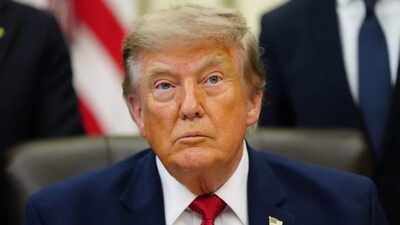
A district court judge on Tuesday temporarily blocked the Trump administration from enforcing an immigration policy targeting foreign researchers, fact-checkers, and trust and safety workers working on misinformation, fact-checking and online safety.The policy, announced by Marco Rubio, Secretary of State, in May 2025, authorised visa restrictions (such as visa denials, revocations, detention, and deportation) against foreign nationals deemed ‘responsible for’ or ‘complicit in’ censoring Americans. The judge said the plaintiffs had shown they were likely to succeed on their claim that the policy violated the First Amendment.The Knight First Amendment Institute at Columbia University and Protect Democracy filed the lawsuit earlier this year on behalf of the Coalition for Independent Technology Research (CITR).US District Judge James E. Boasberg of the Columbia district court, stayed the policy after finding that the CITR, a nonprofit representing academics, journalists, and technology researchers, was likely to succeed in its claim that the policy was in violation of the Constitution and the Administrative Procedure Act.“The court concludes that plaintiff has shown a likelihood that the policy is reviewable and that it burdens protected speech and association on the basis of viewpoint, in violation of the First Amendment and the Administrative Procedure Act,” Judge Boasberg wrote in his 58-page order.Rejecting the Trump administration’s argument that these were merely individual immigration decisions, Judge Boasberg said the evidence pointed to a single policy implemented through both visa restrictions and removal proceedings against non-citizens whose work the government characterised as censorship.Opening his order with a reflection on the role of digital platforms in modern public discourse, the judge observed that public debates once played out on street corners, now play out online, where disagreements over content moderation have become deeply polarised.“The town square of yesteryear has moved online. Where public debate once played out on street corners and in the daily papers, on soapboxes and the evening news, it now unfolds in large part on a handful of internet platforms owned and operated by private entities. Behind the posts, feeds, labels, and takedowns that shape what users see is a sprawling ecosystem of platforms, researchers, fact checkers, advocates, and trust-and-safety professionals. Some study how false or harmful content spreads, others press platforms to change their rules, and still others help users respond to online abuse. To one side of a heated public debate, that work makes digital discourse safer and more accountable. To the other, it is censorship by another name,” were the opening paras of this order.“One person’s content moderation, in the end, is another’s censorship,” he wrote, before concluding that the government had attached immigration consequences to one side of that debate.The judge also rejected the administration’s contention that federal courts lacked authority, holding that CITR was challenging a government policy rather than individual visa or deportation decisions. He found that the organisation had demonstrated concrete harm because researchers had curtailed their work, withdrawn from conferences and public advocacy, and reduced participation in CITR’s activities for fear of becoming targets of immigration enforcement.The lawsuit was filed after the Department of State announced immigration action against five individuals, associated with various organisations such as the Center for Countering Digital Hate, Global Disinformation Index, and even against former European Commissioner Thierry Breton. The latter had sent a letter to Elon Musk, owner of X, in 2024 warning that the platform would face penalties under European law if it did not curb illegal content and subsequently he was barred from entering the US.Welcoming the ruling, Carrie DeCell, senior staff attorney at the Knight First Amendment Institute, said: “This policy punishes researchers for work the public needs and the First Amendment protects…We’re glad the court recognized the serious constitutional harms this policy is already causing and blocked the government from enforcing it while the case proceeds.”“Today’s ruling is a major victory in our ongoing fight to protect free speech and independent technology research,” said Nicole Schneidman, tech counsel, and policy strategist at Protect Democracy. “The court’s order allows researchers and advocates who study and report on online trust and safety to continue their important work without the fear of retaliatory visa denials or deportations while we continue to advocate for permanent relief. While this decision is an important win, this case is not over. We look forward to continuing to defend the rights of independent technology researchers.”The State Department has defended the policy as an effort to protect Americans’ free speech rights from foreign actors it says have sought to suppress lawful expression online.The litigation will now proceed on the merits, in the interim the Trump administration is barred from enforcing the challenged policy.