
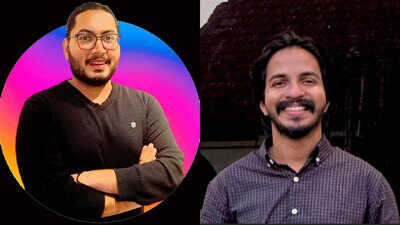
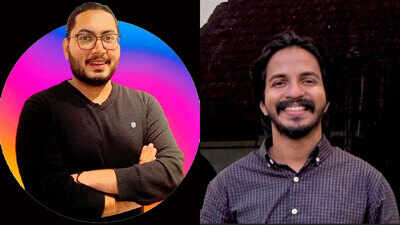
Not every successful career begins with a prestigious MBA or a perfectly planned roadmap. Sometimes, it starts with uncertainty, failed experiments and the determination to keep moving forward despite setbacks.That is exactly what connects the journeys of Abhishek Nimawat from Rajasthan and Abdul Afreed. They come from different backgrounds, faced different challenges and chased different dreams. Yet both eventually built rewarding careers by choosing practical industry skills over waiting for the “perfect” opportunity.For students wondering whether one setback can define their future, their stories offer a reassuring answer—it doesn’t.
A failed café became Abhishek’s biggest classroom
Growing up in Rajasthan, Abhishek Nimawat understood the importance of hard work from an early age. His father worked as a bus conductor with the Rajasthan State Road Transport Corporation (RSRTC), while his mother looked after the family.After completing an MSc in Biotechnology from the University of Kota, Abhishek found himself in a situation familiar to many graduates—he had a degree but little clarity about his career.Instead of waiting for opportunities, he decided to start a small café in Kota while pursuing his master’s.The venture did not succeed and eventually had to be shut down. But the experience proved far more valuable than he had imagined.Running the café taught him customer service, sales, inventory management and the realities of entrepreneurship. More importantly, it helped him discover that his interests lay not in biotechnology but in business.Determined to change his career path, Abhishek enrolled in Kraftshala’s business leadership programme, where he worked on live industry projects and developed practical business skills.The transition paid off. Today, he works as a Senior Sales Executive at Nestlé, beginning his corporate career with an annual salary of Rs 17.5 lakh.
Financial pressure became Abdul’s biggest motivation
For Abdul Afreed, the challenge was different.Raised in a lower middle-class family, he watched his father shoulder the responsibility of being the family’s only earning member while approaching retirement. At the same time, his mother’s medical expenses and an ongoing home loan added to the family’s financial burden.He knew he needed a stable career quickly.Instead of spending years preparing for competitive management entrance examinations without certainty, Abdul chose to build practical marketing skills through Kraftshala’s Marketing Launchpad programme.That decision changed the course of his career.Today, Abdul works as a Performance Marketer at Razorpay with a current annual package of Rs 16 lakh.The professional success also transformed his personal life. He has been able to support his family financially, buy his own bike, travel more frequently and fulfil a long-cherished dream of taking his family on their first flight.For him, career growth meant much more than a salary—it meant creating opportunities that his family had never experienced before.
What students can learn from their journeys
Although Abhishek and Abdul followed different paths, their stories share a common message.Neither of them allowed uncertainty to become a permanent obstacle. One learned valuable lessons from a business that failed. The other converted financial pressure into motivation to build employable skills.Their journeys also highlight an important shift in today’s job market. Employers increasingly value practical problem-solving, communication, sales and marketing skills alongside academic qualifications.For students, this does not diminish the importance of formal education. Instead, it shows that learning does not end with a degree. Building industry-ready skills, gaining hands-on experience and remaining open to changing career directions can create opportunities that traditional career paths sometimes cannot.Success rarely follows a straight line. Sometimes, it begins with a closed café. Sometimes, it begins with the determination to ease a family’s financial burden. In both cases, it begins with the courage to keep learning and keep moving forward.Disclaimer: This article is based on information shared by Kraftshala regarding the career journeys of Abhishek Nimawat and Abdul Afreed. The article is intended for educational and informational purposes only and does not constitute an endorsement of any institution, programme or organisation.