
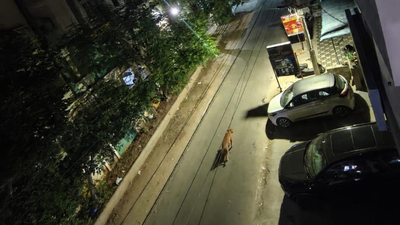
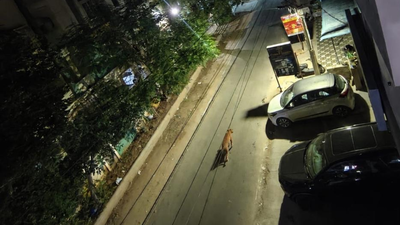
TIRUPATI: Residents of Upadhyay Nagar were left terrified on Friday night after a leopard from the neighbouring Seshachalam forest was captured on CCTV roaming freely along a main road in the locality.The incident has once again highlighted the growing human-wildlife conflict in Tirupati, where rapid urban expansion along the forest fringes is steadily shrinking the buffer between human settlements and wildlife habitats.The situation has worsened over the years as residential colonies have expanded closer to the forest boundary. Neighbourhoods stretching from Alipiri to Cherlopalli and from Kapila Theertham to Karakambadi—including Jeevakona, Beedi Colony, SLV Nagar, Viswanath Nagar, Bank Employees Colony, Thimminaidupalem, BTR Colony, Tirumala Nagar and the extended areas of Upadhyay Nagar—have witnessed rapid urbanisation, along with reported encroachments into forest fringe areas.According to Forest Department sources, unchecked urban sprawl coupled with poor waste management has significantly altered the movement patterns of wild animals. Large quantities of food waste dumped near residential areas attract stray dogs and feral pigs, which serve as prey for leopards and lure them out of the forest.Officials estimate that the Tirupati forest division is home to more than 40 leopards, with at least 12 regularly moving through high-traffic institutional and residential areas, including Sri Venkateswara University, Nagara Vanam, Kapila Theertham and Karakambadi. Sloth bears have also been spotted entering colonies along the forest edge, while elephant movement continues to disrupt rural areas and the Tirumala-Tirupati ghat roads.The ecological imbalance has also severely affected native wildlife. Smaller animals such as deer, wild boars, rabbits and several bird species frequently stray into residential colonies in search of food and water, only to be attacked by packs of stray dogs or killed in road accidents. Forest officials have also detected instances of illegal trapping and hunting along the forest boundary.A forest official, speaking on condition of anonymity, blamed the lack of coordination among the Forest, Revenue and Municipal departments for allowing residential encroachments to extend deep into wildlife habitats.The Forest Department has intensified public awareness campaigns in vulnerable localities and warned of strict legal action against people found trespassing into protected forest areas.