
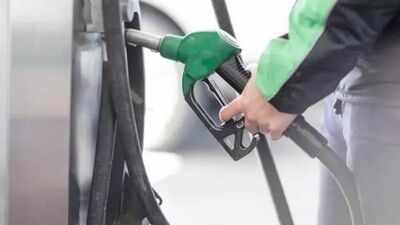
NEW DELHI: Petroleum and natural gas ministry on Friday said that E20 petrol is currently costlier to produce than pure petrol at prevailing global crude oil prices, but maintained that the ethanol blending programme has helped protect Indian consumers from volatile international oil prices while improving the country’s long-term energy security.The clarification comes days after the centre rejected claims circulating on social media that E20 fuel damages vehicle engines, reduces mileage significantly or that the government was preparing to increase ethanol blending beyond 20 per cent without adequate testing.In a detailed clarification issued through a set of frequently asked questions (FAQs) on the Ethanol Blended Petrol Programme, the ministry said the economics of ethanol depend on global crude oil prices.It observed that maize-based ethanol is currently procured at around Rs 71.86 per litre even before GST, transportation, storage and depot handling costs.“Therefore, if international crude oil is trading at around US$70 per barrel, E20 is actually costlier to produce than pure petrol. If crude rises to US$120-130 per barrel, the economics naturally reverse and ethanol becomes even cheaper,” the ministry said.The ministry added, “The real question is, ‘How did India manage to protect consumers from the full impact of volatile global crude prices?'”It explained that nearly 20 per cent of every litre of petrol sold in India today is domestically produced ethanol, reducing dependence on imported crude oil and insulating a part of fuel costs from fluctuations in international oil prices.Looking ahead, the ministry said continued ethanol blending would improve India’s energy security by reducing crude oil imports, lowering foreign exchange outgo, providing greater fuel price stability and increasing farmers’ incomes.According to the ministry, the Ethanol Blended Petrol Programme has already saved more than Rs 1.97 lakh crore in foreign exchange, substituted nearly 316 lakh metric tonnes of crude oil, reduced around 952 lakh metric tonnes of carbon dioxide emissions and transferred more than Rs 1.66 lakh crore directly to farmers.The ministry said India’s transition to E20 has been a phased process spanning more than two decades, with consultations held with automobile manufacturers, oil marketing companies, testing agencies and other stakeholders before implementation.The clarification follows recent remarks by petroleum minister Hardeep Singh Puri, who dismissed claims about E20 fuel causing engine damage as a ‘misinterpretation.’Responding to concerns raised on social media, Puri had said there was no evidence that E20 damages engines in compatible vehicles and that automobile manufacturers as well as vehicle service providers had reported no problems with the fuel.“It is a misinterpretation and I don’t want to use stronger words. There are 20 crore two-wheelers on the road and 20 lakh four-wheelers using this fuel. The automobile manufacturers, as well as the people who service these vehicles, all say there is no difficulty. Why this sudden interest?” Puri had said.He also rejected speculation that the government was preparing to introduce higher ethanol blends such as E25, saying tests were still under way and no decision would be taken until the findings were reviewed with automobile manufacturers and other stakeholders.The government has repeatedly maintained that the ethanol blending programme is backed by scientific studies and extensive testing. It has also said that while some older, non-E20-compatible vehicles may experience a marginal reduction in fuel efficiency, studies by the Automotive Research Association of India (ARAI), Indian Oil Corporation and the Society of Indian Automobile Manufacturers (SIAM) have found no significant engine durability or performance issues with E20-compatible vehicles.