
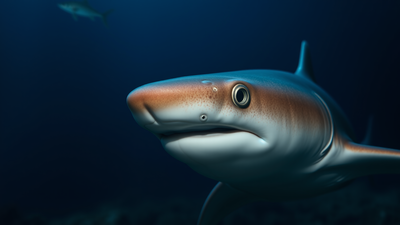
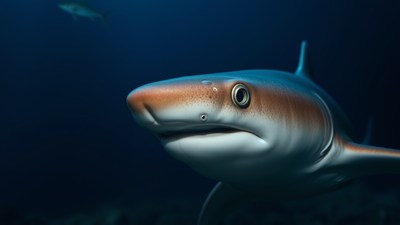
Deep beneath the surface of the Pacific Ocean off the coast of Costa Rica, at depths where sunlight never reaches and pressure would crush most diving equipment, a ghost shark has been quietly going undescribed by science until now. A team of Costa Rican and Brazilian researchers has formally identified a brand new species of deep-sea chimaera, naming it Rhinochimaera costaricana after the country where it was found. The discovery, published on June 10, 2026 in Zootaxa, adds a fourth species to the long-nosed chimaera genus Rhinochimaera a group of ancient, poorly understood fish that have drifted through the ocean’s darkest layers for hundreds of millions of years, largely unseen and understudied.
What are ghost sharks and why is Rhinochimaera costaricana a significant deep-sea discovery
Ghost sharks, formally known as chimaeras, are not actually sharks, even though the name and the vague resemblance might suggest otherwise. They belong to a separate branch of cartilaginous fish, distinct from both sharks and rays, that split off evolutionarily hundreds of millions of years ago and have remained largely unchanged since. The name comes from their pale, almost translucent appearance and their tendency to haunt the kind of deep, lightless environments that make them almost impossible to study.The Rhinochimaera genus, or long-nosed chimaeras, is particularly distinctive because of its elongated, paddle-shaped snouts. Before this discovery, only three species in this genus had ever been formally recognised worldwide: R. africana, R. atlantica, and R. pacifica. The newly described Rhinochimaera costaricana now joins that list as the first species in the genus identified from the Eastern Pacific Ocean.
How researchers collected and identified the three deep-sea specimens over two decades
The story behind this discovery stretches back more than twenty years. The three male specimens that formed the basis of the Zootaxa paper were collected between 2000 and 2023 at depths ranging from 390 to 787 metres, well below the range of recreational diving and into territory that requires specialised deep-sea research equipment to access. Two of the specimens were recovered by INCOPESCA, Costa Rica’s Fisheries and Aquaculture Institute, during fisheries research expeditions near Isla del Caño and off Cabo Blanco, Puntarenas. All three were eventually transferred to the scientific collections at the UCR Museum of Zoology, where they were preserved for comparative study.The specimens measured between 775 and 830 millimetres in total length. Naidely Valeria Vidaurre Quesada, a biology student at the University of Costa Rica, led the formal description alongside co-authors Arturo Angulo from UCR, Alexander Salas Jiménez, José Miguel Carvajal Rodríguez, and Nixon Lara Quesada from INCOPESCA, and Simoni Santos and Juliana Araripe from Brazil’s Federal University of Pará.
Morphological and genetic differences that set Rhinochimaera costaricana apart from known species
Naming a new species requires more than just finding a fish that looks unfamiliar. Researchers must demonstrate, through both physical measurements and genetic evidence, that the animal is genuinely distinct from every previously described species. For this discovery, the team carried out a detailed comparison of 49 body measurements across the three Costa Rican specimens and more than 90 individuals representing the three previously known Rhinochimaera species.Several physical traits set R. costaricana apart from its relatives. The new species has a noticeably shorter snout than other members of the genus, a larger and taller spine on the first dorsal fin, a higher first dorsal fin overall, wider spacing between the two dorsal fins, and fewer tubercles small bony knobs, in the tail region. Its colouring is a dark brown body with fins that are nearly black, distinct from the lighter pigmentation seen in related species.The genetic analysis confirmed what the physical measurements suggested. DNA sequences from the Costa Rican specimens showed a divergence of 3.9% compared to R. africana, 4.5% compared to R. atlantica, and 4.7% compared to R. pacifica. These differences are substantial enough both physically and genetically to support recognition as an entirely distinct species.
Vidaurre Quesada ‘s trip to the Natural History Museum in London to verify the finding
One of the more remarkable steps in the verification process involved Vidaurre Quesada travelling to the Natural History Museum in London, with support from the University of Costa Rica and the Deep Ocean Alliance, to review historical archives of chimaera specimens held in global collections. This was not just an academic formality it was a necessary check to confirm that no earlier scientist had already collected and described this same fish under a different name, which is a genuine risk when working with deep-sea species that are rarely encountered and difficult to transport intact.The review of those historical records confirmed what the team suspected: Rhinochimaera costaricana had never been formally documented before, making it a true addition to the known catalogue of life on Earth.
What the ghost shark discovery reveals about Costa Rica’s uncharted marine biodiversity
Costa Rica is widely recognised for its terrestrial biodiversity its rainforests, cloud forests, and wildlife corridors are among the most studied in the world. Its marine environments, particularly in deep water, are far less understood. The discovery of Rhinochimaera costaricana in waters that have been fished and surveyed for decades, yet still concealed an entirely new vertebrate species, is a pointed reminder of how much remains undocumented in the deep Pacific.Researchers working on deep-sea biodiversity have long warned that species may be disappearing before science even gets a chance to name them. Commercial fishing gear occasionally hauls up specimens from these depths as bycatch, and without proper identification and collection protocols, a new species can pass through unrecognised. The fact that two of the three specimens used to describe R. costaricana came from INCOPESCA fisheries expeditions and were carefully preserved rather than discarded shows how institutional research infrastructure directly enables discoveries like this one.The formal description in Zootaxa now means that Rhinochimaera costaricana can be included in conservation assessments, monitored across future surveys, and used as a reference point for understanding how deep-sea chimaera populations are distributed across the Eastern Pacific. For a fish that spent at least twenty-three years sitting unidentified in a museum drawer, that is not a bad start.