
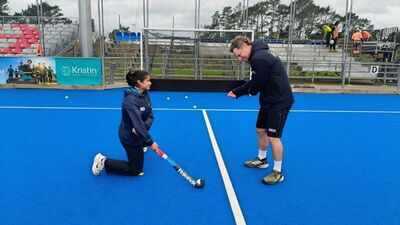
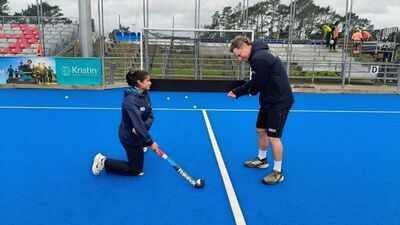
The Indian women’s hockey team scored a whopping 13 goals from penalty corners en route winning the Nations Cup title in Auckland on Sunday, with penalty-corner specialist coach Taeke Taekema playing a key role in the success.Deepika led the charge with six penalty-corner conversions, while Navneet Kaur added three as India remained unbeaten throughout the tournament and beat New Zealand in the final.Deepika, who recently returned from injury, credited Taekema for her impressive performances.“Taekema has always been helping me understand these minute details. He also made me realise the importance of staying calm and focused in pressure situations — to execute my skills to the best of my abilities,” the penalty-corner specialist said in a release.With the World Cup and Asian Games looming, Taekema’s continued presence with the team is expected to provide a significant boost, especially as his role is not restricted to just training the PC takers.“His role goes beyond being a specialist coach. He analyses opponents, works on attacking and defending penalty corners, and also guides the defenders. He is highly experienced and brings a lot to the group,” coach Sjoerd Marijne said during a virtual press conference on Wednesday.Taekema, who has been working with the Indian drag-flickers for some time now, will continue with the team for both World Cup and Asian Games and is expected to make a significant difference.However, with the two events taking place just three weeks apart, it is going to be a challenging period. Marijne, though, believes competing in two major tournaments in quick succession will only benefit the team.“There is nothing better than playing high-pressure matches at a World Cup and using that experience when you play under pressure again at Asian Games,” he said.“Of course, everything is geared towards Asian Games. It’s the most important event for us because that’s where we want to qualify directly for the Olympics.”In 2018 too, there was a similar situation, with World Cup and Asian Games taking place within a span of two weeks. The Indian team reached the quarterfinals of World Cup before going on to win the Asian Games silver medal — its first in 20 years.The coach, meanwhile, has identified a few key areas that he wants the team to continue focusing on.“We are never working on just one area. From the moment I started, I identified the key areas that are most important for us — having a solid defence, being creative in attack, and understanding what is required in different situations during a game,” said the Dutchman.“These are the principles we will continue to focus on over the coming years. We are not going to introduce 10 different topics or keep changing direction.”