
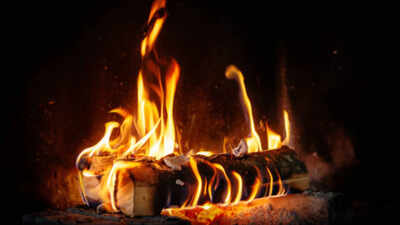
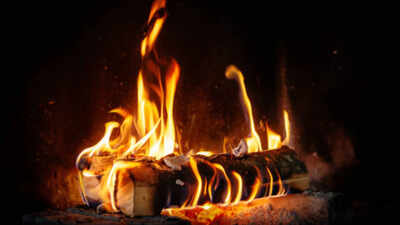
Crooked logs also make straight fires
Not every piece of wood is perfectly straight. Yet when placed in a fire, even a twisted log burns just as well as a straight one. That simple observation lies behind one of Germany’s most enduring proverbs: “Krummes Holz gibt auch gerades Feuer.” Literally translated, it means, “Crooked logs also make straight fires.”At first glance, the saying appears to be about firewood. In reality, it is a reflection on human potential, usefulness and the tendency to judge things by appearances.
What does the proverb mean?
The proverb suggests that something or someone does not have to be perfect to be valuable. A crooked log may look unsuitable, but it still produces the same warmth and flame as a straight one. In human terms, people who appear unconventional, flawed or different can still achieve meaningful results and make important contributions.The saying also carries a practical lesson: Work with what you have rather than waiting for ideal circumstances. Modern explanations of the proverb often describe it as advice against perfectionism. The message is that useful outcomes can come from imperfect resources.
Where did it come from?
Like many traditional German proverbs, its exact origin is difficult to trace. However, it appears in nineteenth-century collections of German sayings and likely circulated orally long before it was written down. The proverb is recorded in Karl Simrock’s influential collection Die deutschen Sprichwörter (1846), which preserved thousands of traditional German sayings.Germany’s historical connection to forests, woodcutting and firewood helps explain the imagery. For centuries, wood was central to daily life for heating, cooking and construction. People understood from experience that oddly shaped timber could still serve a useful purpose.
Why has it endured?
The proverb survives because it expresses a universal truth. Human societies often reward outward appearance, credentials or conformity. Yet history repeatedly shows that talent and value can emerge from unexpected places.Many successful innovators, artists and political leaders were initially dismissed because they did not fit conventional expectations. The proverb reminds us that judging worth solely by appearance can be misleading.The philosopher Immanuel Kant famously wrote: “Out of the crooked timber of humanity, no straight thing was ever made.” Although Kant’s observation differs in meaning, both ideas use the image of crooked wood to explore the imperfect nature of human beings.
Why is it relevant today?
The proverb feels particularly modern in an age of social media, where polished images and carefully curated success stories dominate public life.In workplaces, it can be applied to hiring and leadership. Employers who focus only on conventional backgrounds may overlook capable people with unusual career paths. In education, it reminds teachers and parents that students develop differently and should not be judged solely by standard measures of success.The saying also has personal relevance. Many people postpone ambitions while waiting for the “perfect” opportunity, qualification or moment. The proverb suggests that perfection is not a requirement for achievement. Useful work can begin with imperfect tools and imperfect circumstances.
A proverb about humility
Ultimately, “Krummes Holz gibt auch gerades Feuer” is a reminder to look beyond appearances. It encourages humility in how we judge others and confidence in our own imperfections.A crooked log may never become a straight beam. But it can still provide warmth on a cold night.That simple truth explains why a proverb rooted in the practical realities of firewood continues to resonate centuries later.