
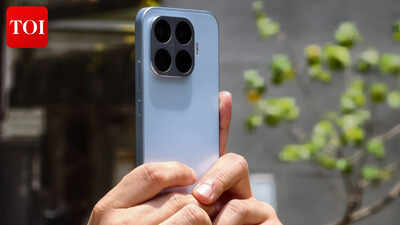
Taipei is a city built for a telephoto lens, though it doesn’t announce itself that way. You notice it slowly. The way the mountains sit behind the apartment blocks in Xinyi, close enough to feel and too far to reach with a normal phone. An old man on a scooter threading between night-market stalls, gone before you’ve raised the camera. The tiled detail high up on a temple roof that you’ll never get closer to.I carried the Xiaomi 17T around for the better part of a week out there, and one thing kept happening: I stopped walking up to things. I just stood where I was and reached.That’s the pitch, more or less, and it holds up better than the spec sheet suggests.The headline isn’t the main camera, though we’ll get there. It’s that Xiaomi has put a 50MP 5x periscope telephoto, a 115mm-equivalent lens, into a phone that starts at Rs 59,999. That kind of reach has lived higher up the lineup until now. Five-times optical zoom, optically stabilised, in this segment, more or less doesn’t exist. Most phones here give you 2x or 3x at best, or they fake the reach with crop-and-sharpen trickery that falls apart the moment you pinch past the comfort zone. The 17T has the actual glass. Everything else about the phone, on first acquaintance, seems to be in conversation with that one decision.
Reach you can actually use
I shoot telephoto-first by instinct, hunting for compression, and a few days in, the 5x had me leaning on it harder than I do on most phones. Frames at the native focal length come out sharp and contrasty, with the Leica colour rendering Xiaomi has spent years on. I’m a Leica Authentic person myself, the more restrained, true-to-the-light profile rather than the punchy one, and it held up the way it does on the pricier phones.
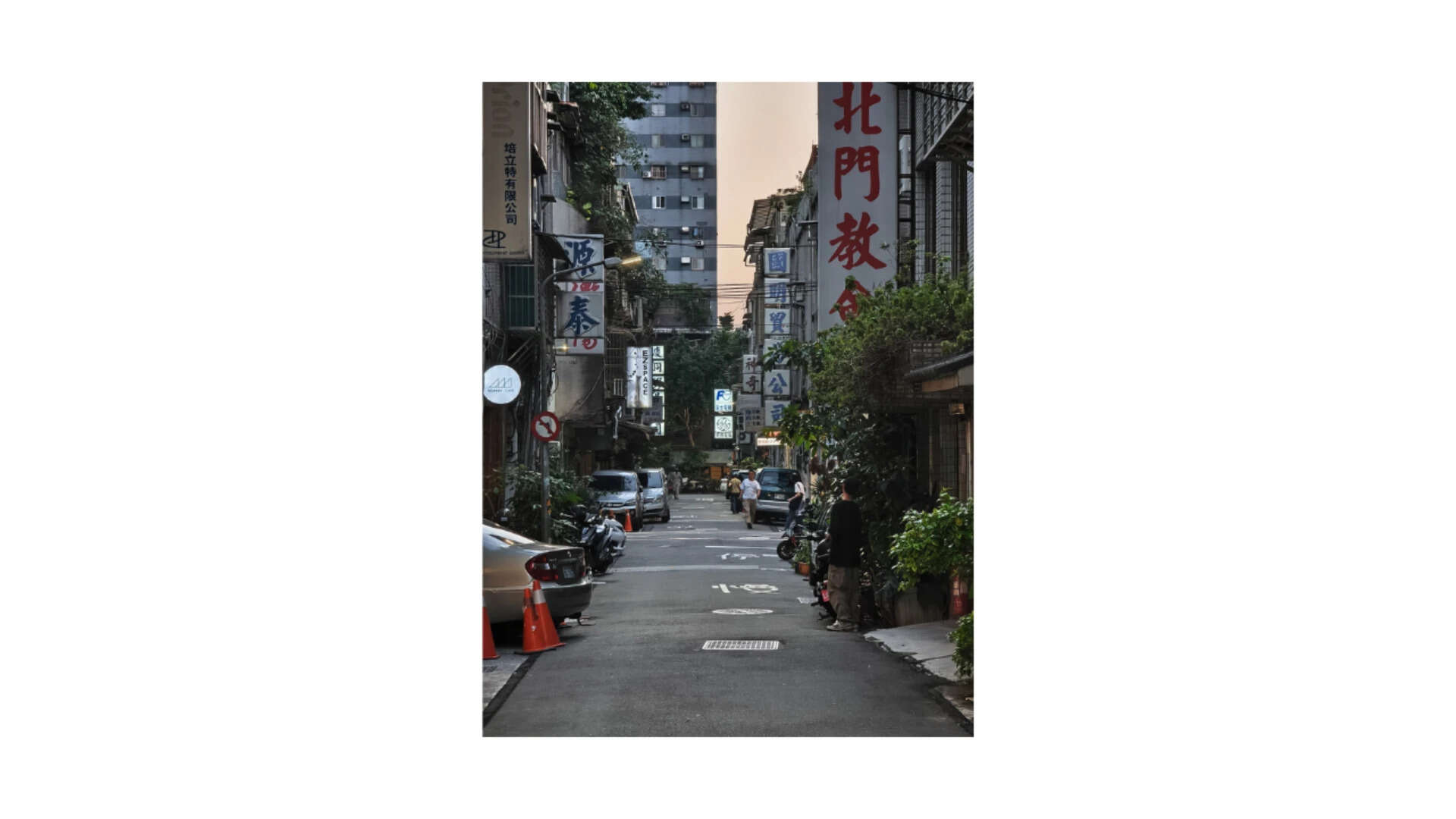
There’s a shot I took down a street, the 115mm flattening the whole scene into stacked layers of signage and shopfronts and people. Looks composed. Wasn’t. I grabbed it waiting at a crossing. Push to 10x and it holds together better than I expected on a phone at this price, real detail, not a watercolour smear of it. Somewhere past 20x the AI takes the wheel and you’ve left photography for reconstruction, and by the 120x the marketing shouts about, you’re shooting a guess. What matters is the middle: 10x stayed sharp, 20x to 40x stayed shareable, and that’s the band that changes how you move through a place.
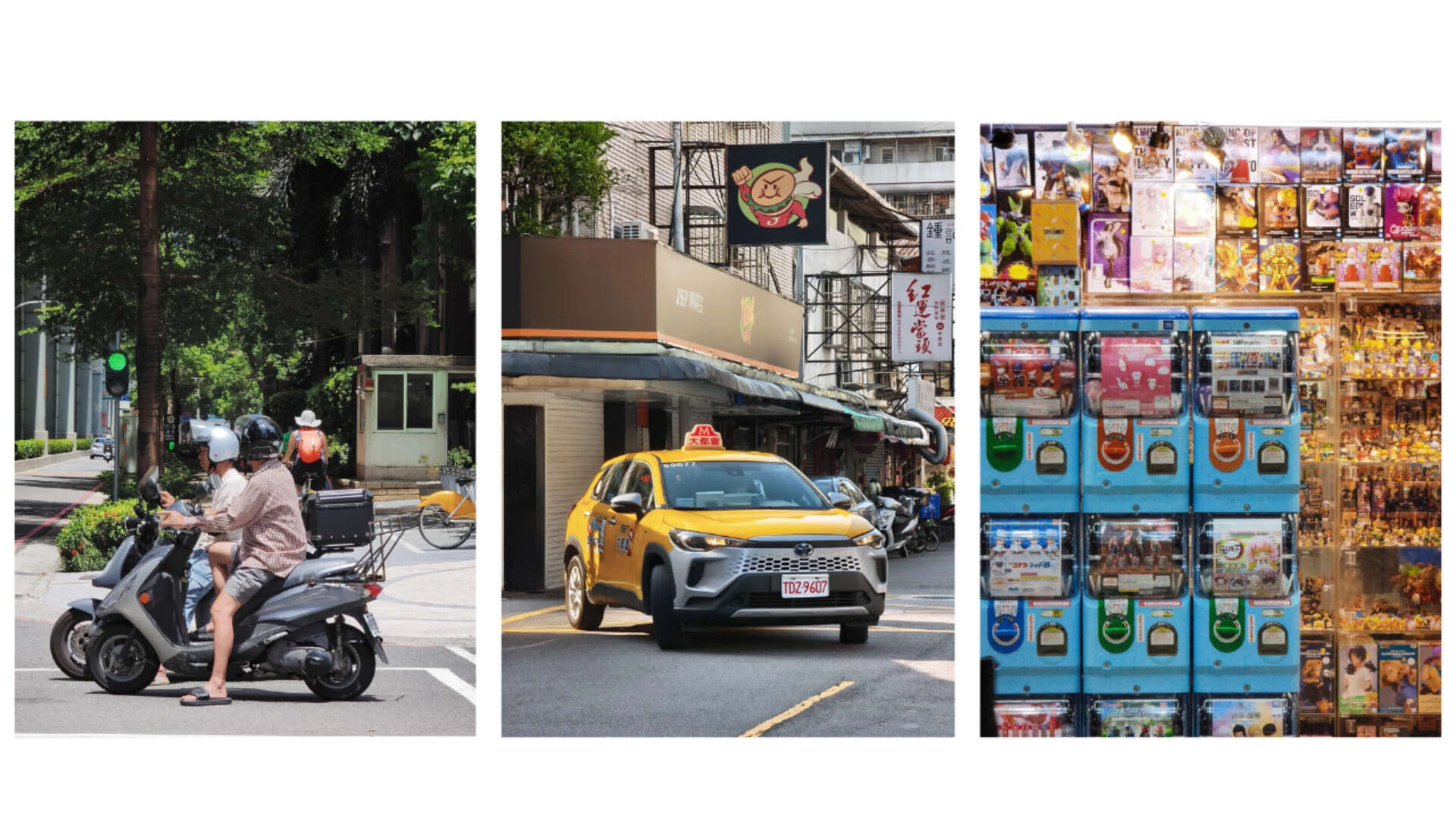
What the reach really changes is how you photograph people. There’s a pair of riders I caught idling at a light, one helmeted, one bareheaded in a checked shirt, both sunk into the wait—the kind of frame that’s gone the moment you step close enough for a normal lens, because they feel you coming and rearrange their faces. From across the junction, they never clocked me. A 5x lens turns out to be the easiest way to photograph people honestly, and a week in, it was the one I reached for without thinking.
The rest of the camera follows the lens
The 5x is the reason to buy in, but it isn’t shooting alone. The main camera is a 50MP, f/1.7 unit on a 1/1.55-inch sensor, and in daylight it pulls bright, punchy frames with wide dynamic range. It has a habit of leaning the contrast a little heavy in awkward indoor light. That’s a long-running Xiaomi trait, and one edit seemed to undo it each time.Evening is the better test, and the one that gave me my favourite frames. The same narrow lane shot as the sun dropped, warm light blowing out the far end of the street, signage and shopfronts falling into shadow up close—is the kind of mixed-light scene that trips phones up, and the main sensor held the highlights and kept the shadows readable without smearing the detail to manage it.
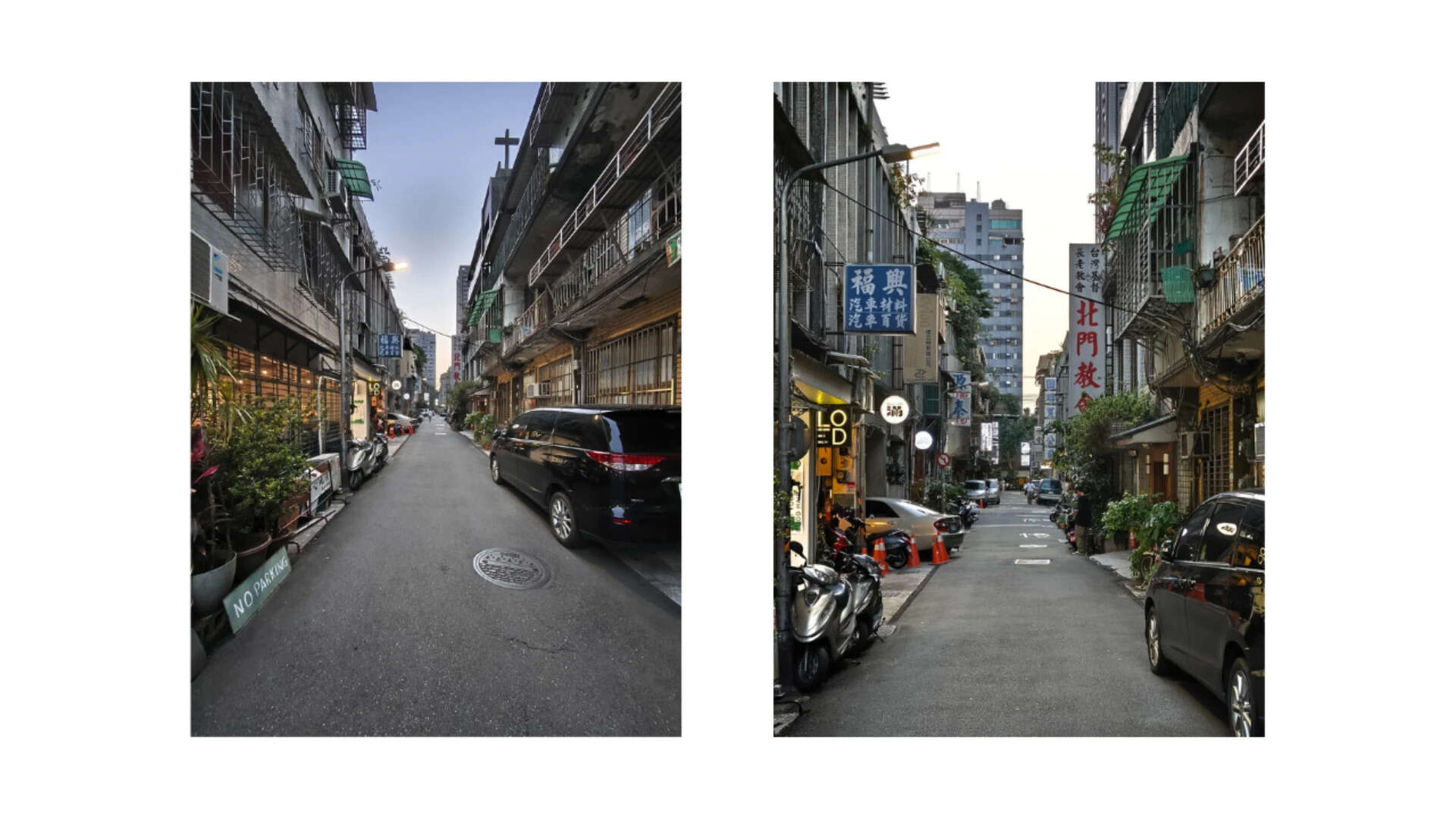
The soft spot, on early evidence and as on every phone in this family, is the 12MP ultrawide. Fixed focus, small sensor, and you can see it give way in that same lane trio, softer and flatter than the frames beside it. Daylight is kinder to it, but it’s clearly the third wheel here. The selfie camera is fine and not a lot more; with no autofocus, the group shots I took softened at the edges.For all that, the wide and ultrawide barely got a look in. That’s the thing about a 5x in your pocket: you stop reaching for anything else. The app has more to it too, more than a week can cover. Leica Live Moment, for one, which Xiaomi kept talking up and I never got around to.
Living with the rest
Step away from the cameras and the 17T is the rare phone that hasn’t grown to fill your whole hand. It’s not a small phone, exactly. But at 6.59 inches it’s compact by the standards of a year where nearly everything else is a slab, and a week of carrying it alongside a camera and two more handsets made me glad of it.The screen filling it is a 1. 5K AMOLED that’s exactly as bright and rich as it should be—120Hz, 3,500 nits at peak, Dolby Vision, and it dims to a single nit, which became the spec I quietly loved at 2am. The frame is plastic and the back a glass-fibre composite, though at this price metal would’ve been the nicer call. The matte finish carries it, mostly.Every phone at this price has a tell, a moment the budget shows through. On the 17T it’s the chip, the Dimensity 8500-Ultra. It’s no embarrassment; there’s 12GB of RAM and up to 512GB of storage backing it, and the phone felt quick the whole time I had it, apps snapping open, camera processing brisk, casual gaming untroubled. I’d want longer with it before saying much about the ceiling.What I didn’t have to think about was running out. The 6,500mAh silicon-carbon cell saw out long days of near-constant shooting with room to spare, and 67W wired charging refilled it fast. There’s no wireless charging.The software is what you get on any Xiaomi these days. HyperOS 3 on Android 16, slick and feature-stuffed, still shipping with a layer of bloatware to clear out on day one. Five years of OS updates, seven of security patches, for the record.A week is long enough to fall for what the 17T is built around, and not long enough to know where it’ll wear thin. I’ll save that for when I’ve lived with it longer. What I can already tell you is that I kept reaching for the 5x the way I reach for a real lens, and what came back—the framing, the colour and that restrained Leica Authentic read of the light—mostly isn’t what a phone at this price hands you. Ask me again in a month.