
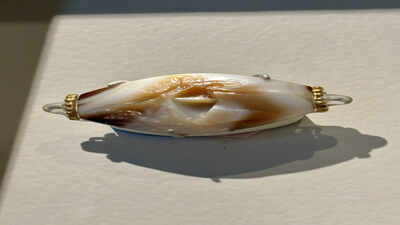
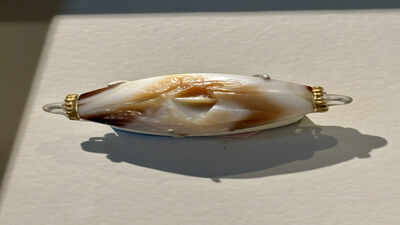
An archaeological dig carried out near the ancient site of Pylos yielded unexpected physical proof concerning the technical abilities of ancient European artisans. While excavating the undisturbed tomb belonging to an elite warrior, who is now referred to as the Griffin Warrior, archaeologists stumbled upon numerous items of wealth and weaponry from the Bronze Age. Included in the rich cache of artefacts unearthed was a singular, heavily encrusted gemstone, which changed views about early Mediterranean art.As investigators carefully removed the compact sediment from the floor of the grave, they recovered a miniature hardstone seal.Indeed, the physical characteristics of this item were indicative of levels of precision that shocked the archaeological team. This item is known as the Pylos Combat Agate, and it is a remarkably detailed artefact recovered from the burial chamber. As a carved seal stone, its length measures just 3.6 centimetres and yet an intricate three-figure battle scene is portrayed with such finesse that previous assumptions about artisanal capabilities of the time were redefined.Redefining the limits of prehistoric engravingThe recovery of this artefact was a significant breakthrough for our comprehension of early Aegean art because it showed that miniature engraving techniques emerged several centuries prior to their presumed appearance. Indeed, the publication Archaeologists unearth ‘masterpiece’ sealstone in Greek tomb by the University of Cincinnati states that the exact age of this burial complex dates back to around 1450 BCE. Therefore, this agate was crafted during the early Mycenaean period.The discoveries changed the existing understanding about the approach of early Bronze Age artisans of the Greek mainland because, until then, mainstream archaeology suggested that they were preoccupied only with more abstract and geometric depictions. However, as pointed out by the research from the University of Cincinnati, some of the engravings are so minute that they require special magnification before they can be comprehensively studied.
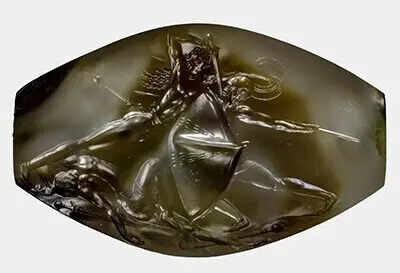
An astonishing miniature seal, the Pylos Combat Agate, unearthed near Pylos, has rewritten our understanding of ancient European artistry. This 3.6 cm gemstone, dating to around 1450 BCE, displays an incredibly detailed battle scene, proving Bronze Age artisans possessed advanced miniature engraving skills centuries earlier than believed. Image Credit: The Department of Classics, University of Cincinnati
A miniature artefact explaining connections between different culturesThis discovery allows researchers to look at the process of artistic development and the connection of elites across ancient societies differently. For example, rather than presenting a culture that was interested exclusively in war, the find suggests that early Greek elites deeply valued elaborate images.The stylistic execution of the scene points to a strong connection with the neighbouring Minoan civilisation, which was celebrated for its fluid artistic depictions of the human body. As explored in the comprehensive research project database hosted at The Griffin Warrior Tomb website, the recovered objects demonstrate a complex cultural interaction where mainland rulers actively acquired elite materials. It shows that early mainland elites were systematically collecting and displaying items that represented the absolute peak of contemporary engraving techniques to express their authority.Today, this small artefact serves as an essential benchmark in art history, proving that the physical scale of an object does not limit its impact on the historical record. The data from the above-mentioned study confirms that prehistoric artisans were capable of working with extreme precision on hard surfaces. It demonstrates that the development of detailed representational art in Europe followed a more complex and technically advanced path than early twentieth-century models suggested.Even though the modern age often relies on big stone structures in order to comprehend the past, the parameters of artistic capabilities during the Bronze Age are captured on a tiny gem buried underground near the city of Pylos.