
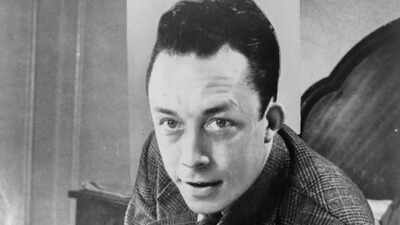
There are some quotes people read once, nod at politely, and forget almost immediately. Then some quotes seem to follow people around afterwards. They linger in the back of the mind during quiet moments, stressful days or late-night overthinking sessions. This line by Albert Camus belongs firmly in that second category because it feels less like a motivational quote and more like a confrontation.“The only way to deal with an unfree world is to become so absolutely free that your very existence is an act of rebellion.”The wording sounds dramatic at first. Almost cinematic. Still, beneath the intensity, there is something deeply personal hiding inside it. Camus does not appear to be speaking only about governments, politics or revolutions. The “unfree world” he mentions can also describe the invisible systems that quietly shape ordinary human lives every single day.People are taught very early how they are supposed to behave. Families create expectations. Schools create expectations. Society creates expectations, too. Over time, many individuals slowly begin editing themselves to fit what feels socially acceptable. They learn which opinions are safe to express and which emotions should remain hidden. Some even begin shaping their personalities around approval without fully noticing it happening.That process feels normal because almost everybody does it to some extent.Camus seems deeply uncomfortable with that idea.
Quote of the day by Albert Camus
“The only way to deal with an unfree world is to become so absolutely free that your very existence is an act of rebellion”
What is the meaning behind this quote by Albert Calmus
At its core, the quote appears to argue that real freedom starts internally rather than externally. A person may technically live in a free society and still feel emotionally trapped every single day. Someone may follow routines, careers or relationships that no longer feel meaningful simply because changing direction feels frightening.That kind of emotional imprisonment is surprisingly common.Many people quietly live according to expectations designed by others. Some continue jobs they dislike because success looks impressive publicly. Others suppress opinions constantly because disagreement creates anxiety. A few eventually wake up feeling disconnected from themselves entirely, almost like they became actors inside lives they never consciously chose.Camus seems to suggest that genuine freedom begins when people stop organising every decision around fear of rejection or social approval.That does not mean behaving recklessly or rejecting society altogether. The quote feels more connected to authenticity. Camus appears to believe there is something deeply unhealthy about spending an entire life performing a version of yourself designed mainly to keep other people comfortable.The phrase “your very existence is an act of rebellion” carries enormous weight because of this. He seems to argue that simply living honestly can become rebellious in environments where conformity is constantly rewarded.
Modern life quietly pushes people toward sameness
One reason this quote still feels remarkably modern is that society continues to reward conformity in subtle ways. Social media intensified this pressure dramatically. People compare careers, appearances, relationships and lifestyles almost endlessly now. Public approval became measurable through followers, likes and reactions.The strange part is that modern culture constantly encourages individuality while simultaneously punishing people who stand out too much.That contradiction exhausts many individuals.People carefully soften opinions online. They filter personalities. They avoid saying things that might create criticism. Over time, some individuals become more focused on appearing acceptable than actually feeling authentic.Camus would probably recognise this tension immediately.His writing often explored the conflict between personal truth and social expectation. That conflict seems even stronger now because so much of modern life happens publicly. People are not simply living anymore. Many feel like they are constantly presenting themselves.That pressure changes behaviour slowly.Sometimes almost invisibly.
Freedom sounds beautiful until it becomes uncomfortable
There is another reason this quote continues to affect readers emotionally decades later. Camus understands something many inspirational slogans ignore completely: freedom is not always comfortable.Real independence often comes attached to uncertainty.Someone who chooses honesty may disappoint family members.Someone who refuses social expectations may lose approval.Someone who lives differently may feel isolated for long periods.Human beings naturally want belonging. Most people fear rejection far more than they admit openly. Camus seems fully aware of this emotional reality. His version of freedom is not glamorous or easy. It demands courage because authenticity occasionally creates loneliness.That tension makes the quote feel painfully real.People often imagine rebellion as something loud and dramatic. Camus seems more interested in quieter forms of rebellion. Refusing to live dishonestly. Refusing to abandon personal values entirely. Refusing to become emotionally numb simply because conformity feels safer.Those acts may appear small externally.Internally, they can change everything.
Albert Camus wrote for people struggling with meaning
Albert Camus became famous for exploring themes like absurdity, meaning and personal freedom. His writing rarely offered simple comfort. Instead, he examined the confusion and uncertainty that often sit beneath ordinary human life.That honesty still feels refreshing today.Many modern conversations about success and happiness sound polished and predictable. Work harder. Stay positive. Follow the right path. Camus approached life very differently. He openly acknowledged that existence can feel chaotic, irrational and emotionally exhausting.Still, he did not believe people should surrender completely to hopelessness.He seemed more interested in awareness.Awareness of fear. Awareness of conformity.Awareness of the quiet ways people abandon themselves over time.That emotional honesty explains why younger generations continue connecting with his writing so strongly. Many people feel overwhelmed by modern expectations and increasingly suspicious of shallow definitions of success. Camus speaks directly to that exhaustion without pretending easy solutions exist.
The quote also reflects fear of emotional numbness
Another interesting layer inside this quote involves emotional passivity. Many individuals drift through routines for years without questioning whether those routines actually matter to them personally. Life becomes automatic. Wake up. Work. Scroll online. Sleep. Repeat.That cycle can slowly disconnect people from themselves.Camus appears deeply uncomfortable with passive existence. He repeatedly pushed readers toward awareness even when awareness felt painful. Living consciously mattered enormously to him because unconscious living often turns people into spectators inside their own lives.Perhaps that is why this quote continues spreading online decades later.It does not flatter readers. It unsettles them slightly.Usually, the most powerful ideas do exactly that.
Life lessons hidden inside Albert Camus’ quote
The quote quietly suggests that authenticity matters more than endless approval. Many people spend enormous amounts of energy trying to become socially acceptable while ignoring whether they actually feel emotionally fulfilled. Camus appears to believe that kind of life eventually creates emptiness.The quote also teaches that freedom carries responsibility. Individuals cannot simply blame society for everything while refusing to make difficult choices personally. Real freedom often requires uncomfortable honesty about fears, compromises and priorities.Another important lesson involves courage. Independent thinking sounds admirable until it creates conflict or rejection. Camus seems to argue that avoiding discomfort completely may cost people their sense of identity over time.Most importantly, the quote reminds readers that rebellion is not always dramatic. Sometimes rebellion simply means remaining emotionally honest in environments that encourage performance and conformity instead.
Albert Camus’ timeless warning about losing yourself in modern society
Albert Camus’ quote survives because it captures a struggle millions of people quietly experience every day. Human beings want acceptance and belonging, though they also crave individuality and freedom. Those desires often pull in opposite directions.Modern life constantly rewards performance, predictability and social approval. Camus appears to challenge people to resist disappearing completely inside those systems. His idea of rebellion feels less connected to anger and much more connected to honesty.Perhaps that is why the quote still resonates so strongly.It reminds readers that freedom is not always about escaping physical control. Sometimes the hardest form of freedom involves refusing to abandon yourself simply because conformity feels easier.